William Tyndale, God’s Outlaw

William Tyndale, God’s Outlaw

William Tyndale, God's Outlaw

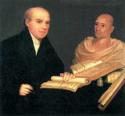
It is hard for us today to imagine not having a Bible in our own language, but it hasn’t always been that way. When William Tyndale was a little boy growing up in England in the 1500s, ordinary people did not own Bibles. They had to go to church to hear what the Bible had to say. But there was one problem–the priest read the Bible in Latin, a language only the most educated people could understand.

As William Tyndale grew older and finished college, he felt that God was calling him to translate the Bible into English so that all people could read it for themselves. But–believe it or not–translating the Bible was against the law. Like many others during his time, William Tyndale was called a false teacher and was put to death for his beliefs. Based on historical sources, this is his story as he might have told it.

My Gift for Languages Lets Me Read the Bible for Myself
I grew up on a farm in Gloucestershire, England. Life was very difficult for English families. Children worked very hard to help their parents. Disease and famine often killed thousands at a time.

My parents could tell early in my life that I had a gift for learning languages. I was able to go to Oxford University, one of England’s finest schools. By the time I graduated, I had mastered SEVEN languages! Of them, Hebrew and Greek were most useful to me, because I could now read the Bible in its original languages.

I learned so much about God as I read the Bible for myself! I knew I had to use the gift God had given me so that others could read the Bible for themselves, too! I was well aware that translating the Scriptures was against the law and could cost me my life, but how could I not do what God was calling me to do?

Church and King Try to Keep Me Quiet
At first I asked the Church authorities for permission to translate the Bible into English. The answer was no. The Church believed that only the Pope and priests were educated enough to truly understand and interpret the Bible.

One day a discussion with a priest became a heated argument when he told me that it was better to be without God’s laws than the Pope’s. I could not believe what I was hearing! I answered him by saying, “I defy the Pope and all his laws; if God spares my life, I will cause a young farm boy to know more of the Scriptures than you do.”

I also did not agree with the Church’s teaching that doing good things was the way to get to heaven. The Bible clearly says that salvation is a free gift from God for those who believe. Many in the Catholic Church and also the King of England, Henry VIII, looked for ways to keep me quiet.

Hiding from Spies
I knew I must leave England immediately. I secretly traveled to Germany, where others had also taken a stand against some of the Church’s teachings. When I arrived, I quickly changed my name–so no one would be able to find me–and began my work.

Translating the Bible into English was a difficult job. Each word had to be recorded correctly. The language also had to be simple enough for even an uneducated person to understand. It took more than a year for me to complete the New Testament translation.

I had to find a good printer whom I could also trust to keep my whereabouts secret. I could not risk being caught. English spies would be paid well to turn me in. One spy eventually did find out where the first printing was taking place. I narrowly escaped capture, getting away just in time with some of my materials!

The English Bible on English Soil 
Once the printing was completed, copies had to get into England without being seized. Smugglers hid the Bibles in shipments where no one expected them: in flour barrels, in trunks with false bottoms, and in airtight boxes inside wine barrels.

The Bibles sold as quickly as they reached England, even though one cost about half a week’s earnings (over $100 in today’s dollars). Families saved and put their money together, and a farmer would trade an entire load of hay to get just one Bible. Groups would meet together to hear the Word of God for the first time in their own language.

The religious leaders and the King were furious! They tried to destroy as many copies as they could. They also intensified their search to find and arrest me.

A “Friend” Turns Me Over to Killers
I had begun to feel quite safe in Germany. I had also become somewhat of a celebrity. But I let nothing get in the way of completing my task. I worked late every night translating several books of the Old Testament.

One day I met a young Englishman in Germany who seemed to share my ideas about the need to translate the Bible. Over time we became good friends. What I didn’t know was that this young man was a spy who would soon betray me. He led me right into the hands of my captors, after inviting me out for a meal. I was jailed, charged with heresy (false teaching), and sentenced to death by burning.

PostScript 
The last thing we know about William Tyndale is that he was led through a crowd into the public square. A noose was placed around his neck. His last words were, “God, please open the King of England’s eyes.” He was then hanged and his body was set afire.

God answered his prayer in a wonderful way. Within one year of William Tyndale’s death, the King of England gave approval for an English Bible to be published. Tyndale’s Bible was used as a guide for the new translation. This new translation is the father of the King James Bible that is still read today.

  1. William Tyndale had a talent for learning languages. Instead of burying his talent, he worked hard to develop it and use it for God. What talent has God given you? What can you do to develop your talent and use it for Godês glory?
  2. Translating languages is very difficult work. To get a feel for the difficulty, try translating the Ten Commandments into language that a preschooler could understand. You can find them in the Old Testament book of Exodus, chapter 20.
  3. It seems strange that some people in the 1500s thought the Pope’s law could be more important than God’s law. Can you think of a time when you have had to choose between following God’s laws and following man-made laws? What did you do?
  • Suggested reading:
    • The Queen’s Smuggler: William Tyndale by Dave & Neta Jackson (Trailblazer Books, Bethany House)
    • William Tyndale by Bruce Fish (Heroes of the Faith series, Barbour)
    • God’s Outlaw by Brian Edwards (Evangelical Press)

William Carey, the Father of Modern Missions Part 1

William Carey, the Father of Modern Missions Part 1

William Carey, the Father of Modern Missions Part 1

SECRET LANDING IN INDIA
“Father, wait up!” called eight-year-old Felix Carey as he ran along the upper deck of the ship. “Mother won’t do it. After all she’s gone through on this journey, she says that climbing overboard and getting into that little fishing boat is just the last straw!”

William Carey turned and laid a hand on his son’s shoulder. “Don’t worry, Felix. I know Mother is scared, but I’ll help her.”

Felix gazed down at the fishing boat bobbing in the waves. He knew missionaries could not officially enter India and were not welcome here. But he still had concerns.

“Father, what if I slip off the ladder and fall in the water?” asked Felix.

William smiled down at his son. “Do you remember the stories about Captain Cook?

Felix brightened. “Of course I do!”

“Well, think of this as an adventure from Captain Cook’s journals, only we’re not going just to explore. We’re here to share the Gospel with the people of India. God has called us here!”

“Yes, I know,” replied Felix triumphantly. “Expect great things from God! Attempt great things for God!”

“I didn’t know you listened so closely to my sermons!” said William with a twinkle in his eye. “You call your brothers and I’ll speak with Mother. Before long, we’ll be on Indian soil! And we’ll see what great things God will do!”

WHO’S THE STRANGER HERE?
The Indian fishermen put down their nets to watch the spectacle which unfolded as the light-skinned family unloaded their belongings from a fishing boat. “Why are they all staring at us?” Felix asked as he stepped onto the shore in Calcutta.

“We look as strange to them as they do to us!” his father explained. All eyes followed the family as they made their way through the town. The smell of fish was heavy in the air, but soon other smells greeted them. Indian spices, like curry, garlic, and ginger, wafted over from the outdoor market. Indian women dressed in bright colors paused from their shopping to stare, while the children giggled and pointed at the foreigners.

“See all those people?” asked William. “They all need to learn about Jesus!” It was November 11, 1793, and these pioneer English missionaries to India had no idea of the troubles they would face.

WAITING FOR GREAT THINGS
Several months later, William sat on Felix’s sleeping mat and stroked his son’s forehead. Felix held his knees tightly to his stomach, groaning with the familiar pain.

“Feeling any better, son?”

“I think so, Father,” Felix whispered. “I don’t want to wait any longer.” Felix just wanted to get away from the horrible slum, even if he had to travel while sick.

“Father, why isn’t God doing any great things in India yet?”

Felix’s words cut to William’s heart. He understood the question perfectly. They lived in horrible conditions with little to eat, and were often sick with dysentery. William worked long hours to learn the language, and even preached a little, yet no one seemed to care about the Gospel. Was this what God intended for them in India?

“I know how you feel, Felix, but we must be patient. God is with us no matter what, and surely that is a great thing.”

The Careys moved not once, but five times during their first seven months in India. Finally, they settled in the town of Mudnabatti, where William found work running a factory. This helped to provide money for their family, but their struggles with illness were far from over.

FATHER, DON’T YOU CARE?
“Father, how can you keep working after all that’s happened?” Felix asked late in 1794. “Baby Peter died and Mother won’t come out of her room, yet you keep working. It’s like you don’t even care!”

William looked up from his writing and rubbed his tired eyes. “Felix, I miss Peter as much as anyone. It is a terrible thing to lose a child so young. I pass my days as if in the valley of the shadow of death, but I must go on. He who has called us will be faithful.”

Angry tears streamed down Felix’s face. “God doesn’t seem too faithful to me, Father. The Indians don’t want to hear about our God. They have enough gods of their own. Not even one of them has believed. And now mother is sick and Peter is dead! We came here expecting great things, but God has let us down.”

“Oh, Felix, God is still here. We must press on and trust Him, even when times are so hard.”

William labored on for six years with little encouragement and little support before things began to improve.

HELP ARRIVES
“Those Carey children just run wild,” said Hannah Marshman. Hannah and her husband, Joshua, had recently come to India along with William Ward and five others. The eight new missionaries arrived in 1799 to help William.

“William has worked so hard for six years, with his wife sick in bed and no one to help him. It appears the children have picked up some bad habits,” answered Joshua. “Perhaps we can help.”

Hannah and Joshua did just that. Along with William Ward, they helped William Carey run the mission, open schools, and print the Scriptures. Hundreds of people came to listen when William preached, yet still there were no converts to Christianity. In 1800, the team moved to Serampore, 17 miles north of Calcutta. Before long there was a breakthrough.

GREAT THINGS AT LAST
On December 28, 1800, the missionaries gathered together to walk with Krishna Pal to the river for the big event. Crowds of Hindus yelled and threw rocks to stop Krishna Pal from going through with his plans, but he was determined.

Felix walked alongside William. “Father, Krishna Pal is brave to be baptized when he knows his whole community will reject him and he’ll lose his place in society.”

“Yes, after seven long years, we can rejoice in the first Indian convert. God has done a great thing!”

“God has done another great thing, Father,” said Felix. “My faith has grown stronger as I’ve talked with Krishna Pal. I want to be baptized today as well.”

“Son, I will baptize you with joy!” said William. “This is only the beginning of the great things God will do here in India.”

Felix Carey and Krishna Pal both went on to help spread the Gospel in India. William Carey worked in India for 34 more years–the rest of his life. He continued to face many obstacles and trials, but never gave up. Eventually hundreds of Indians came to Christ through William’s work. But perhaps his greatest accomplishment was in helping to show people that the Gospel is meant for all races of people all over the world. His example has inspired generations of missionaries to leave the comforts of home and bring the Gospel to those who’ve never heard it. William truly is the “Father of Modern Missions.”Make It Real! Questions to make you dig a little deeper and think a little harder.

  1. Do you think going to another land would be an adventure? Where would you most like to go?
  2. People of William Carey’s day did not understand that the Gospel is meant for all the people of the world. How do you think William Carey convinced them it is? See Matthew 28:19-20.
  3. William Carey pressed on even when it seemed God was distant. Why might that be hard to do?
  4. One of the struggles William faced was that he had very little contact with the people from his home in England. Would that be hard for you? Can you write a letter of news and encouragement to a missionary?
  • Suggested reading:
    • William Carey: Obliged to Go by Janet & Geoff Benge (Christian Heroes: Then and Now series), YWAM
    • William Carey: Bearer of Good News by Renee Taft Meloche (Heroes for Young Readers), YWAM

William and Catherine Booth: Building God’s Army

William and Catherine Booth: Building God’s Army

William and Catherine Booth: Building God’s Army

Eva set her basket of flowers down in the alley and wiped her hands on her tattered skirt. There were blisters on her feet from her secondhand boots, and her back ached from walking. She hadn’t sold many flowers today, but she was not discouraged. Eva peeked around the corner of the building and saw a well-dressed gentleman approaching. Hiding her basket behind a barrel, Eva smeared dirt all over her face and stepped out in front of the gentleman.

“Please, sir. Can you help me?” she sobbed.

“What is it?” he asked, trying to see her face under her bonnet. Eva kept her head down, her shoulders shaking as she cried.

“Someone stole my flowers!” She exclaimed. “I was going to sell them, and now I won’t have any money to take home to my family!”

Feeling sorry for this poor girl, the man reached into his pocket to give her money.

At this, Eva could no longer contain herself. She laughed out loud, startling the confused gentleman.

“Don’t you recognize me?” she giggled. “Have I fooled my own father?”

Surprised, he lifted her chin and looked closely. Under all that dirt smudged from real tears was his own daughter, as happy as could be.

With excitement, Eva told how she was mingling with the poor girls in the city and sharing the love of God with them.

Eva’s eyes twinkled as she shared her favorite part. “A poor man told me I could find help at the Christian Mission. He even mentioned your name, Father! He said, ‘That William Booth is a kind man. He will help you.'” Eva retrieved her basket, waved and hurried off through the alley. Her father smiled, thinking how Eva reminded him of her mother on the day they met.

William thought back to April 10, 1852. He had met his wife in London on his 23rd birthday.

A LOVE STORY
“It was nice to have met you, Mr. Booth. Happy birthday.” Catherine paused, then turned to walk away.

“Wait!” William called after her. “I’d like to see you again.”

“That would be fine,” she replied. William smiled as Catherine went inside. Reluctantly, he turned to leave.

“What an evening,” he thought. Though they had just met, he and Catherine had talked for hours. She had such a passion for reaching those who didn’t know Christ! Like himself, she had a special burden for the poor people in the city. He couldn’t wait to see Catherine again. They had so much in common!

As the weeks went by, William’s thoughts of Catherine led to thoughts of marriage. What a partnership they would make: partners in marriage as well as partners in ministry. Together they could work for God!

William smiled at the memory as he watched Eva go. Such spunk and passion! Just like her mother! What a joy to see their children joining in the ministry. Shaking his head with wonder, William continued on his way. His mind returned to the sermon he would give at tonight’s tent meeting. The crowds were growing under the old circus tent as word spread around East London. Poor and hurting people came to the tent for something they didn’t get in the other churches—a warm welcome. Together, William and Catherine reached out to those that other churches would not accept. No one was turned away from their meetings.

ROTTEN APPLES WON’T STOP THEM!
Marcus waited for his friends outside the old circus tent. He was nervous and excited all at once. James rounded the corner and thrust two rotten apples into his hands.

“The others are over there,” James whispered, pointing to a tree next to the tent. “Stay low and wait for the signal.”

Marcus wasn’t sure what the signal was, but he didn’t want to ask. He watched James pull a knife out of his pocket and lift up the bottom of the tent. They waited.

Inside he heard someone yell, “Hallelujah!” Then everything happened at once. James started tearing at the tent with his knife while the other boys ran inside, throwing things at the preacher.

Marcus ran in and threw his apples, too. One of them hit the preacher right in the head, but he just kept preaching. Marcus couldn’t understand what he was saying because of all the commotion, and he didn’t wait to find out.

When he saw the flames in the back, he ran as fast as he could to get away.

As some of the workers put out the flames, William Booth kept right on preaching. He knew why those boys were there, and he wasn’t going to let them stop him.

Just this afternoon, William had stood outside the pub, reading the Word of God and inviting passersby to come to the tent for services tonight. To his delight, some of the men left their liquor behind to go hear William’s message!

The pub owner had been so angry. “You’re ruining my business!” he shouted.

William tried to invite him as well, but the man had slammed the door without answering.

That man had paid these boys to break up the meeting.

GOING INTO BATTLE
Even though a lot of people were against the Booths, their services in the old circus tent soon grew into a huge organization. Word spread among the needy. William and Catherine started soup kitchens, helped those addicted to alcohol, and cared for the needs of society’s outcasts. Catherine reached out to the women in the congregation, teaching them to help others. But most importantly, they were leading people to Christ!

Still, they had their share of opposition, from those angry pub owners to established church leaders to school bullies. One of the Booths’ sons came home from school badly beaten because of his parents’ work. Even so, Eva and her brothers and sisters joined eagerly in the work.

Their ministry was very much like a battlefield at times. Someone began using military terms to describe their activities. This attracted attention because of the recent Civil War in America. They sent out newsletters telling about a new “battery of artillery” and a developing “regiment.” They soon began wearing uniforms with badges and calling their volunteers an “army.” Eventually they became known as the “Salvation Army,” a group that is still active today.

TODAY’S SALVATION ARMY
Hannah and her mother stepped out of the busy store into the cold air. Snow flurries danced around the busy shoppers, and sounds of Christmas tickled their ears. Amid the pleasant Christmas music, a bell rang out beside the Salvation Army kettle.

Hannah tugged on her mother’s sleeve and asked for some change to toss in. The volunteer smiled and thanked Hannah as she walked away, humming Christmas carols and thinking of Christmas morning.

Everyone sees these kettles around the holidays, but many would be surprised to know how far The Salvation Army reaches. The organization, established in 1865 as “Christian Mission,” still helps needy people today through Christmas kettles, thrift stores and sharing God’s love around the world in 80 countries—all because William and Catherine Booth loved the unlovable, just as Jesus did!Make It Real! Questions to make you dig a little deeper and think a little harder.

  1. William and Catherine Booth’s marriage was based on more than love. What common goal did they share?
  2. What ways did their children get involved with their ministry?
  3. Are there ways your family can work together to help others?
  4. What kinds of people did the Booths reach out to? Why do you think so many people (including fellow Christians) were against them?
  5. Have you ever seen a Salvation Army worker ringing a bell and collecting money at Christmas time? What do you think the money is used for?

Suggested reading:

  • Benge, Janet & Geoff. William Booth: Soup, Soap and Salvation. Christian Heroes: Then and Now series, YWAM Pub.
  • Jackson, Dave and Neta. Kidnapped by River Rats: William and Catherine Booth. Trailblazer series, Bethany House Pub.

Special Issue–Christmas Part 1

Special Issue–Christmas Part 1

Special Issue--Christmas Part 1

Have you ever written a letter of special requests to Santa Claus? Many children wonder, “Is there really a Santa Claus?” The answer may surprise you. Long ago in the village of Patara in modern day Turkey, a boy named Nicholas was born to wealthy parents. Nicholas’ parents could afford to give him all kinds of good things, but the best thing they gave him was their faith in Jesus. Nicholas’ parents loved Jesus very much, and they taught him to do the same.

When Nicholas was still a boy, his parents died. Though he was sad, he still had the special gift they gave him. He still had his faith in Jesus! Nicholas made up his mind to give his life and his money to help other people. This was long ago, but we still know of some of the good things he did.

In the town of Myra, there was a poor man with three daughters. It was time for the girls to get married, but the father had a problem. In those days the father of the bride had to pay money to the groom when they got married. This money was called a “dowry.” The father did not have enough money for three dowries. He didn’t even have enough money for one dowry! Without the money, the girls might be sold into slavery.

The bishop of the town was none other than Nicholas. He wanted to help this poor father. One night before they went to bed, the girls washed their wool stockings and hung them by the fireplace to dry. As they slept, Nicholas crept up to the house and secretly threw gold coins into their window–enough to pay for their dowries! The next morning the girls had a happy surprise when they found gold coins in their stockings!

Another time Nicholas made a special trip, or pilgrimage, to the Holy Land in Israel. He wanted to walk where Jesus had walked and see the things Jesus had seen. After his visit, Nicholas boarded the ship to go home. On the journey, a fierce storm developed. The ship was tossed about on tall waves as lightning flashed overhead. The passengers and crew feared for their lives, convinced they were doomed! Of all the people on board, only Nicholas remained calm. He drew on his faith and prayed calmly for the Lord to stop the tempest. To the amazement of the terrified sailors, the wind and waves stopped suddenly.

After Nicholas’s death, the Church came to celebrate his life through a special feast day each December 6. European children often dressed like him and gathered money for the poor in memory of his love for children and his desire to give gifts. They also set out shoes or stockings the night before December 6 for “Nicholas” to fill. The Dutch and Germans brought these traditions to the American colonies.

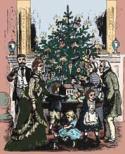
Today’s popular image of Santa Claus started in 1823 when Clement C. Moore wrote a poem “The Night Before Christmas.” He combined the Dutch “Sinterklaas” and German “Saint Niklaus” to “Santa Claus,” which sounded more American. It also began the tradition of Santa arriving in a sleigh pulled by reindeer.

All these centuries after the time of Nicholas, Christians still remember his good deeds and kindness. Christians still give gifts to each other as a way to celebrate their faith in Jesus. Today there is a popular depiction of Santa Claus kneeling in prayer before the cradle of the Christ Child. It reminds us that Nicholas was a great man because he served Jesus.

Why do people write XMAS instead of Christmas? Is it because they are trying to take Christ out of holiday celebrations?
In Greek, Jesus is called “Christos” which begins with the Greek letter “chi” or “X.” In 16th century Europe, Christians began to use “X” to mean “Christ” in the word “Christmas.”

Was Jesus really born on December 25th?
In the 4th century there was a popular pagan festival called Saturnalia, which included lots of wild parties. The festival was held during the short cold days of December in honor of the pagan sun god, Mithras. Birthdays weren’t celebrated much back then, but the Church wanted to help believers stay focused on Jesus instead of the pagan partying all around them. December 25 was selected as the official birthday. In fact, it is unlikely that Jesus was born in December, because it would have been too cold for people to travel at that time for the census that Joseph and Mary were observing. In addition, shepherds wouldn’t have been in the fields with their sheep in the winter. Most scholars believe that Jesus was probably born in the spring or fall.

What exactly are “The Twelve Days of Christmas?”
They are the time between Christmas and Epiphany, which is January 6. That is the time the early church determined that the wisemen would have come to worship the Christ child. “Epiphany” means a revelation of a divine being, which of course, was Jesus, God in the flesh.

Who wrote the Christmas carol “O Little Town of Bethlehem?”
It is believed that the Church of the Nativity in Bethlehem stands on the very spot where baby Jesus once lay in a manger. In December 1865. Pastor Phillips Brooks visited the Holy Land and attended a Christmas Eve service in that special church. The pastor was so struck by the children celebrating Christ’s birth and the “dark streets” of Bethlehem that three years later he wrote words for a Christmas song. Brooks gave the lyrics to his organist to compose a tune so the children could sing it on Christmas Day, but the organist, Lewis H. Redner, forgot about the assignment until Christmas Eve. He awakened that night to recall the words, and he said an “angel strain” (or melody) rang in his ears. Redner got up and quickly wrote down the melody, calling it a “gift from heaven.” On Christmas morning 1868, in Philadelphia’s Church of the Holy Trinity, children sang the beloved Christmas carol “O Little Town of Bethlehem” for the first time.Make It Real! Questions to make you dig a little deeper and think a little harder.

  1. How can you “keep Christ” in your Christmas celebrations?
  2. Have you ever given a secret gift like Nicholas did? What was that like? Can you give a secret gift this Christmas?
  3. How do you like to celebrate your birthday? How might Jesus want his birthday party to be celebrated?
  4. If you could write a letter to God, what special gift would you ask Him for? Look up John 3:16 in the Bible to find the greatest gift God has given to the world.
  • Videos/DVDs:
    • Nicholas: the Boy Who Became Santa An animated story of Nicholas.
    • The Candy Maker’s Christmas The story of the candy cane.
    • Martin and the Heavenly Tree The origin of the Christmas Tree.
    • Prince of Peace The Christmas story in beautiful 3D animation.
    • The Story of Silent Night The story of the beloved Christmas carol. 
      (Order these from Vision Video, 1-800-523-0226 or www.visionvideo.com)

Samuel Morris, Missionary to America

Samuel Morris, Missionary to America

Samuel Morris, Missionary to America

You have heard of missionaries who went to Africa to tell the people about Jesus. But did you know that in the late 1800s an African man came to our country and showed Americans the love of Jesus?

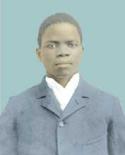
His name was Samuel Morris, or Kaboo, as he was known to his tribe. His story is as amazing today as it was to those who met the young Samuel Morris more than 100 years ago. Here is his story based on his own account.

Pay or Sammy Suffers!
The year: 1872 
The place: My native country of Liberia, in Africa

“You must pay if you want peace,” threatened the enemy chief. “We will pay,” thundered my father, “We will pay.” As the oldest son, I was taken as a hostage until my father, also a tribal chief, could pay off the war debts. Each month, my father brought gifts to the enemy chief, but they were never enough. The chief beat me daily with a poisonous, thorny vine he used as a whip. The poisonous thorns infected the wounds on my back, making me sick with chills and a fever.

A Bright Light and Broken Knots
After many whippings, I was so weak, I could no longer stand. I was tied to a wooden cross to be beaten. My captors planned to bury me alive if my father didn’t bring enough goods next time. I actually began to look forward to death. At least I would be released me from this unbearable pain. As I hung over the grave they had dug, I could feel myself slowly dying. Then suddenly a bright light appeared over me! The ropes miraculously fell off my hands and feet! I heard a voice call my name, and it told me to run! All of a sudden, I felt strong. I ran as fast as I could into the jungle and hid in a hollow tree until night came. I now had time to think about what had happened. What caused the bright light? Who had spoken to me? How did I become strong so quickly? I didn’t have any answers, but I knew I must run far away. If I returned to my father, the enemy chief would kill my entire tribe.

As I stepped out of the hollow tree into the darkness, I was amazed–the bright light that shone on me earlier was still there. It guided me through the night.

After walking for many days, I came to a farm. A young worker greeted me and took me to his boss. The boss gave me clothes to wear and a job. I noticed there was something different about the young farm worker. I often saw him kneeling on the floor. He told me he was praying to God, his Father in heaven. He invited me to go to church with him. I went and found the presence of God there. It all began to make sense to me. I now know it was Jesus who saved me from my captors. Jesus was the light who guided me through the jungle and to my new home!

As I began to learn more about Jesus, I asked him to be my Savior. After I was baptized, an American missionary who was teaching me gave me a new Christian name: Samuel Morris.

It Really Did Happen
I know my story about the bright light seems impossible, but many months later I met a young boy who had been a slave of the enemy chief at the time I was a hostage. He said, “We did not know what had happened to you. We saw the bright light flash over you. We heard someone call your name, and then you were gone.” After I told him about the miracle, he became a Christian, too.

Nothing Stops God Taking Me to America
I had so many questions. I was hungry to know more about God. I decided to go to America to study and learn. I went to the African coast and found a ship headed to America. The ship’s captain refused to let me on board. I asked God to change his heart, and he did! One of his sailors became very sick. The captain let me take his job, assuming that I knew how to sail, but I didn’t. When he and the sailors drank too much, they treated me very badly. One man even tried to kill me. But I showed them God’s love. Over the months at sea, many of them, including the captain, became Christians. A ship, once so full of hatred and drunkenness, became a vessel of love and unity in Christ.

America Warms to Sammy Morris
We arrived in New York City, and I spent many months with Stephen Merritt, a man the missionaries said could teach me more. My desire to know God better helped stir the hearts of the men at the homeless mission that Stephen operated. Many of them became Christians. Stephen later urged me to go to Taylor University, in Fort Wayne, Indiana. Even though the University was having hard times, the dean felt that God wanted me to come. God used my desire to know him better to start a spiritual revival in the town, after a local newspaper printed a story about an all-night prayer service we had. It also included the story of my capture and conversion to Christianity. The name Samuel Morris became known in almost every home in Fort Wayne. So many donations came in to the “Samuel Faith Fund” that the university began to grow. (The fund helped other needy students, too.)

PostScript
Samuel often became sick because of the cold Indiana climate that he was not used to. He asked God to heal him, but Samuel’s work on earth was done. He died just five years after coming to America. But the story doesn’t end there. God used Samuel’s simple faith and strong prayer life in a mighty way. Many students took the Gospel that Samuel understood so well back to Africa and even around the world. Taylor University is still sending out missionaries today, thanks in part to the faith of a young African man named Samuel Morris.Make It Real! Questions to make you dig a little deeper and think a little harder.

  1. During Samuel’s trip to America, why do you think the captain and the sailors treated him so badly?
  2. Are there ways that you can reach out to people from other countries whom you meet in school or in your neighborhood?
  3. What parts of Samuel’s story do you think had the greatest impact on the people he met in America?
  4. Do you think Samuel Morris considered himself a missionary? Why?
  • Suggested reading:
    • Samuel Morris by Lindley Baldwin (Men of Faith series, Bethany House)
    • Quest for the Lost Prince: Samuel Morris by Dave & Neta Jackson (Trailblazer Books, Bethany House)
    • Samuel Morris: Apostle of Simple Faith by Terry W. Whalin (Heroes of the Faith series, Barbour)

Rosa Parks and the Bus Ride That Changed America

Rosa Parks and the Bus Ride That Changed America

Rosa Parks and the Bus Ride That Changed America

“IGNORE WHAT THEY DO TO YOU”
“Now you remember, Rosa,” Mama said as I started out the door. “No matter what those other children do to you, you turn and walk away.”

“But Mama, that’s so unfair!” I protested.

“Child, fair and unfair don’t matter here. I want you to stay safe and the way to do that is to ignore what they do to you. If you don’t fight back, you won’t get hurt.”

“Yes, Mama,” I said, and quietly walked out the door. I knew it was no use arguing with her. Mama would just tell me to turn the other cheek like Jesus said to in the Bible. We had read those verses in devotions last week and talked about what that meant to black people in Alabama in the 1920s. I was only nine years old, but I already cringed under the cruelty I had experienced first-hand. Why could white children push me around just because my skin was darker than theirs? It was so unfair! Why couldn’t we be friends? And if we were all equal in God’s eyes, why did they abuse us?

“I WON’T BE PUSHED AROUND”
As I walked by the white children’s school, I gazed longingly at the nice building and well-kept lawn. I wished I was brave enough to walk over and peek through the windows to see if it was true. Was there really a whole room in that school filled up with shelves of books? How I wished I could visit that room and open those books!

As I walked, I thought of my own school, the one for black children. It was just a shack, with no windows or desks. One of the few books we had was the Bible. I was fortunate to have a Bible at my home as well. I knew many of the stories by heart, since my grandparents read the Bible to me nearly every day. Stories of God caring for His people were a comfort. I wanted to trust God to take care of me, too, but sometimes that was hard.

I was suddenly jolted back to the present by a hard shove from behind. I turned around quickly to defend myself. The white boy who had shoved me was watching with a smirk on his face. We both knew I was expected to take it and pretend that nothing had happened, but this morning I couldn’t do that. I shoved him back. The smirk on his face quickly turned to shock. Then I noticed his mother behind him. She was even more shocked than her son.

“What do you think you’re doing?” she shouted. “How dare you touch my boy?”

I looked her in the eye and replied, “I won’t be pushed around by your son or anyone else.” My heart was pounding as I turned calmly and walked away.

“THE LAW IS THE LAW”
Thirty-three years later, black people in America still lived under the laws of segregation. We had to eat in different restaurants, go to different schools and even drink from different water fountains. When riding the public bus, we had to sit in the back section, separated from the whites. By this time, I was married to Raymond Parks. “Parks,” as I called my husband, didn’t like segregation any more than I did. We knew segregation was wrong, but we felt powerless. In the end, God used a simple bus ride to accomplish more than we could have ever dreamed.

December 1, 1955, was just like any other day until I got on the bus that evening to go home. I stepped on the bus at the front and paid my dime to the driver. Then I had to step off the bus and re-enter it in the back, just like always. There were many seats available, and I sat in the first row that black people were allowed in. As we traveled, however, the bus began to fill up. Then it happened. A white man boarded the bus and there were no more seats in the white section.

The driver looked back at me and demanded, “Let me have those seats.”

I instantly felt God give me the strength to endure whatever would happen next. God’s peace flooded my soul, and my fear melted away. All people were equal in the eyes of God, and I was going to live like the free person God created me to be.

I refused to move.

The bus driver, J. P. Blake, looked back and said, “Y’all better make it light on yourselves and let me have those seats.”

The other three black people in my row got up, but I still refused to move.

Blake called the police, and in less than five minutes they were there.

“Why do you push us around?” I asked one of the officers.

“I don’t know,” he answered, “but the law is the law and you’re under arrest.”

February 4, 1913 Rosa McCauley is born in Tuskegee, Alabama
December 18, 1932 Rosa marries Raymond Parks at her mother’s house
December 1, 1955 Rosa refuses to give up her seat on a Montgomery bus
December 21, 1956 Montgomery city buses are legally integrated
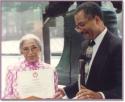
June 15, 1999 Rosa is awarded the Congressional Medal of Honor
October 24, 2005 Rosa dies at her home while napping, at the age of 92

PRAYER CHANGES THINGS
To my great relief, I was released from jail later that evening. Three days later, I was found guilty and ordered to pay a $14 fine. Although the fine was small, I knew the time had come to take a stand.

“Hurry up, Parks,” I called to my husband a few weeks later. “We can’t be late.”

I couldn’t wait to get to the Monday night prayer meeting at church. My arrest had caused our people to unite in protest against segregation. We decided to boycott the public bus system. This meant that no black person would ride a public bus until the laws were changed. This prayer meeting was also part of our protest. We knew that we needed God’s help to change the laws of our country. The 25-year-old minister, Martin Luther King Jr., was going to speak at our meeting tonight, and I didn’t want to miss a word he said.

We found a seat just in time. Reverend King looked so young, but when he began to speak, we forgot his age and heard only his message.

“Our country does not want to give us our freedom,” he said. “We must demand it. We must protest the law of the land because it violates God’s law. But violence is not the answer. It is our duty to protest segregation, but we must do so with dignity and Christian love. Join me in praying that the radiant stars of love and brotherhood will soon shine over our great nation.”

THE RESULTS OF MY ARREST
For 381 days, we stayed off the buses. Churches helped some people find rides to work, and many of us walked several miles to work for over a year. Some people even lost their jobs because they had no way to get to work, but still, we pressed on and did not resort to violence. Reverend King got lawyers who took our case to the U.S. Supreme Court.

They eventually agreed with us that black people did not need to give up their seats to whites. Although our protest was peaceful, we had still demanded justice based on God’s law. Because black people and some whites had stood together peacefully, the unfair laws of our country were changed. Racism did not disappear just because segregation was no longer legal, but things slowly started to improve. And I was proud to help that happen.Make It Real! Questions to make you dig a little deeper and think a little harder.

  1. Was Rosa right to shove the boy who pushed her? Was she right to disobey the law and refuse to give up her seat on the bus? Which one involved peaceful protest of wrong treatment?
  2. How is being forced to sit in a certain section of a bus the same as being pushed around? How do you think you would have reacted?
  3. What do you think Jesus means when he tells us to “turn the other cheek”? How does this apply to believers today?
  4. How would you feel if you couldn’t go to a good school just because of the color of your skin?
  • Suggested reading:
    • I Am Rosa Parks by Rosa Parks with Jim Haskins (Dial Books for Young Readers)
    • Quiet Strength by Rosa Parks with Gregory J. Reed (Zondervan Publishing House)

Create a website or blog at WordPress.com

Up ↑

Design a site like this with WordPress.com
Get started