Robert Raikes and How We Got Sunday School

Robert Raikes and How We Got Sunday School
Robert Raikes and How We Got Sunday School

Robert knelt beside his father’s grave after the funeral. Where would he go now? What would he do with his life? He’d always worked beside his father in the printing shop. But now those days were gone forever.

He mopped his teary face with a handkerchief and stood to his feet. Leaving the graveyard, Robert walked toward the printing shop that now belonged to him. He and his father had spent the last several years there, working on Gloucester, England’s newspaper, the Gloucester Journal.

Robert opened the creaky front door of the shop and slowly walked inside. The familiar smell of ink and machinery greeted him. Robert picked up the last copy of the Gloucester Journal published by his father that year, in 1757. “I’ll make you proud, Father,” he said aloud. “With God’s help, I’ll keep your Gloucester Journal alive.”

The days passed and Robert worked hard. He made the newspaper larger, improved its layout, and hired new writers. Soon even more people wanted to read the Gloucester Journal!

On his days off, Robert often visited prisoners in Gloucester. There he found the castoffs of society living in the most appalling circumstances. Most of them were sick or even dying from overwork. They lived in crowded, filthy spaces with almost no food. Even children were sometimes imprisoned along with the worst criminals. Robert felt sad to see these sick and starving prisoners. But what could one person do to ease the pain of so many? He decided to write about the terrible prisons in his newspaper.

The White Slaves of England
One evening he walked down St. Catherine’s Street to look for his gardener. Suddenly, he saw a group of ragged children. They looked just as poor and overworked as the prisoners he visited. A little boy in a tattered blue shirt swore as he tackled another boy half his size.

“Git your hands offa me!” the little boy yelled as the two of them wrestled on the cobblestones. Soon a crowd of children gathered around, noisily cheering.

“Hey, stop fighting!” Robert shouted at them as he pulled the two boys apart. “Go home, all of you.”

As the children walked away, Robert asked the gardener’s wife, “Who are these children?”

“Ah, pay no mind to them,” she answered. “Everyone calls them the white slaves of England.”

“Slaves?” asked Robert.

“They work 12 hours a day or longer in the mills and sweatshops,” the woman answered. “Most of their parents are in prison or dead.”

Robert cringed. He knew that if his father had died when he was little, he could have been one of these poor children. “When do they go to school?” he asked.

“School? They don’t go to school. They have to work to live.” she answered.

And Sundays are the worst. It’s their only day off and they run around like wild animals!”

Sunday Schools Started
Robert knew that the future was grim for these children who had to work all the time with no hope of an education. Worse yet, with no one to teach them the good news of the Gospel or how to live God’s way, they were likely to end up cold, sick and starving in the dreadful prisons. An idea began to form in Robert’s mind which he shared with his friend, Reverend Thomas Stock.

“Let’s start a Sunday school!” said Robert.

“School on Sunday?” asked Thomas.

“Yes, school on Sunday!” answered Robert. “We’ll teach them to read and write part of the day and teach them the Bible for the rest of the day.”

“It’s a great idea!” said Thomas.

Robert waited expectantly the first Sunday for the children to come to the new school, but only a few came.

“Marcy, why don’t more of the children come to Sunday school?” he asked the little red-haired girl with freckles.

Marcy looked down. “Cuz our clothes ain’t no good,” she answered.

“Now I understand,” answered Robert. “Well, you tell your friends that all they need is a clean face and combed hair, okay, Marcy?”

Marcy smiled. “You’re nice.”

Robert squatted down beside her. “I’ll tell you what, Marcy, I think you’re nice, too. Here’s a penny for coming to class today. If you work very hard and learn your lessons, you’ll get a special reward.”

“Really?” asked Marcy, her sparkling eyes fixed on the candy Robert held in his hand. “I’ll do my very best!”

Sunday Schools Stop Crime
It didn’t take long until Robert Raikes and Reverend Thomas Stock had 100 children ages 6 to 14 attending their Sunday schools. Even though the children were taught only one day a week, their behavior began to improve. Now they had something to look forward to after working so hard every day. The policemen of the city told Robert that the children weren’t stealing and fighting like before.

Robert waited three years to see if his Sunday schools were a success. Then he printed a story about the new Sunday schools. Soon, about 4,000 new Sunday schools were started in towns all over England. Robert even used his printing press to publish reading books, spelling books, Bible study books, and copies of the Scriptures for the Sunday schools.

The World Marches On
One Sunday, Thomas and Robert walked up the street to the Sunday school building. Thomas said, “Robert, your father would be proud of what you’ve done with his newspaper. He’d be proud of your Sunday schools, too, although you know–everyone is calling you ‘Bobby Wild Goose and his ragged regiment.'”

Robert laughed. “I’ve been called worse names than ‘Wild Goose,’ I think,” he answered.

Robert looked around at the hundreds of children now attending his Sunday school and his face grew quite serious. “Thomas, my father died and his father before him died. One day we will grow old and die, too. But the world won’t die with us. The world marches forth on the feet of little children.”

Thomas patted his friend on the back. “So it does, Robert. So it does.”Make It Real! Questions to help you dig a little deeper and think a little harder.

  1. Can you imagine working 6 days a week, up to 12 hours each day? Why would these overworked, poverty-stricken children spend their one free day going to school?
  2. Why were the children hesitant to come to Sunday school at first? What are some things that keep children from coming to Sunday school today?
  3. The new Sunday schools taught two kinds of lessons. They taught reading and writing part of the day and Bible lessons the rest of the day. Which do you think was more important for helping the children and why?
  4. What difference has attending Sunday school made in your life? Have you ever invited a friend to Sunday school?
  5. Many other adults were aware of the white slaves of England, but did nothing to help. Why do you think Robert Raikes chose to do something to help the children? What resources did Robert have that he could use to further this cause?


Abrahán… amigo de Dios

Abrahán mirando las estrellas en el cielo

Abrahán… amigo de Dios

UNO de los lugares adonde la gente fue a vivir después del Diluvio se llamaba Ur. Ur llegó a ser una ciudad importante con casas bonitas. Pero la gente de allí adoraba dioses falsos. Eso hacían en Babel también. La gente de Ur y Babel no eran como Noé y su hijo Sem, que siguieron sirviendo a Jehová.

Al fin, 350 años después del diluvio, el fiel Noé murió. Solo dos años después nació el hombre que ves en este cuadro. Era una persona muy especial para Dios. Se llamaba Abrahán. Vivía con su familia en aquella ciudad de Ur.

Un día Jehová le dijo a Abrahán: ‘Deja a Ur y tus parientes, y ve a un país que te voy a mostrar.’ ¿Obedeció él a Dios y dejó atrás todas las comodidades de Ur? Sí. Y porque Abrahán siempre obedecía a Dios se le llegó a conocer como el amigo de Dios.

Parte de la familia de Abrahán salió con él cuando él se fue de Ur. Su padre Taré salió. También su sobrino Lot. Y, claro, también su esposa, Sara. Con el tiempo todos llegaron al sitio llamado Harán, y Taré murió. Estaban lejos de Ur.

Después Abrahán y su casa salieron de Harán y llegaron a la tierra llamada Canaán. Allí Jehová dijo: ‘Esta es la tierra que daré a tus hijos.’ Abrahán se quedó en Canaán y vivió en tiendas de campaña.

Dios empezó a ayudar a Abrahán y éste llegó a tener grandes rebaños de ovejas y otros animales y cientos de siervos. Pero él y Sara no tenían hijos suyos.

Cuando Abrahán tenía 99 años, Jehová dijo: ‘Te prometo que serás padre de muchas naciones de gente.’ Pero ¿cómo podía llegar a ser esto, cuando Abrahán y Sara eran muy viejos ahora para tener un hijo?

Génesis 11:27-32; 12:1-7; 17:1-8, 15-17; 18:9-19.

Richard Wurmbrand: The Voice of the Martyrs

Richard Wurmbrand: The Voice of the Martyrs

Richard Wurmbrand: The Voice of the Martyrs

Eleven-year-old Michael tried to be brave as he followed the guard down the prison hallway. The echo of their footsteps stopped when they reached the large room where several prisoners huddled together. He looked around nervously. Finally his eyes found hers.

“Michael!” cried his mother. Michael felt a lump in his throat when he saw her. Her shabby uniform hung loosely on her thin body. She was so dirty, he could hardly recognize her. Yet when their eyes met, a familiar joy filled them for the first time in two years. Michael took a deep breath, trying to hold back the tears.

“Michael!” She called again across the room. “Believe in Jesus with all your heart!”

Before he could respond, the guards were dragging her away from him, angry at her words of faith. Tears rolled down his cheeks, and he sobbed as she disappeared around the concrete wall.

Seeing his mother’s unwavering passion for Jesus despite being in prison, the boy made a life-changing decision. It was at that moment that Michael Wurmbrand welcomed Christ into his own heart.

It was 1952 in Communist Romania. Michael’s mother, Sabina, was in prison because of her faith. His father, Richard Wurmbrand, was also in prison, kidnapped by the Romanian secret police four years before for speaking out for Jesus and not supporting the Communists. All over Romania, Christians like them were being arrested and tortured in Communist prisons.

Despite the danger, some Christians continued to meet together. There was no church building, steeple, or sign to welcome visitors. Instead, believers had to find new ways to gather for meetings.

Desperate Times, Clever Measures
The doctor stood on the busy street corner, pretending to read his newspaper. Plenty of young men walked past, but none had the tattered brown umbrella he was looking for. Finally, he saw the signal. The doctor folded his newspaper and tucked it under his arm. Keeping a distance between them, he followed the young man with the tattered brown umbrella down the street and around the corner.

A few blocks away, the young man disappeared into a stairwell. The doctor walked past, stopped and looked around, then quickly followed the young man inside. He hurried up the stairs and through an open door, which shut softly behind him. He was safe in the secret meeting place with a group of believers—the underground church!

Michael stood there next to his mother, Sabina. It was a year after his brief visit with her, and he was overflowing with thanks for her release from prison. They waited as the young man looked through the peephole in the door. A moment later, he straightened and said, “It’s all clear, we can start the meeting.”

“What news do you bring of Richard?” Sabina asked. Michael waited, holding his breath for the answer.

“He’s alive.” The doctor replied.

“Oh, praise Jesus!” Sabina whispered.

Michael stepped forward, his eyes glistening with tears. “Is it really true?” he asked hopefully.

“Yes, son.” The doctor smiled. “Your father is alive.”

Michael’s mother pulled her son into a tight embrace and both wept with joy.

Then everyone took turns praying. One prayed for Richard’s protection and release from prison. Another prayed that God would protect the underground church. They even prayed for the Communists. They continued praying all night, praising God for helping them through such hardships.

Even the Walls Speak of Faith!
In his cell, Richard Wurmbrand was on his knees, too, praying for his fellow Romanians who were also in prison—those who held strong in the faith no matter what, as well as the weaker ones who would give in to their fear and even turn in their own families to avoid more torture.

He prayed also for his wife and son, though he wasn’t sure if they were still alive. The last he had heard, Sabina was in prison and was forced to work, digging a canal. He asked God to keep his family strong in faith.

A tapping on the wall interrupted Richard’s prayers. At first he thought it might be a mouse scurrying about, but the tapping continued and a pattern began to emerge … dot, dot, dash, dot, dash, dot. Morse code! Someone in another prison cell was trying to communicate with him! Richard knelt beside the wall and tapped back. The two prisoners began passing the time in “conversation.”

Before long their friendship grew, and Richard was able to share his faith with this man. Finally, without ever hearing his voice or seeing his face, Richard used Morse code to lead this man to Christ.

Even though he was starved, tortured, beaten and abused, Richard Wurmbrand held to his faith through 14 years in prison. Despite those horrible circumstances, God used him to help many hurting people. Finally, in 1965, he was released and reunited with his family. Knowing he could be imprisoned again, Richard still looked forward to preaching the Word of God in Romania once more. But God had other plans.

The World Must Know!
“You must go! Leave the country!” pleaded a woman. Richard and his wife, Sabina, exchanged a long look. Twenty-three-year-old Michael stood silently by, waiting for the answer.

“I have not endured all these scars only to turn and run away. I am needed here, to be a voice to the Romanian people for Christ!” Richard said with frustration.

“We need you even more to be a voice for us in the outside world,” a man said, his hand on Richard’s shoulder. “No one outside the country really knows what the Communists are doing to our people!”

Richard began to imagine how God could use him if he shared the story of Romania’s suffering Christians in the United States. If Christians and governments in the free world understood how the Communists were secretly torturing believers, maybe they could help.

The Voice of the Martyrs
Richard looked out the airplane window as the buildings of Communist Romania grew smaller. With Sabina and Michael at his side, he was on his way to freedom in America. He thought about the secret police and their last threat: “If you speak against Communism, we’ll hire a gangster to kill you for just $1,000.”

But Richard knew that God was with him. He was not afraid. He wanted to be a voice for his country and for the oppressed Christians. He wanted to be a “voice of the martyrs” to the free world.

In the years that followed, Richard’s voice reached the free world with stories of Christians suffering for their faith. Most people thought that Christian persecution was a thing of the past. Richard’s stories were shocking and provoked Christians to be more bold and active in their faith. The ministry he began, The Voice of the Martyrs, still helps persecuted Christians around the world and educates others about their struggles.Make It Real! Questions to make you dig a little deeper and think a little harder.

  1. Christians are still being persecuted and even killed around the world today. How could you help them? Check out http://www.kidsofcourage.com for ideas.
  2. In many places where Christians are persecuted, the church is growing rapidly. Why might that be?
  3. Have you ever had someone make fun of you for your faith? What did you do?
  4. What might comfort someone who is suffering from severe persecution?
  5. The second Sunday in November is set aside as “International Day of Prayer for the Persecuted Church.” Find this day on your calendar. How can you help your family and church participate in this day of prayer this year?

Suggested reading:

  • MacKenzie, Catherine. Voice in the Dark: The Story of Richard Wurmbrand. Christian Focus Publications, 1997.

El primer arco iris

El primer arco iris en el cielo; el arca de Noé en tierra seca

El primer arco iris

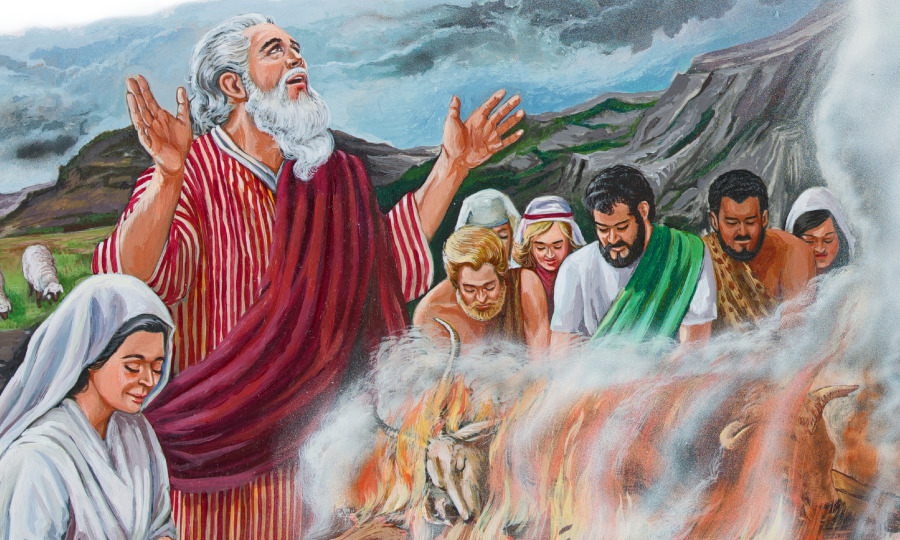
¿SABES lo primero que hizo Noé cuando él y su familia salieron del arca? Él hizo una ofrenda o regalo a Dios. Míralo haciendo esto en el dibujo de abajo. Noé ofreció este regalo de animales para dar gracias a Dios por haber salvado del gran diluvio a su familia.

¿Crees que a Jehová le agradó el regalo? Sí, le agradó. Y por eso le prometió a Noé que nunca más destruiría al mundo con un diluvio.

Noé y su familia haciendo una ofrenda de gracias a Jehová

Pronto toda la tierra se secó, y Noé y su familia empezaron una nueva vida fuera del arca. Dios los bendijo y les dijo: ‘Tienen que tener muchos hijos. Tienen que aumentar hasta que haya gente viviendo por toda la Tierra.’

Pero después, cuando la gente oyera acerca del gran diluvio, pudiera ser que temieran que un diluvio como aquél sucediera otra vez. Por eso Dios dio algo que le recordaría a la gente Su promesa de nunca más cubrir con agua toda la Tierra. ¿Sabes lo que dio para que recordaran eso? Fue un arco iris.

Muchas veces el arco iris se ve en el cielo cuando el Sol brilla después de una lluvia. El arco iris puede tener muchos bellos colores. ¿Has visto uno alguna vez? ¿Ves el de la lámina?

Esto fue lo que Dios dijo: ‘Prometo que nunca más será destruida toda la gente y los animales por un diluvio. Estoy poniendo mi arco iris en las nubes. Y cuando el arco iris aparezca, yo lo veré y recordaré esta promesa mía.’

Por eso, cuando veas un arco iris, ¿qué debes recordar? Sí, la promesa de Dios de que él nunca más destruirá al mundo por medio de un gran diluvio.

Génesis 8:18-22; 9:9-17.

Richard Allen: Freedom Without Equality Is Not Freedom at All

Richard Allen: Freedom Without Equality Is Not Freedom at All

Richard Allen: Freedom Without Equality Is Not Freedom at All

“You must leave this section now.”

“Wait until the prayer is over and I will go,” softly replied the black man, kneeling in prayer.

“No, you must go now or I will call for aid and force you away,” warned the trustee. Hearing the commotion, black Methodist preacher Richard Allen, a former slave, opened his eyes to see his friend, Absalom Jones, being forced from his knees. For Allen this was the last straw. He could no longer serve in a church that did not welcome his people as equals. Over the months, the black members had been pushed farther and farther back in St. George’s Methodist Church. On a cold Sunday in November 1787, Richard Allen and all the black church members stormed out of St. George’s, vowing never to return.

Life as a Slave
I was born in Philadelphia, Pennsylvania, in 1760. Even though my family and I were slaves, we enjoyed a fairly happy life. Our owner, the lawyer Benjamin Chew, was a good man. My family worked inside his Philadelphia home and was treated well. But when I was seven years old, our lives changed without warning. Master Chew called us to the parlor. “You all know I treasure each of you, but my business is failing and some changes must be made.” What followed was a blur. My family was being sold. Momma and Papa tried to comfort me saying, “Child, it’s gonna be alright,” but I could tell they too were scared. They had seen other slave families split up, never to see each other again. We were all happy when a Delaware farmer bought our whole family.

Working Master Stokeley’s plantation was hard work, but he was also a good man and we were happy to be together. Our worst fears came true after about ten years, when Master Stokeley called us together for an announcement. “The plantation is in deep debt. In order for it to survive, I’m gonna have to sell off some of you.” My momma, two of my brothers and a sister were sold. As was often the case, we never saw or heard from them again. My papa and the rest of us were heartbroken. In confusion and grief I searched for answers.

The Secret that Could Not Be Hidden
We had to wait for the cover of darkness before finding our way through the deep woods. No one must know of this secret meeting. I followed the group, wondering what I would hear from the white preacher. When the clearing came into view, I could hear his message about the evils of slavery and how God would judge slave owners. Of course, that quickly got my attention. He said that even when slaves were treated well, the very practice of owning another human being was still evil. My thoughts swirled with the idea of freedom–freedom to be and go and do as I pleased. But then the preacher said something I had never heard before. He said that God loved me so much He sent His Son to earth to die for me. In God’s eyes, I was a sinner, in need of forgiveness, just like the slave owners. The preacher’s message shook me to my very being. My soul agonized for days. Finally, I wholeheartedly asked God to take over my life and use me as He pleased. I would still serve Master Stokeley, but God would be the master of my heart.

Church Will Make Slaves Lazy
“You let those slaves off from their work to go to church, and they will become even lazier.” Master Stokeley’s neighbors had begun to spread this warning. My brother and I decided to work extra hard to prove them wrong, and it paid off. Master Stokeley was overheard telling his neighbors, “My Christian slaves are my hardest workers.” That being so, he agreed when I asked him to let traveling preachers come to the plantation to preach to the other slaves. Master Stokeley even came to hear one of the preachers himself. He didn’t know that the words of the preacher would change his life, too. I will never forget Master Stokeley’s reaction when the preacher said that God was going to hold slave owners accountable on Judgment Day. He did not know what to do. He was too deep in debt to just let us go free. But after becoming a Christian, he knew he had to find a way to set us free.

Free at Last!
Master Stokeley said I could go free if I saved the $2,000 that I could be sold for. After about three years of working extra jobs, I finally earned my freedom papers! As I traveled I told those I met how much God loved them and wanted them to live righteously.

Richard Allen the Preacher
It was quite a surprise when the leaders of St. George’s Methodist Church in Philadelphia asked me to move there to preach at their church. Even though people thought I spoke with great fervor and authority, it was unheard of for a black man to preach in a white church. Sure, there were many freed blacks in the church, but most of the members were white. I accepted the position, preaching with all my might. My messages drew large numbers of blacks. Because of this, white members complained. They forced the black members to sit or stand in the back of the church. The day the blacks were forced to move from the main floor to the newly built balcony during prayer, I knew it was time to find a church where we could worship freely. Maybe this was the reason God brought me to Philadelphia in the first place.

The First Independent Black Church
I purchased land in downtown Philadelphia at 6th and Lombard Streets for what I hoped would be the future site of the first Black Methodist church. On July 29, 1794, we held our first church service in Bethel “Methodist” Church, a converted blacksmith’s shop. Loud “amens” and clapping filled the air where horseshoes and halters once hung. There were just ten members at first, but within a few years, our membership grew to over 100. By 1813, the number had grown to 1,272. The leaders of St. George’s were not happy with our independence, so for years they tried to take control of the church. In 1816, nearly 20 years after we stormed out of St. George’s, we were granted legal status as Bethel African Methodist Episcopal (AME) Church. It became the first independent black denomination in the US.

Post Script 
Richard Allen (1760 – 1832) and his friend Absalom Jones also formed the Free African Society to help freed blacks integrate into society. They spoke against slavery and gave food, clothing, and shelter to the needy. Allen also founded a day school, fought against the move to return freed slaves to Africa, published numerous articles, and operated successful businesses. As a result, he was able to serve the AME church without ever collecting a salary.

Make It Real! Questions to make you dig a little deeper and think a little harder.

  1. Even though the preacher at the secret meeting was white, Richard Allen was open to his message. Are you surprised that he believed what the preacher had to say?
  2. Why would the slave owners think slaves would become lazier if they attended church? Why is it important for Christians today to work hard? See Ephesians 6:7Æ8.
  3. The Methodist church worked hard to help free slaves and even invited Richard Allen to preach there. Why did they continue to treat blacks as unequals? Look up Galatians 3:28.
  4. Freed slaves had to keep their freedom papers with them at all times. How is this another form of bondage?
  5. Do you know of examples today where some races or nations are not treated as equals?
  • Suggested reading:
    • Richard Allen by Steve Klots (Black Americans of Achievement series, Chelsea House Publications)

Polycarp: Courage on Display Part 1

Polycarp: Courage on Display Part 1

Polycarp: Courage on Display Part 1

URGENT ESCAPE
“Pastor! Pastor!” I ran breathlessly into the church where I found Bishop Polycarp praying on his knees. Why didn’t he jump in alarm at the fear in my voice? Instead, he continued to pray while I waited impatiently. Finally, he raised himself up and looked at me with his kind eyes.

“Yes, Alpay, my son. What is it that has you so agitated?”

I gazed into the elderly face that I had loved since I was but a boy.

“I heard it in the marketplace. The Romans say the Christians have angered their gods. They’re coming after you since you are the Christian leader in Smyrna.”

He gave a little sigh and put his hand on my shoulder. “Yes, I have heard this as well.”

My temples throbbed. Why was he so calm? “You must leave at once, or they’ll take you to the arena and throw you to the beasts!”

“Leave my church? And where shall I go?” he asked, still calm.

“I have made arrangements to hide you at a nearby farm, but you must quickly gather your things.”

He smiled as if to reassure me. “I have little to take but my prayers.”

Finally, we fled into the countryside where a family awaited our arrival. The firelight in the farmhouse welcomed us, as if this were merely a pleasant social call. I knew better, though. Our purpose for being there was to keep Smyrna’s beloved bishop alive. I hoped to keep myself in that state as well.

A VISION OF FIRE
The following day, as Bishop Polycarp was lying on his bed praying, he fell into a trance. Moments later, he woke with a start.

“I just saw my pillow burning with fire,” he said.

Those of us with him cast fearful glances at each other.

“What does this mean?” the lady of the farm cried.

“I shall be burned alive.”

She scolded him. “You mustn’t say such a thing!”

I was startled by his vision and his composure. I became even more determined to keep him alive. That night, a messenger ran to the farmhouse.

“You must leave again! The soldiers are tracking us down!”

I hurried Bishop Polycarp to yet another farmhouse. While he rested, I warmed myself at the hearth, and tried to calm two of the house servants.

“Aren’t you afraid?” one of them asked.

“Yes, especially when I remember his vision of being consumed by the flames,” I said, drinking deeply of hot broth they had brought to me. “But my pastor’s peace gives me courage.”

“I wish I could be like that,” said the other servant. “I fear that if the time comes, I may not remain faithful.”

“If I can be at peace, you can as well,” I assured him.

CAPTURED
The moment I dreaded arrived that evening with shouts and soldiers coming up the path carrying swords and torches. How had they found us? When the farmer answered the urgent summons, two soldiers burst in.

“Where is the bishop?” they demanded.

The farmer stalled. “Bishop?”

“We know he is here, so don’t play games with us.”

Hearing this, I rushed up the stairs to alert the Bishop. “Pastor, the soldiers have come for you!” I whispered. “Hurry, we’ll slip out the back!”

He shook his head. “God’s will be done.”

I followed as he went downstairs to greet his pursuers in the name of Christ.

“Ah,” he said, “you must be tired from your journey.” Bishop Polycarp startled us by treating these thugs as if they were honored guests. The soldiers appeared shocked at his kindness. “Well, yes, we are.”

“Then come and have some food,” he invited. “You will feel better. My dear hosts will see to your well-being and it will give me some time to pray here by the fire.” While they ate, Bishop Polycarp poured out his heart to God for what seemed like all the churches he’d visited and all the people he’d ever met, including me. “Protect him, O Lord, by your great might,” he said. “Keep Alpay strong to serve you.”

I had been so afraid. But now, though I knew what lay ahead for him and possibly even for me, I felt peaceful because of Jesus. The soldiers took him away after their meal, and I went along, his servant to the end.

“Do not worry, Alpay,” he said. “The Lord himself told us, ‘Do not be afraid of what you are about to suffer. . . Be faithful, even to the point of death, and I will give you the crown of life.'”

LAST CHANCE AT LIFE
As we went along to his trial, the local magistrate and his father called out, “Come, Bishop Polycarp! Come up and speak with us.” Soldiers helped him into their carriage.

The magistrate and his father tried to persuade Polycarp. “All you have to do is deny your faith. Then you will be spared.”

“Ah, but I could never disown my Lord.”

“Then be done with you, fool!” At this, they shoved Polycarp out of the coach, and I ran to his side as he landed with a jolt.

“Are you all right, Pastor?” I asked.

He rubbed his shin. “I am fine.”

We walked on slowly until we entered the stadium. The rowdy crowd shouted for “entertainment.” Just then a voice called out, “Be strong, Polycarp, and play the man!”

I looked around but did not see any speaker. Others also were straining to see who had said these words. I concluded that the voice was from Heaven, and I took courage in spite of what was to come.

The soldiers presented Bishop Polycarp to the proconsul, a cruel-faced man who yelled to be heard above the noisy throng. “Curse Jesus, and I will spare you!”

The idea made my skin crawl. How could anyone who had loved our Lord ever curse him?

My dear pastor looked compassionately into the man’s searing eyes. “Fourscore and six years have I served Him,” he said, “and He has done me no harm. How then can I curse my King that saved me?”

“So be it!” he called out. “Carry him to the beasts!”

A soldier stepped forward. “Master, it is late, and the beasts have gone down for the night.”

Appearing annoyed, the proconsul waved his hand with a large ring on it. “Then burn him!” I drew in my breath as I thought of the bishop’s dream in which his pillow burned. My worst fears were about to come true.

The crowd, eager for the deaths of more Christians, gathered wood for the fire. I watched as Bishop Polycarp’s lips moved in prayer, his face aglow from the light of Christ within him. He caught my eye and nodded. Like the children of Israel in the fiery furnace, Polycarp’s body remained unharmed by the flames. In the end, a soldier stabbed him. Throughout, my dear pastor’s face looked like that of an angel. Every year, on the anniversary of his death, believers gathered to thank God for Polycarp’s life among us. He taught us to fear nothing, even death.Make It Real! Questions to make you dig a little deeper and think a little harder.

  1. Polycarp knew he was being hunted and might die for his faith. How did God comfort and encourage him even as he faced death?
  2. Look up the word “martyr.” Do you think there are Christians being martyred in the world today?
  3. Have you ever suffered for being a Christian? How did you respond?
  4. If someone really, truly believes in Christ in their heart, would it be possible for them to deny their faith? Why or why not?
  5. Did you know that Christians are still being persecuted in some areas of the world? Visit the website http://www.persecution.net to learn more about this. What can you do to support persecuted Christians?
  • Suggested reading:
    • The Crown of Fire: Polycarp Bishop of Smyrna by William C. Newsom (Mass Market Paperback)

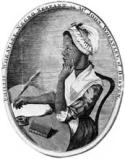
Phillis Wheatley: A Slave No More

Phillis Wheatley: A Slave No More

Phillis Wheatley: A Slave No More

Captured and Chained!
Screams and shouts echoed through my village as white-skinned men chained and forced us into the boats.

“Mama!” I cried as I was dragged away.

She reached across the distance, tears pouring down her beautiful face as she sobbed, “Baby!”

Then I saw her no more. I crouched in fear with the other captives, wondering what was to become of me.

I was seven years old.

Sold in a Slave Market
Two months later we reached land. Still in chains, I staggered to the shore, grateful for solid ground. I soon found myself an object of ridicule in the 1761 slave market.

“Look at that scrawny Negro!”

“You couldn’t pay me to take that one!”

I felt humiliated, emptied of all I had been. Once I was a beloved daughter and sister, but what was I now? These people treated me like worthless garbage.

Finally the man yelled, “Sold!”

I wasn’t sure what that meant, but the heavy chains were removed from me and I was given a ragged carpet to cover myself. A smiling man and his wife led me to a horse-drawn carriage.

A New Life
We traveled a few miles to an enormous dwelling with glass windows. My eyes took in colorful carpets and curtains and dark furniture gleaming in the mid-morning light. A faint ticking sound came from a box in the corner. When it chimed loudly, I jumped.

The man chuckled. “That’s just a clock,” he said. He looked at his wife. “I think you made a good choice, Susannah. No one else wanted this poor little girl. She is sure to become a good companion for you.” The woman held out her hands. I saw a light in her eyes, and I felt warmed for the first time in weeks.

“Don’t be afraid, child. We will take good care of you. You will live with us, and no one will hurt you again.” She rose. “Now we need to get you cleaned up.”

I thought of my parents. They had taught me that I mattered, that I was a gift. Maybe these people would treat me as if I was worth something. Perhaps my new life with the Wheatley family in Boston, Massachusetts, would be bearable.

My Very Own Book
“Phillis! I didn’t realize you were there.”

I lowered my gaze. As I cleaned the Wheatley’s home, I often became distracted watching their daughter Mary at her studies.

“You’ve done this before,” she said. “Come here.”

Hesitantly I moved closer, smelling her lavender cologne.

“This is a book,” she told me. “You learn about things in them.”

I nodded.

“This one is the Bible. My parents have read it to me since I was real little.” Her blue eyes glowed. “Would you like me to read it to you?”

“Yes, Miss!” I could barely contain myself.

She patted the chair next to hers.

“Sit down,” she invited.

Each day, Mary read to me and taught me the alphabet. I learned quickly. I was afraid, however, when the head servant caught us.

“Phillis Wheatley!” Her eyes blazed. “Come here at once!”

She took me to Mistress Wheatley.

“Ma’am, I caught Phillis sitting with Miss Mary, reading. Slaves ain’t supposed to read.”

Mrs. Wheatley smiled. “That’s okay, Susan. Phillis has a gift for language, and I want her to develop it.” Within a year, I had mastered English. I was reading about God and His Son, Jesus Christ, and my heart was drawn to the Savior. One day the Wheatleys took me to hear the dynamic preacher George Whitefield, and I gave my heart completely to Jesus. The Wheatleys had made me a part of their family, and now I was part of God’s family!

“You Never Wrote That!”
I loved all my studies, but I especially enjoyed learning about heroes of the past. I wanted to write about people in my time who were doing great things in God’s strength. When I was 13, I wrote my first poem. When Pastor Whitefield died in 1770, I composed an elegy to honor him.

“This is superb!” Mrs. Wheatley exclaimed. “I’m taking this to the newspaper immediately.”

I thought she was exaggerating. Would anyone really want to read my poetry? But Mrs. Wheatley was right. The newspaper published my poem and people actually liked it! Encouraged, I continued to submit poetry for publication, but not everyone appreciated this.

“Are you trying to tell me that a slave wrote these?” they asked.

“No Negro could write at all, let alone poetry!” some accused.

Mrs. Wheatley found me crying one day. “What is it, child?” She said as she sat next to me.

“Those people think I’m worthless and stupid because of my skin color.”

She shook her head. “Phillis, they don’t understand. God made you. He gave you your gift and He is pleased with you.”

After that, she approached famous people who knew me, and they signed a document. It said, “We whose Names are under-written, do assure the World . . . that the Poems specified in the following Page were . . . written by Phillis, a young Negro Girl. . . She has been examined by some of the best Judges, and is thought qualified to write them.” Among the signers were the Massachusetts governor and lieutenant governor, John Hancock, the Rev. Samuel Mather, and five judges. They helped me believe in myself.

A Book of Poetry
One day Mrs. Wheatley told me, “Your poems should be collected in a book so more people can read them.”

When no one would believe that a slave could write, she reassured me. “Phillis, God has given you an extraordinary gift, and He will open doors.”

Some lines from Phillis’ poem “On the Death of the Rev. Mr. George Whitefield.”Behold the prophet in his tow’ring flight!
He leaves the earth for heav’n’s unmeasur’d height,
He prayed that grace in ev’ry heart might dwell,
He longed to see America excel;
He charg’d its youth that every grace divine
Should with full lustre in their conduct shine.

Help came in the form of a great lady, Selina, the Countess of Huntington, in England. She had been Mr. Whitefield’s friend. To my surprise, she sent for me.

Once again, I crossed the expanse of ocean, this time as a first-class passenger. In London, the Countess treated me as a complete equal in her grand home. But all the grandeur paled in comparison to the joy I felt upon first seeing the leather-bound copy of Poems on Various Subjects Religious and Moral. My poems on great people of faith and on God’s redeeming work through Jesus Christ were in print for many people to read!

I Meet George Washington
Back in America, I received many letters and visits from those who were now enjoying my poetry. It was the time of the American Revolution, and I wrote many poems about liberty. I dedicated one to General George Washington. When he read it, he sent for me! As I curtsied, he smiled.

“So this is the poetess,” he said. “I had not realized you were so young.”

“Yes, sir.”

“I thank you for the kind poem you wrote about me.”

“It is all true,” I said, meeting his gaze.

“As are you,” he replied. “As are you.”Make It Real!
Questions to make you dig a little deeper and think a little harder.

  1. How did God protect Phillis when she was captured?
  2. Though the Wheatleys treated Phillis well and gave her the opportunity to learn, she was still a slave. Do you think she doubted her own worth?
  3. How did Phillis help people to see that skin color has no effect on a person’s gifts and abilities?
  4. What special talents has God given to you? How can you use your talents to serve Him?
  • Suggested reading:
    • Phillis Wheatley by Victoria Sherrow (Chelsea House Publishers)
    • A Voice of Her Own by Kathryn Lasky (Candlewick Press)

Perpetua: Her Prison Became Her Palace

Perpetua: Her Prison Became Her Palace

Perpetua: Her Prison Became Her Palace

A young woman named Perpetua stood firm in her faith in the year AD 203 in Carthage, North Africa. Because she kept a diary, we know much about her ordeal. This story is based on her diary.

“I Am a Christian”
It was simple, really. All I had to do to get out of prison was to offer a small sacrifice of incense to the pagan gods. Just a pinch of incense to honor the emperor Septimus and I would walk free. My father insisted that something this small should be easy for me to do. Why was I being so stubborn?

“Father, do you see this pitcher?” I asked as I pointed to the water pitcher on the table.

“I see it,” he replied.

“Can it become a dog?”

“Of course not!” he exclaimed, looking at me as if my arrest had scrambled my brains. “It is a pitcher!”

“You’re right. It cannot become something it is not, and it is ridiculous for me to call it something else. So it is with me, Father. I am a Christian and cannot be called anything other than what I am. A Christian.”

At this, my father’s temper rose and he stormed from the prison cell in a fury. Once again, my convictions just didn’t make sense to him.

Obedience
Deep anguish pierced my heart as I sank down to the hard stone floor. How could I cause my dear father so much pain? I thought of how well he treated me over the years. Beautiful robes of the finest silk, expensive jewels to adorn my hair, and the choicest delicacies were all mine. My well-to-do father would spare no expense when it came to his only daughter.

Of course, Father expected obedience in return. All good Roman girls were taught to obey, and I was no exception. Disobedience simply wasn’t an option. I had been taught to be loyal at all costs, and until now I had always done what was expected. It was easy to do since I adored him so. But now my heart ached, for I had no choice but to go against my father’s command.

You see, my loyalty to my father was very strong, but even stronger was my loyalty to my Lord and Savior. I had recently learned that Jesus died for my sins, and I had committed my life fully to Him. Love for Jesus filled my soul, and joy filled my heart. It wasn’t long, however, before the authorities learned of my faith. They came in the evening and pulled me and my servant girl, Felicitas, also a Christian, out into the street. We were paraded in shame down the streets of Carthage to the prison.

Dungeon or Palace?
“Felicitas! Come sit here on this bit of straw and rest for a while,” I said.

“Oh, Lady Perpetua! It’s so odd for you to be fussing over me!”

“Felicitas, please don’t call me that anymore! In Christ we are all equal. You are no longer my slave, but rather you are my sister and dear friend! Come now, you must get plenty of rest for the sake of your unborn baby.”

The dark dungeon prison was a far cry from my comfortable Roman-style home. The heat and stench were nearly unbearable. Hunger overtook my body, but God sustained me and the other prisoners who were Christians. We cried out to God for relief, and took great comfort in prayer and song and in speaking God’s Word. God even gave us visions and dreams that encouraged us in our journey. True relief came my way one special day.

The day they allowed my infant son to come and stay with me, I felt the prison had suddenly become like a palace! I no longer minded the horrible smell or the oppressive heat — I had my sweet little baby to hold and to care for. I fed him and held him and sang to him our songs of faith. Night and day I prayed for him, trusting God for his future.

My case was before the Roman official, Hilarion, and my father had returned. His tears dropped on my hand as he begged me to abandon my Christian beliefs. “If you won’t do it for me, then consider your infant son! Surely you don’t intend to leave him behind for the sake of this new god you have found.”

My stomach wrenched in pain as I thought of my family and my own sweet son. But no matter what, I could not dishonor my Savior. I tried to comfort my father. “Whatever God wants to happen to me will happen. My strength doesn’t come from myself, it comes from God.”

Finally, the sentence was handed down. I was condemned to the arena and the wild beasts. I would be called upon to give my life for Jesus, just as He gave His life for me. I knew He would strengthen me for what I must do.

The other Christians were also sentenced to death. We praised God when Felicitas’ baby was born healthy and adopted by another believer. God also provided for my baby to be cared for by my family.

In our final days together, we prayed, sang and encouraged one another. We even celebrated the Lord’s Supper on our last evening. God gave us the strength we needed to stand firm in our beliefs. We rejoiced knowing that our struggle would soon be over and we would be together in the presence of our Savior!

That’s as far as Perpetua’s writing takes us. Other Christians added the rest of the story.

Into the Arena
When the believers entered the arena on the day of their victory, their faces reflected great joy! They had finally begun their journey from the dark prison to the light of God’s presence.

The crowd became very angry, demanding that the gladiators whip those who were to die. Instead of becoming angry, the prisoners rejoiced that they were able to share in the sufferings of Jesus.

A mad cow was set loose upon Perpetua and Felicitas. Perpetua was thrown to the ground first and then the cow charged toward Felicitas. Though her gown was torn, Perpetua was not hurt. She covered herself with her torn garment and pinned her hair back up. It seemed she wanted to look her best as she prepared to meet her Savior. The two friends embraced, awaiting the end.

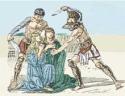
As the crowd demanded to see their death, Perpetua looked into the eyes of the gladiator who was to take her life. His hands trembled so badly he could barely hold his sword. Perpetua reached out and slowly guided the sword for him. As she whispered the name of our Savior, she left this world and entered into the everlasting happiness of God’s presence.

Make It Real! Questions to make you dig a little deeper and think a little harder.

  1. Why did Perpetua refuse to offer the incense to the pagan gods? What would you have done?
  2. In order to obey God, Perpetua felt she had to disobey her father. Was this a good choice? Why or why not?
  3. Pagans worshipped idols. Exodus 32 tells how even the Israelites made a golden calf idol while Moses was on Mount Sinai getting the Ten Commandments from God. What did they do with it? What was God’s reaction?
  4. Are there idols or false gods that people worship in place of God today?
  5. Why do you think Perpetua’s story is still being told almost 2,000 years later?

Create a website or blog at WordPress.com

Up ↑

Design a site like this with WordPress.com
Get started