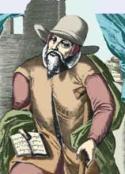
Patrick: From Slave to Missionary

Patrick: From Slave to Missionary
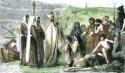
Patrick: From Slave to Missionary

I sat alone, always alone, inside a small cave during one of Ireland’s frequent thunderstorms. Although I was protected from the rain and lightning, I knew that a pack of wolves or warriors could attack and I would be trapped, with only one way to escape.

I reached for the few berries I had found in the wilderness yesterday. To take my mind off my hunger, I squeezed my eyes shut and remembered my parents’ faces. I wondered if they too had been captured, or if they were still alive in Britain.

Captured by Irish pirates
I shivered at the memory of the day fierce pirates, armed with horned helmets and spears, attacked our home. I had been captured and taken to Ireland where I was sold to a cruel warrior chief who killed any slave foolish enough to try to escape.

Watching my only companions, the sheep, huddle together only intensified my deep longing for human friendship. My loneliness was so intense that I hugged my knees and rocked myself for comfort. I guess it looked silly to be doing that at seventeen years of age, but I had no one to watch me. That is, no one but God.

Friend of God
In the midst of those sad, lonely days tending the sheep, I began to know God. One day I bowed my head inside that small cave, and felt God’s love comforting me! I stopped my rocking, as I sensed that I was no longer alone! I laughed with joy to realize that the God of the universe was with me in that tiny cave!

Days turned into weeks. As the seasons changed, I moved the sheep from one green pasture to the next. My love for God grew as we walked and talked together on those hillsides. I faced dangers from wild animals, warriors, and my own master’s anger when he came by to check up on his sheep.

But God surrounded me. My spirit was so moved that in a single day I would say as many as a hundred prayers, and almost as many in the night. I rose for prayer before daylight, even when frost covered the ground or the snow fell. After a while, the snow and rain didn’t bother me any more. I delighted in God’s friendship. He led me to places that were special to him and taught me how to forage for food there. He miraculously provided for me as I tended the sheep.
So many times, I regretted not learning more about God when I was younger! I had been too busy having fun with my friends. God was good to me in spite of my childish attitudes.

Voices in the night
As I slept under the sky one night, I dreamed I heard a voice say, “It is well that you fast (go without food for a time). Soon you will go to your own country.”

From then on, I thought about going home. A short while later, I was stunned to hear a voice say, “See, your ship is ready.” A ship? I thought. There wasn’t a ship or sea for 200 miles! For six years I had lived on Ireland’s rocky pastures, with God as my friend. I knew it was His voice telling me about the ship, so I went in God’s strength to find the ship.

I found the ship, but only after much prayer did the captain agree to let me sail with them. I was finally leaving Ireland, the land of my captivity! When I reached my home, I found my parents alive and delighted to see me. I was eager to learn more about this God who walked with me on the lonely hills of Ireland. Even though I was home with the people who loved me, I couldn’t forget Him.

Visions from God
One night at my parents’ house, I saw a vision of a man named Victoricius. He came to me from Ireland and his arms were full of letters. He gave me one of the letters and I opened it. “The voice of the Irish,” it said. As I read the letter, I heard the voices of people near the Western Sea in Ireland calling together in unison, “We ask you, holy boy, come and walk among us once more.”

Was God calling me back to Ireland? Back to the land of my captivity? Back to those who worshipped idols and sacrificed human beings?

I couldn’t stop thinking about the dream. I thought Victoricius may have been an angel and perhaps those letters were real prayers of the people of Ireland. I didn’t know, but I was thrilled that God was still speaking to my heart! I was glad I hadn’t left him when I left the sheep in Ireland!

A few nights later, the voices from Ireland called me again as I was praying, but I couldn’t understand what they were saying. At the end of the prayer, God said, “He that has laid down his life for you, it is he that speaks in you.” Now I knew for sure that God was calling me to return to Ireland–not as a slave this time, but as an evangelist to tell his wonderful gospel.

Return to Ireland
Once in Ireland, I preached first to the kings who ruled the island’s many kingdoms. The people naturally followed their king’s religion, so I walked among the Irish, preaching, working, starting churches, and training new converts to become leaders of the churches. More importantly, I prayed continuously to God for guidance. God enraptured me and I loved his sacred scriptures. I loved to talk to him under trees, in caves, on high hills, and under the crevice of mountain rocks. He offered me his friendship and, when needed, he gave me dreams.

I had eight dreams that guided my path from Ireland to Britain and back to Ireland again. God gave me such grace that many thousands of Ireland’s poor sinners were saved and brought into God’s kingdom. Some call me a great missionary because of this. But I am happier to be called the friend of God who walked with God on the green hills of Ireland.

His Lasting Legacy
During Patrick’s 30 years in Ireland, he evangelized and baptized thousands of people–as many as 100,000! He helped to establish some 200 churches. Within a few hundred years, the Irish became leaders in both spreading and preserving the Christian faith. Patrick’s decision to return to the land of his captivity to spread the gospel truly had a lasting impact.

Make It Real! Questions to help you dig a little deeper and think a little harder.

  1. What made Patrick so sure that his dreams were from God?
  2. How did Patrick become tuned in to hearing God’s voice?
  3. Does your school or family celebrate St. Patrick’s Day in March?
  4. Why do you think the color green is the color of St. Patrick’s Day?
  5. Do you think that our modern day St. Patrick’s Day celebrations have much to do with the story of Patrick? Give examples.
  • Video:
    • Patrick: Brave Shepherd of the Emerald Isle is an animated version of Patrick’s story that you can buy from Vision Video with a parent’s assistance.
    • Patrick is a docu-drama from Faith & Values Media that your parents can order from Vision Video online or by calling 1-800-523-0226)

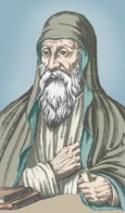
Origen: The Stone That Sharpens Us All

Origen: The Stone That Sharpens Us All

Origen: The Stone That Sharpens Us All

NOT A STITCH IN THE HOUSE
In North Africa over 1,800 years ago, young Origen awoke feeling groggy. He pulled his blanket up close and rolled over to go back to sleep. Suddenly, he remembered the events of the night before and jumped out of bed, reaching for his clothes.

However, they were nowhere to be found. Wearing only his nightshirt, Origen rushed to find his mother.

“Mother, has Father returned? And where are my clothes? They’re all missing.”

His mother replied quietly. “Sit down, Origen. The news about your father is not good. He was arrested last night, and his trial is going on right now. Since everyone who knows your father knows he is a Christian, they will find him guilty and he is sure to face execution.”

Origen jumped to his feet. “But Mother, why didn’t you wake me? I must join Father. I can’t allow him to be martyred alone!” Origen started to rush out of the house, then paused, remembering that he wore only his nightshirt.

“Mother, where are my clothes? I need to join Father as soon as possible.”

“Origen, your clothes are not in the house,” his mother replied calmly. “I gave them to your uncle. He won’t bring them back until it’s safe for you to go out.”

Origen felt shocked and betrayed by his mother’s actions. “Mother, how could you do this to me?” he exclaimed. “I need to join Father right now so we can stand together for our faith. We’ve both longed to give our lives for Jesus, just as He gave His life for us. How can you stand in my way?”

Tears came to Lydia’s eyes as she witnessed her son’s bravery. This was harder than she had anticipated.

“Son, I know you love the Savior and want to give everything for Him, but becoming a martyr is not something to be sought. If God asks it of you, then so be it. But what if it is God’s plan that you serve Him by living, not by dying?” Lydia’s voice cracked as tears flowed down her face.

“Origen, you are a gifted student, and your father has taught you much. You must use your gift to help others understand the faith.”

Lydia’s words gave Origen much to think about. The Christian faith was misunderstood, and Christians were being persecuted in many parts of the empire. Perhaps God would make a way for him to make a difference.

NOTHING IS TOO HARD FOR GOD
Weeks later, Lydia and her children watched as the soldiers carried off the last of their possessions. It almost seemed like more than they could bear.

“I’ll find a job, Mother,” promised Origen. “I’m the oldest, and it’s my duty to take care of you.”

“But what about your studies?” replied Lydia. “You are not yet ready to take a teaching job. Besides, no one will hire the son of a man who’s been executed as a traitor of the Roman Empire. We must find another way.”

“It does seem impossible, but nothing is impossible for God,” said Origen. “We must pray for His plan to be revealed.”

Origen believed God would guide his life. He trusted God to place him where he could best defend Christianity against those who wanted to destroy it. And he was right—God did just that. Origen soon found a wealthy person who provided money for him to finish his education. Finally, Origen was a teacher and could help others learn about faith.

CHRISTIANS IN CONFLICT
The sun shone brightly overhead as Origen stood watching a few of his students. Lost in thought, he hardly noticed the sun. He frowned as yet another disagreement erupted about Christ‘s divinity.

Origen shook his head and walked away from the students in frustration. Having taught at Alexandria’s Christian school for only a short time, he needed to seek the wisdom of someone else–the man who had appointed him.

“Bishop Demetrius,” Origen began earnestly, “May I have a word with you?”

“Ah, Origen, I hear your students are at it again! They argue night and day!”

“That’s just it, Bishop. They are only following the example of the scholars who teach them! If the teachers don’t agree on the faith, how will the students?”

The bishop was thoughtful. “You are beginning to understand the challenges we face,” he replied. “Christianity is so young, and we spend so much energy defending our beliefs to the pagans who don’t believe in Christianity. Now the faithful are beginning to argue even among themselves.”

Origen agreed. “When I speak with pagans, I expect to defend the faith. But when I’m teaching a group of Christians, I expect them to understand the basic principles of Christianity. They’re out there now, disputing yet another issue as we speak! How will we ever get beyond these disagreements?”

Bishop Demetrius looked across the courtyard to where the students stood, arguing. “We do need unity if we are to survive. Someone needs to explain our beliefs so everyone can understand.” He smiled at the young teacher. “Someone who is quick to learn and eager to teach. Someone like you, Origen. Perhaps God has appointed you to this task.”

Origen thought back to his mother’s words. This could be his legacy. He resolved to unify believers by helping them better understand the teachings of Christ.

ORIGEN’S LASTING LEGACY
Though he was only 18 when he took charge of the school in Alexandria, Origen was very dedicated to his work. He studied the Scriptures by night and taught a growing number of students by day. The teacher was also a student, studying closely with modern philosophers so he could defend his faith in a way that they would understand. But Origen was more than a great scholar. When his students and friends were put in prison for their beliefs, he visited them and encouraged them in the faith. He himself was eventually imprisoned and tortured, though he was not martyred.

Origen is best remembered today for his many books defending and explaining Christianity. Because no one had written books on these subjects, some of Origen’s ideas were later examined and had to be rejected or modified by Christian scholars. Even so, many of his writings continued to bless the church down through the centuries. He had so much to say that he kept seven secretaries busy recording all of his teachings! He helped Christians identify their beliefs so they could stand for their faith. It seems God had a special job for Origen, and the Lord’s protection was with him throughout his life. If Origen had followed his youthful desire for martyrdom, he would have been forgotten, but as he lived for Christ, he became one of the first great theologians of the faith and came to be known as “the stone that sharpens us all.”Make It Real! Questions to make you dig a little deeper and think a little harder.

  1. Origen was eager to serve God in his youth. How can you serve God even though you are young?
  2. Do you think people can be blessed even when bad things happen to them?
  3. “Theology” is a word to describe your basic beliefs. What Christian beliefs are part of your theology?
  4. What beliefs do most Christians share in common?
  5. Why would Origen have the name “the stone the sharpens us all?”

Nate Saint Fit to Fly … for God

Nate Saint Fit to Fly … for God

Nate Saint Fit to Fly ... for God

The sky was calm and clear over Quito (Kee-toe), Ecuador (Eck-wah-door), on December 30, 1948. Missionary supply pilot Nate Saint whistled as he loaded his plane and helped the young boy and his mother aboard. Within minutes after his perfect take-off, however, Nate knew they were in trouble. A strong gust of wind roared over the mountains and slammed into his plane, forcing it downward. Nate did his best to control the plane, but it plunged, crashing into the field below.

Nate slowly awakened to the bright light and white walls of an Ecuadoran hospital. His passengers were not seriously hurt, but Nate had a broken back and badly sprained ankle. He would spend the next month in the hospital and five months after that in a body cast.

Can you imagine wanting to fly again after that? The accident did not stop Nate. He could not wait to get back in his plane. He knew being a jungle pilot was dangerous: (fifty-one people died in jungle plane crashes within six months after his accident.) Even still, Nate was sure God had called him to do this work.

Sleeping on a Flat Roof
Nate Saint grew up near Philadelphia, Pennsylvania. He was a very curious child, much like his grandfather, who was a very successful inventor. As a result, Nate’s mother felt it was important to let her children try out new ideas.

One day, Nate’s older brothers asked their mother if they could sleep on the roof of their house. She agreed and had a carpenter build cots and a fence on the flat part of the roof. The Saints spent many nights sleeping under the open sky of their new rooftop bedroom.

Ten Year Old Pilot? Well, Almost…
Nate Saint was only seven years old in 1930, when his older brother, Sam, a pilot, took him on his first airplane ride. At ten, Sam even allowed Nate to help fly the plane on a short flight. And guess what? Nate decided that day that he wanted to be a pilot when he grew up, just like his big brother.

A Horrible Infection
When Nate was 14 years old, he became very ill. The doctor noticed a small, red cut on his leg from sledding the week before. The doctor said an infection had spread from the cut to the bone in Nate’s leg. Because there was no cure for infections back then, the doctor prescribed plenty of rest and hoped Nate’s body would be strong enough to fight off the infection. Otherwise, he could die.

Nate’s leg ached so badly, he could not get out of bed for weeks. He spent a lot of time praying, reading his Bible and thinking of inventions. The infection eventually went away, but it would return later and change Nate’s life.

Wings for Nate
After graduating from high school, Nate Saint joined the Army. The world was at war, and he hoped to become a fighter pilot. But just one day before he was to begin pilot’s training, he began to feel sick. He noticed that the old scar on his leg had turned red. The infection had come back after five years. Can you believe that? Nate couldn’t.

The army told Nate he was no longer fit to be a fighter pilot. He was very sad, but he didn’t stay sad long. Instead, he used his time learning to fix airplanes. He would look for another way to learn to fly.

Serving God from the Sky
After leaving the armed forces, Nate got his commercial pilot’s license, hoping to become an airline pilot like his brother Sam. However, one day a missionary called Nate and asked him to come to Mexico to fix a plane that had crashed in the jungle. Nate went, fixed the badly damaged plane and decided to become a missionary pilot instead.

As a missionary supply pilot, Nate spent a lot of time delivering food and medical supplies to missionary families. He also flew the missionaries to villages that would have taken them many days to walk to in the thick jungle. In addition, he invented several safety devices to help make jungle flights safer.

Nate often had to drop supplies out of the plane while he was flying over a village, because there was no place to land the plane. The goods would often get stuck in the treetops or end up broken on the ground. So Nate invented a way to lower supplies in a bucket attached to his plane by a rope. The bucket would hang completely still as Nate circled overhead, allowing the missionaries to remove their supplies.

Nate’s Final Flight
One day while flying over the jungle, Nate noticed a village that he had not seen before. It belonged to a Stone Age Indian tribe known then as the Aucas (Ow-cuz), known now as the Waodani (Wah-oh-dah-nee). The Aucas had killed every outsider they’d found in their territory. Nate and four other missionaries began planning a way to tell the Aucas about Jesus.

For several months, Nate flew over the village, dropping gifts to the Aucas to show friendliness. After much prayer, he and the others decided to land on a beach near the Auca village. They built a tree house to sleep in until they could see if the Indians were friendly. The Aucas were not friendly, though. They attacked the missionaries, killing them all. U.S. Army officials later went to the beach, found the bodies of the five missionaries and quickly buried them. The Waodani have since become a friendly tribe. Many are now Christians.

Nate Saint may not have been fit to be a fighter pilot, but he was more than able to fly for God. Because of his death at the hands of the Auca Indians, many others have been inspired to give their lives to be used by God, too. His sister, Rachel Saint, lived with the Waodani for 40 years until she died in 1994. Nate’s son, Steve Saint, became a pilot just like his dad. He and others continue the work among the Waodani today.Make It Real! Questions to make you dig a little deeper and think a little harder.

  1. After the Aucas killed the first five missionaries, how do you think the other missionaries had enough courage to go and live among the Aucas?
  2. Have you ever done anything for God that you were scared to do?
  3. What inventions do you think have been the most useful for helping to spread the Gospel around the world? Why?
  4. Why do you think the Aucas were so ferocious at first and refused the offer of friendship extended to them by the missionaries?
  • Suggested reading:
    • Nate Saint: On a Wing and a Prayer by Janet & Geoff Benge (Christian Heroes Then and Now series, YWAM Pub.)
    • The Fate of the Yellow Woodbee by Dave & Neta Jackson (Trailblazer Books, Bethany House)
    • Jungle Pilot by Russell T. Hitt (Discovery House Pub.)

El gran Diluvio

El arca flotando en el agua

El gran Diluvio

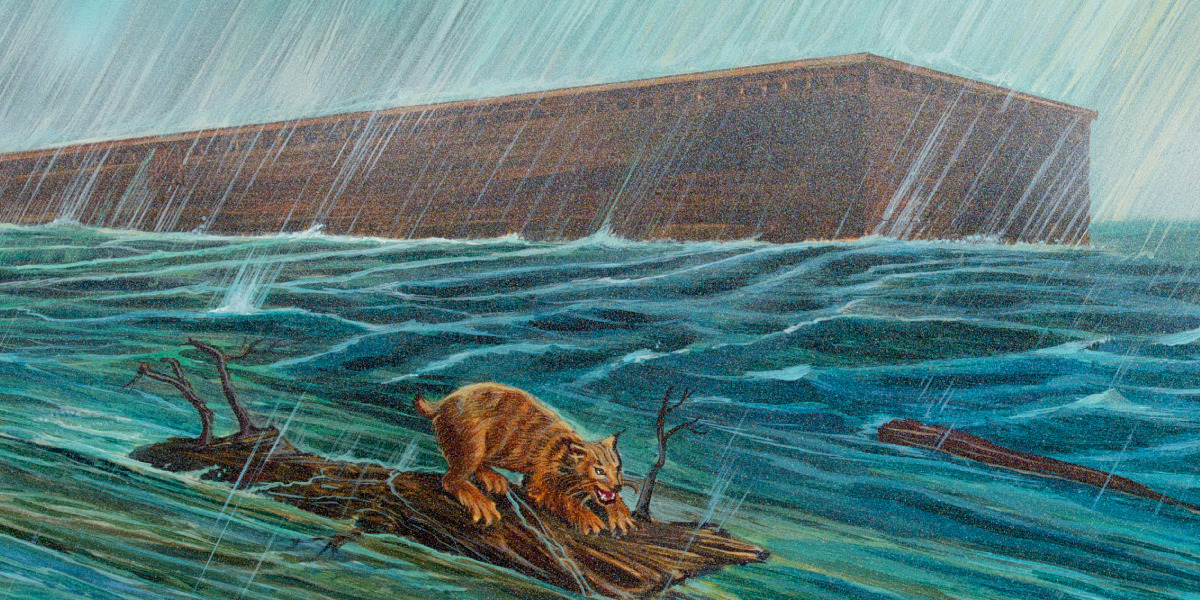
FUERA del arca, la gente seguía su vida como antes. Todavía no creían que el Diluvio vendría. Tienen que haberse reído más que nunca. Pero poco tiempo después dejaron de estar riéndose.

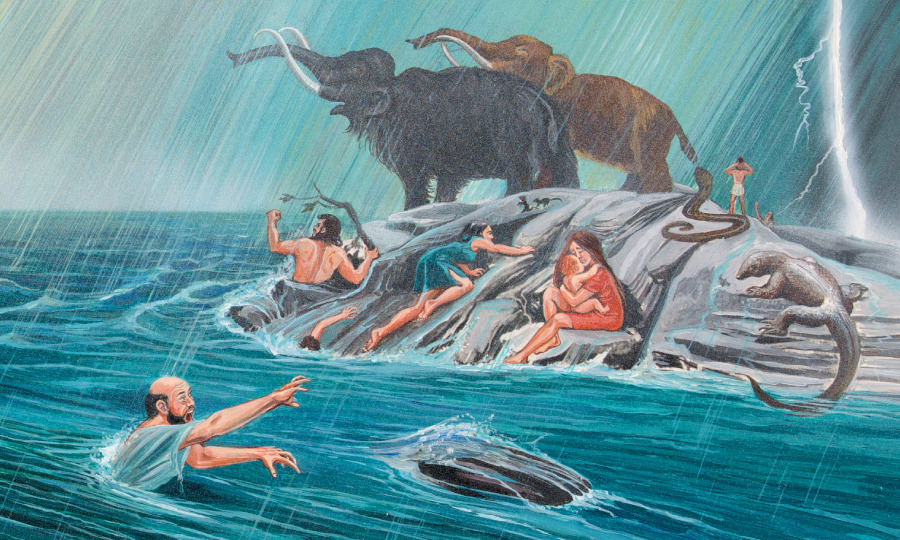
De repente empezó a caer agua. Cayó del cielo como cuando uno derrama agua de un cubo. ¡Noé tenía razón! Pero ya nadie más podía meterse en el arca. Jehová Dios había cerrado bien la puerta.

Pronto todo el terreno bajo quedó cubierto. El agua parecía grandes ríos. Empujaba los árboles y movía grandes piedras y hacía mucho ruido. La gente se asustó. Subieron a terreno más alto. ¡Ay, cuánto deseaban haber prestado atención a Noé y haberse metido en el arca cuando todavía tenían la puerta abierta! Pero ahora era demasiado tarde.

El agua siguió subiendo y subiendo. Por 40 días y 40 noches cayó agua del cielo. Subió por las montañas, y pronto hasta las más altas quedaron cubiertas. Tal como Dios había dicho, toda persona y animal que estaba fuera del arca murió. Pero todo el que estaba dentro estaba a salvo.

Las aguas del Diluvio empiezan a cubrir todo lo que está fuera del arca

Noé y sus hijos habían hecho un buen trabajo al hacer el arca. El agua la levantó, y ella flotó por encima. Entonces, un día, cuando dejó de llover, el Sol empezó a brillar. ¡Qué vista! Había solo un gran océano por todas partes. Y lo único que se podía ver era el arca flotando encima.

Ya no había gigantes. No volverían para causar daño a la gente. Todos habían muerto, junto con sus madres y la demás gente mala. Pero ¿qué les pasó a sus padres?

Los padres de los gigantes no eran en verdad gente humana como nosotros. Eran ángeles que habían bajado a la Tierra para vivir como hombres. Por eso, cuando vino el Diluvio, no murieron con la demás gente. Dejaron de usar los cuerpos humanos que habían hecho, y volvieron al cielo como ángeles. Pero ya no se les permitió ser de la familia de ángeles de Dios. Se hicieron ángeles de Satanás. En la Biblia a estos ángeles se les llama demonios.

Dios ahora hizo que un viento soplara, y las aguas del diluvio empezaron a bajar. Cinco meses después el arca quedó encima de una montaña. Pasaron muchos días, y los que estaban dentro pudieron mirar afuera y ver la cumbre de las montañas. Las aguas siguieron bajando y bajando.

Entonces Noé dejó que un pájaro negro llamado un cuervo saliera del arca. Éste volaba un rato y entonces volvía porque no podía hallar un buen lugar donde quedarse. Siguió haciendo esto, y cada vez que volvía se posaba sobre el arca.

Noé quería ver si las aguas se habían escurrido de la tierra, así que después mandó una paloma desde el arca. Ésta volvió también, porque no encontró dónde quedarse. Noé la mandó por segunda vez, y ella volvió con una hoja de olivo en el pico. Las aguas habían bajado. Noé envió la paloma por tercera vez, y por fin ésta halló un lugar seco donde vivir.

Ahora Dios le habló a Noé. Le dijo: ‘Sal del arca. Lleva contigo a toda tu familia y los animales.’ Habían estado en el arca más de un año entero. ¡Imagínate lo contentos que estaban de estar afuera otra vez y vivos!

Génesis 7:10-24; 8:1-17; 1 Pedro 3:19, 20.

Mitsuo Fuchida: The Enemy Whose Attack Provoked America

Mitsuo Fuchida: The Enemy Whose Attack Provoked America

Mitsuo Fuchida: The Enemy Whose Attack Provoked America

The Mighty Samurai
“I will be the samurai!” I told my playmates. My toy sword glinted in the morning light in this land of the rising sun.

“You always get to be the samurai!” they complained. “Give us a chance.”

Though Japan no longer had professional soldiers known as samurai, all the boys in my village loved to pretend.

I needed to make them understand that for me this was more than just play.

“I am meant to be a mighty warrior,” I said. “You’ll see! Some day, Mitsuo Fuchida will be a hero who brings glory to Japan!”

As I grew, I worked hard to make my dream a reality, graduating from the military academy by age 21. Eventually I became Japan’s top pilot. My dreams were coming true, and my country was on its way to ruling a vast Asian empire. There was just one problem. A giant, an enemy named America, stood in the way of our glory. If we could destroy the giant, no one could stop us. In 1941, I was chosen to lead the charge to wound the giant.

The Sleeping Giant
Early in the morning of December 7, 1941, the roar of engines echoed in my ears. I climbed aboard the fighter plane, prepared to realize those boyhood dreams of greatness. Moments later I was leading more than 180 planes loaded with deadly power toward Hawaii. Our mission was to destroy the United States’ Pacific Fleet. As we approached the sleeping island paradise, the first light of dawn streaked across the sky, followed by the rising of a brilliant red sun. Chills swept up my spine, for the Japanese symbol is the rising sun. Through binoculars I saw the magnificent American ships docked at Pearl Harbor. The enemy was peacefully going about its business– we would take the giant by surprise!

At 7:49 AM I cried “Tora, Tora, Tora!” into my microphone. As my battle cry reached the Japanese warriors, my adrenaline surged. Like mechanical wasps we dive-bombed with merciless precision, watching as the mighty American ships went up in flames, then sank like toy boats. In less than two hours we shattered 150 planes and killed over 2,000 American servicemen. My heart swelled with pride and joy as I celebrated our victory. It was, however, only a matter of time before the giant would awaken and take his revenge.

Two Narrow Escapes
Following emergency surgery for appendicitis, the doctor ordered me to stay in the hospital and rest, but this mighty warrior wasn’t about to listen to him! I headed up to the ship’s deck where I could see the Battle of Midway unfolding. Just when we seemed destined to win, a new round of enemy planes closed in. Within seconds, a devastating blast knocked a hole in our ship and the battle was lost. I later learned that all the patients in the ship’s hospital died from the blast.

On August 5, 1945, I left the Japanese city Hiroshima for another military base. Several hours later the Americans dropped the atomic bomb, obliterating that city. Why was my life spared a second time? When the war ended several days later, my country was defeated and I was devastated. Bitterness and hatred filled my heart. Once a proud warrior, I now had to turn to farming to make a living.

My Complete Reversal
One day I was walking through the noisy train station when an American missionary handed me a pamphlet called “I Was a Prisoner of Japan.” In it was the story of Jake DeShazer, an American who had participated in a surprise raid on Tokyo. Full of revenge for Pearl Harbor, Jake wanted to bomb my country to pieces. He was captured in battle and spent the rest of the war as Japan’s prisoner. In our harsh prison, Jake was brutally mistreated and suffered with dysentery, a horrible disease. His hatred toward everything Japanese boiled up inside him.

As the train rattled along, I became engrossed in Jake’s story. The American was now a missionary in Japan sharing the love of Jesus with those who had imprisoned him. How had he gone from hating Japan to serving its people with love? I learned that after two years in captivity, DeShazer had been given a Bible and came to realize that Jesus Christ was his only hope. To me, Jesus was a Western god, but because of Jake’s story, I wanted to know more about Jesus.

A few days later at the train station, a Japanese man was handing out books. I couldn’t believe it when he cried, “Get your Bible– food for the soul!” I took one, and as I read, I was struck by Jesus’ words in Luke 23:34, “Father, forgive them, for they do not know what they are doing.” Jesus had died so I could be forgiven! On that day in 1950 I became a new person. I became a Christian. My friend at the train station urged me to share my story at a faith rally. I was afraid at first, but I did it. Five hundred Japanese came to know Jesus that day. I continued to share my faith and lead others to Christ, yet deep inside, I sensed God calling me to take another step toward peace.

Enemy Warriors Embrace
I stood at the door trembling with anticipation. Jake DeShazer had been sharing the love of Jesus with the Japanese for several years now, but would he be able to forgive the one who had led the charge on Pearl Harbor? It was partly my fault that Jake had spent years as Japan’s prisoner. Finally, I reached up and knocked on the door.

“Yes?” asked a kind-looking man.

“I have desired to meet you, Mr. DeShazer. My name is Mitsuo Fuchida.”

It took only a moment for him to recognize my name, and to my relief, a smile spread across his face. “Come in, come in.” Through the love of Jesus, we former enemies embraced as brothers in Christ’s love. God had brought peace not only to a war-weary world, but to the souls of two mortal enemies who had fought in it.

I traveled all over the Orient telling others about Jesus and leading many to faith. Still, when I was invited to share my story in America, I wondered how they would react to the one who had led the attack years before. To my surprise, I was welcomed with warmth. I told them, “I would give anything to retract my actions at Pearl Harbor, but that is impossible. Instead, I will work at striking the death-blow to the giant called hatred which infests human hearts. Jesus Christ can truly uproot that hatred. He is the only one powerful enough to change a life like mine and inspire it with His loving thoughts.”Make It Real!
Questions to make you dig a little deeper and think a little harder.

  1. What motivated Mitsuo Fuchida to lead a surprise military attack?
  2. Fuchida’s life was ruined after the war. How do we find hope when our plans fall apart?
  3. After the war, Mitsuo Fuchida became a Christian and started telling others about Jesus, but he still felt called to do more. What other step did Mitsuo take?
  4. How did Fuchida’s enemies find it possible to forgive him for all the harm he had done?
  5. What did Jesus mean when he told us to pray, “Forgive us our debts as we also have forgiven our debtors”?
  6. Why does Jesus reach out to people who do bad things?
  • Suggested reading:
    • World War II Battles and Leaders ed. Aaron R. Murray (DK Publishing, Inc.).
    • Remember Pearl Harbor by Thomas B. Allen (National Geographic Society).
    • Welcome to Molly’s World, Growing Up in World War Two America(American Girls Collection).

Menno Simons: Pioneering a Way of Peace

Menno Simons: Pioneering a Way of Peace

Menno Simons: Pioneering a Way of Peace

“I just want to punch that Derrick right in the mouth!” exclaimed Jan Simons one evening at supper. “He’s the meanest kid in all of Wismar, maybe even all of Germany!”

Menno Simons looked across the table at his wife Gertrude and sighed. Would their son never learn what they’d been teaching all these years? “Why do you think Derrick treats you so badly?” asked Menno.

Jan set down his spoon and considered the question. “Derrick said his parents know about your books. He said we Anabaptists don’t belong here–that we should move away. I’m sick of moving, Father, and I’m tired of bullies like Derrick.”

Menno Simons was a leader of a new Christian group called Anabaptists. For this reason, he and his followers were hunted criminals and had to move from town to town.

“We’re not moving any time soon, Jan. The officials of Wismar say we can stay and we don’t even have to hide.” said Menno.

“But that won’t change Derrick’s mind. I just want to teach him a lesson,” said Jan.

“Son, you remember what happened when Uncle Peter and the others used force to try to create a Christian community, don’t you?” asked Menno.

“Yes, I remember.” Jan stared at his soup for a moment. “Do you miss them Father?”

“I sure do. But, without their sacrifice I might never have had the courage to stand for my own beliefs. They had good intentions, but their methods were all wrong. Violence is never the answer Jan. You’ll just have to come up with another plan to handle Derrick,” said Menno.

The Ship in the Ice 
A few weeks later, Menno and Jan were walking along the docks of Wismar’s icy harbor. “Look,” said Jan, “there’s a light in the harbor. No ship would sail now, would it, Father?”

“I don’t think so,” said Menno. It was December 1553, and the coldest weather he had ever seen in northern Germany. “No ship has left Wismar for a week.”
“Maybe a ship is trying to come into port then.”

“If so, it will take the city rescue crew to save them from the ice,” said the preacher.

“Now, that’s a job I’d like!” grinned Jan.

Menno shook his head. “It might sound exciting, but it’s also dangerous. We’ll see what happens by morning.”

The next day when father and son passed the same way, no one had rescued the people from the frozen ship. After asking a few questions, they discovered why.

“Those are John Lasco’s people out there,” growled a city official standing with other onlookers on the icy dock. “They’re part of the Reformed Church, and Germany is Lutheran now. We Lutherans don’t want them! We already have enough trouble from the Anabaptists.”

Menno Simons’ face got very grim. He grabbed his son’s arm and hurried down the street.

Helping Those Who Hurt Us 
Within an hour, several of the leading members of the underground Anabaptist church of Wismar gathered in Menno’s home. Jan and his sisters listened to them talk.

“Why should we do anything?” asked one man. “It’s not our concern that they’re trapped on that ship. Menno, have you forgotten how John Lasco treated you in East Friesland?”

“No, I haven’t forgotten,” answered Menno. “He mistreated many of our people and we had to leave. And that was after pretending to be my friend!”

“But now they need help,” said Gertrude, Menno’s wife. “If the city crew won’t rescue them, we must.”

“If we go out there, everyone in town will know about it, and we will be in worse trouble,” objected another Anabaptist. “Besides, it’s extremely dangerous out on that ice and we don’t have the training or the equipment.”

“There are children on that ship,” Menno argued. “We must help them. I understand Lasco’s own children may be out there.”

“All the more reason to leave them there,” grumbled a serious voice. “Whether Reformed, Roman Catholic, or Lutheran–everyone is against us. Why should we help them?”

“Brothers and sisters,” pleaded Menno, “what would our Lord have us do? Are we not called to show God’s grace to all people, even our enemies?” His words silenced the protests, and in a few minutes all agreed to meet at the harbor with food and supplies to rescue the refugees.

Taking the Risk 
“Father, I know what to do!” exclaimed Jan as they hurried to the harbor.

“Yes, Jan, we’ll rescue Lasco’s people. It will place us in danger, but it’s the right thing to do.”

“Sure Father, but I’m talking about Derrick.”

“Ahhh, Derrick, the bully,” answered Menno. “Well, what have you come up with?”

“He’s been treating me badly for weeks now, but I’m going to try a new tactic. I’m going to be nice to him, before he even has a chance to be mean!”

“Now you’re catching on,” said Menno. “Perhaps a kind word or a smile might take the wind out of his sails.”

“Yes, and if that doesn’t work, I’ll just steer clear of him. There are plenty of other kids to play with.”

Menno’s smile showed Jan that he approved. “We must follow Christ’s ways, Jan, even if it costs us.”

Jan and Menno worked along with the other Anabaptists to rescue the Reformed Church refugees from the icy waters. At first, the refugees seemed thankful, but before long, they wanted to be accepted by the Lutherans in the town. Some of the refugees stirred up trouble for the Anabaptists, turning the town against them. Within a few months, the Anabaptists were chased from the city.

Menno Simons lived most of his life on the run because the Anabaptists were not accepted by any of the established religions. Menno taught his followers to live in peace and to serve others, even in times of difficulty or conflict. His writings helped to spread his ideas and eventually those who followed his ways became known as Mennonites. Those who helped him often paid with their lives.

Despite all the opposition they faced, the Anabaptist faith spread. Though many of Menno’s followers were killed for their beliefs over the years, some of them always survived.

Today there are many denominations that come from Anabaptist roots. The Mennonites, Amish, Hutterites, and Brethren in Christ are just a few.Make It Real! Questions to make you dig a little deeper and think a little harder.

  1. Have you ever been in a difficult conflict with a friend or an acquaintance? What did you do to solve the problem?
  2. Why might fighting back or violence not be the best solution in many circumstances?
  3. Have you ever done something nice for someone who has been mean to you? What happened?
  4. Are there times when fighting back is a good choice? Why or why not?

Suggested reading:

  • Hero Tales Volume I by Dave and Neta Jackson, (Bethany House Publishers).
  • The Betrayer’s Fortune by Dave and Neta Jackson (Trailblazer series), Bethany.

Mary Slessor Issue 2: White Ma of Calabar

Mary Slessor Issue 2: White Ma of Calabar

Mary Slessor Issue 2: White Ma of Calabar

In the last issue of Glimpses for Kids we learned about young Mary Slessor and her bravery in sharing God’s Word with street kids of Scotland in the 1860’s. This issue now follows Mary’s adventures as a missionary in Calabar, Africa. Let’s listen in to hear how her adopted daughter, Janie, might have told her story.

“Janie, come help me pack,” called Ma. “We’re moving to Okoyong.”

“Okoyong?” I asked. I squatted beside Ma, who was hovering over her luggage, sorting medicine bottles. “But Ma, there are head hunters in Okoyong!”

The White Ma touched my dark face, a twinkle in her blue eyes. “Ah, but Janie, the people of Okoyong have never heard the gospel! We must tell them about Jesus!”

The gospel was a subject that Mary Slessor, my adopted ma, could not be talked out of. I knew we were going, despite the elephant stampedes, twisting tornadoes, and slithering cobras. Still, I didn’t want to be anywhere else than with Ma.

Rescuing Babies
Ma was the bravest woman I knew. Her short hair was the color of flames and her love was always big enough to rescue one more dying baby. Everyone in Calabar loved her.

The natives in Calabar thought that if a woman had twins, one of them had to be a devil, so they left twin babies in the jungle to die. I was one of the first twins that Ma rescued and, in my heart, I wanted to be her special girl forever.

Distant Drumming
King Eyo Honesty VII of Old Town hired 30 canoe paddlers and on August 3, 1888, we traveled up the Calabar River toward Okoyong in his grandest canoe. Ma and five of us children sat on colorful cushions, surrounded by blankets and supplies. We arrived to the sound of distant drumming. In Africa, we dance to the drums for many reasons–a wedding, a funeral, a feast, to relay messages or. . . to start a war!

Ekenge, the nearest village in the land of Okoyong, was four miles away. The boat paddlers were too afraid to go with us, so we walked alone. Carrying all our supplies and the baby, we struggled through the dark jungle, listening to the drumming as we went.

All at once, my feet flew sideways in the mud. Packages flew, but at least I managed to keep the baby from falling. When I stood up, the little one started crying.

“Don’t cry,” Ma urged. “Jesus is watching over us. Let’s sing.”

Welcome to Ekenge
Hours later, we stumbled into Ekenge, out of breath from all our singing and walking.

The great Chief Edem stood at the entrance to the village. “You are welcome, Ma,” he said, bowing. “The drums of many villages told me you were coming. We have all heard of your wisdom. I have a house ready for you as long as you will stay.”

“Wow!” I whispered. “What a welcome!” Ma squeezed my hand.

“Thank you, Chief Edem,” Ma answered. “I would like to speak to your people when the sun rises.”

I was tired in the morning, but I helped Ma put up a wooden plank and lay the white tablecloth over it. I got out Ma’s Bible for her, and the older boys made a wooden cross and propped it up in front of the table.

We sat on small benches, holding the little ones, and sang at the top of our lungs. Chief Edem came first, and then the villagers followed.

Ma glowed like a candle in the morning light as she witnessed to the villagers about Jesus for the first time.

The next morning, I helped Ma set up that same wooden plank, only this time it became a table for all her medicine bottles. I watched our little ones so Ma could give out medicine to the sick people.

That night, after the others were asleep, Ma crawled onto the floor mat beside me. “The Ekenge don’t seem to be so wild, Janie,” Ma whispered as she pulled the blanket around us.

“It is because you are famous, Ma,” I told her in the darkness. “Everyone in Okoyong calls you the White Queen.”

“Then we will make Jesus the famous King in Okoyong,” Ma answered. She yawned and within seconds her snoring told me she was asleep.

We lived in Ekenge for more than a year, but Ma traveled to other villages to preach the gospel and give medicine while I stayed with our little ones. I grinned whenever I saw big Chief Edem sitting on the benches among the small children, reciting his Bible lesson to the White Ma.

“Ma!” I cried as soon as I saw her coming. “Chief Edem is sick and the witch doctor has taken prisoners!”

Ma took off running and I followed her into Chief Edem’s hut.

“Witchcraft,” the chief mumbled. “Someone put a spell on me.”

“That’s not true!” cried Ma.

I gasped. No one talked to Chief Edem in this way.

“You are sick because you ate dirty food,” said Ma. “Wait here. I’ll go get you some medicine.”

The chief became well with Ma’s medicine. The next night, the chief freed the prisoners and the village celebrated with loud, clamorous drumming and a great party.

“No one will die tonight,” I told Ma.

She smiled. “Yes, the prisoners won’t die now, Janie. And one day, I will bring the gospel to Chief Nijri.”

“Chief Edem says that Nijri is the fiercest chief in all of Okoyong,” I answered. “Can’t you pick a nicer person?”

Ma smiled at me, the answer in her eyes. Ma always chose the worst, the outcast, the most wicked and brought them the gospel that would save them.

After two years, Okoyong had changed from a wild ferocious land into peaceable villages that worshipped God. We were ready to go back to Old Town.

Ma and I went on many adventures in the jungles of Calabar. She told me I was always her girl, and I never left her side. Her fame spread all over the jungles of Calabar and the world, and I was proud that she was my special White Ma.

Make It Real! Questions to help you dig a little deeper and think a little harder.

  1. In order to reach the African people effectively, Mary lived just as they did. What kinds of conveniences do you think she gave up in order to live among African tribes?
  2. What modern conveniences would be the hardest for you to give up if you were to live as Mary did?
  3. Missionary work involves more than just telling people about Jesus. In what ways did Mary show the gospel to those she was trying to reach?
  4. One of the ways African people used drums was to communicate. What forms of communication were in use in other parts of the world at that time?
  • Suggested reading:
    • Trial by Poison by Dave & Neta Jackson (Trailblazer Books, Bethany House)
    • Mary Slessor: Queen of Calabar by Sam Wellman (Heroes of the Faith series, Barbour)

Create a website or blog at WordPress.com

Up ↑

Design a site like this with WordPress.com
Get started