Mary Slessor Issue 1: The Worst Place on Earth

Mary Slessor Issue 1: The Worst Place on Earth

Mary Slessor Issue 1: The Worst Place on Earth

“I want the job,” I said to the Sunday school superintendent.

He peered down at me over his wire-rimmed glasses. “You’re quite small, Mary, and I’m not sure–“

“I’m fourteen!” I said. “I can read and write, and I know my Bible stories, too. I can teach them.”

The superintendent cleared his throat. “I know you mean well, Mary, but the street children run wild here. The gangs of boys are rough and they don’t want us teaching here on Queen Street. You could get hurt!”

“I can do it,” I answered. “Besides, I think God wants me to teach. I’m not afraid.”

I tried desperately to sound as brave as my brother Robert.

The superintendent stroked his moustache, staring at my red hair.

“Well, I guess you can give it a try. Can you start this Friday night?”

“Yes!” I exclaimed. “Thank you!”

Dreams of Calabar, Africa
I ran to Mother, who was standing outside the front door of the church.

“Mother!” I shouted. “I can have the job!”

“You’ll be a wonderful teacher, Mary,” Mother said. “Just be careful. The gangs are mean to outsiders.”

“I know,” I answered. “It’s a little dangerous. But it’s not as bad as Calabar!”

Mother laughed. “No, not as bad as Calabar!”

As we walked home, I felt as though my heart would burst! Mother used to tell Robert and me about a place called Calabar in Africa. Calabar was the worst spot on earth–with headhunters, witchcraft, and deadly sicknesses. I was too young to go to the worst spot on earth, but at least I could be a missionary on Queen Street, the worst spot in Dundee, Scotland.

“Robert would be proud of you, Mary,” Mother said, smiling.

A tear came to my eye. “Robert was always brave.”

My older brother, Robert, was with Jesus now. When we were small, Robert’s eyes would grow as wide as tea saucers whenever Mother read missionary stories.

Sometimes he’d say, “When I grow up, Mary, I am going to be a missionary. And I’m going to take you with me.”

After Robert became sick and died, I felt doubly sad. Not only had I lost my big brother, I had also lost the dream of serving in missions with him. I think that Robert would have become a great missionary, maybe even as great as David Livingstone.

Mud Balls on Queen Street
Friday came quickly. I walked down to Queen Street with my Bible in hand, eager to share God’s word with the street kids.

“Hello,” I greeted the first two children as they entered the building. They were dirty and their coats were torn.

Three more children came, and I started teaching at 7 o’clock sharp.

“I want to begin with the story of how God created the world,” I said. “I’ll pass these papers out–“

Suddenly, the door in the back opened and a tall boy ducked inside and hurled a mud ball at me.

“Ouch!” I yelled, rubbing my arm. The rock hidden inside the mud ball really hurt!

“What should I do?” I wondered.

“We don’t want you here!” the boy yelled. There was a clamor outside the door as the gang yelled for me to get out.

“Let’s get out of here!” cried my students as they ran out of the classroom.

The gang finally left, too, and I shut the door and slumped to the floor. My legs were shaking, but my heart was determined–these mean bullies and their mud balls would not stop me from teaching.

The mudslingers came week after week, but I kept teaching and more and more children kept coming!

Discouraged 
One night, I walked outside on Queen Street feeling discouraged. The street gang had beaten up one of my students and knocked over my lantern lights.

I trudged home, lost in thought. The alley was dark and foggy so I didn’t notice the gang of boys that had circled around me until it was too late. I stopped, praying while my heart raced.

“What do you want?” I asked.

“We want you to leave,” the leader answered.

The boys closed in the circle around me and the leader stepped forward. He carried a large piece of metal with razor-sharp edges. The metal was tied to a string and he started swinging it around and around over his head.

“This will fix your pretty face,” the boy sneered. “Move back.”

I refused to budge. I was scared, but this boy wasn’t going to make me run.

The boy kept swinging the string while the sharp metal came closer and closer to my face. I swallowed hard and bit my lower lip.

“Give in,” the leader demanded.

Another swing. The metal grazed my forehead. I kept staring at him as the warm blood oozed down my forehead.

The boy suddenly dropped the metal weight onto the street. Amazingly, his heart had changed.

“You’re brave for a girl,” he said, laughing. “You can walk anywhere and we won’t let anybody hurt you!”

I took out a handkerchief and wiped my forehead. “Then why don’t you come to my mission meeting tomorrow night?” I asked boldly.

The boys laughed. One joked, “Yeah, we’ll come to your mission meeting.”

Success!
I was thrilled the next night when all of them came. One of them even asked Jesus into his heart!

My mission meetings on Queen Street helped me to get accepted as a foreign missionary after I grew up. I was so surprised when one of the people who appointed me said, “You have proven you can be a good missionary on Queen Street. We’d like to send you to Calabar, Africa.”

Calabar! Wow! 
My heart pounded with excitement the afternoon in 1876 when I boarded the ship for Calabar. Even though my dear brother Robert couldn’t go with me, I thought about him as the gangway was lowered onto the dock and the ship noisily pushed away from the shore. One day I would see Robert in heaven and then I’d tell him all about my missionary adventures.

And I wasn’t afraid! Jesus was right beside me as I traveled to the worst spot on earth–Calabar, Africa.

The Continuing Story
Mary’s adventures were just beginning when she headed for Africa. You can get a glimpse into her Africa years in next month’s Glimpses for Kids.Make It Real! Questions to make you dig a little deeper and think a little harder.

  1. Mary had to stand up to some bullies while trying to share Bible stories on Queen Street. Why do you think they left her alone when they saw that she wasn’t afraid?
  2. Mary didn’t let her young age stop her from sharing God’s Word with others. Do you have someone that you can share Bible stories with? Maybe it’s someone in your family, your neighborhood or even your school or church.
  3. Mary wanted a specific job with all her heart. She wanted to teach the street children on Queen Street. What job do you want?
  • Suggested reading:
    • Mary Slessor: Forward into Calabar by Janet & Geoff Benge (Christian Heroes Then and Now series, YWAM Pub.)
    • Mary Slessor Unit Study Curriculum Guide by Janet & Geoff Benge (YWAM Pub.)

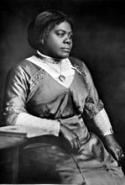
Mary McLeod Bethune; a Missionary to Her Own People

Mary McLeod Bethune; a Missionary to Her Own People

Mary McLeod Bethune; a Missionary to Her Own People

The group of sweaty nine-year-old girls tramped up the back steps of a small school in late 1904. Nettie was at the front of the pack, since she was the bravest and had agreed to do the talking. Nettie walked quickly to their teacher and spoke the words she had practiced in the garden. “Mrs. Bethune, we finished the weeding, but we have a question.”

Mrs. Bethune looked up from the heavy sack she was opening and smiled at their dirty knees and hands. “I’d love to hear your question Nettie, but you girls need to wash up first so we can peel these potatoes for supper.”

Nettie glanced back at the others and mustered her courage. “That’s just it, Mrs. Bethune. We’re here to get book learnin’ so we won’t need to be no house servants. So why we need to do all this dirty work? I don’t like scrubbin’ floors, peelin’ taters, and fetchin’ water to boil clothes. The bucket’s too heavy and that ol’ black pot is too big to make full.”

Mrs. Bethune smiled at the first students in her new school, the Daytona Normal and Industrial Institute for Negro Girls. She recalled the heavy buckets of water she had carried to the thirsty cotton pickers when she was much younger than these girls. “Girls, there is no such thing as menial work, just menial attitudes,” she explained patiently. “Remember our Bible verse from last week? For God so loved the world?” Eagerly the girls showed off what they had learned, “For God so loved the world, that He gave His one and only Son, that whoever believes in Him shall not perish, but have eternal life.”

“Did you hear those words, ‘whoever believes’? ‘Whoever’ means you! God loves you so much he sent his Son to die for you. This is where your dignity comes from–not what you do or what you have. Now wash up and we’ll start these potatoes. I have a story to tell you.”

Mrs. Bethune’s Story 
As a little girl in South Carolina I was expected to help keep the water buckets filled for the thirsty cotton pickers. I was just five years old and the year was 1880–long before you were even born! My sister Rachel and I would fill our buckets at the well and then lug them down the long rows to the cotton pickers. One morning in early fall, I noticed the white children walking the dirt road to their schoolhouse, just across the field.

“Mary Jane! Why you stoppin’?” my sister Rachel whined, water splashing on her legs as she bumped me.

“Don’t you see ’em?””See who? ” “Them white kids goin’ to school.” I pointed, trying not to attract momma’s attention. “Wish I was white so I could go ta school ‘stead of totin’ water all day,”

“Mary Jane, Rachel, be ’bout your own business,” Mother reminded us.

“We hurryin’, momma,” I said. I dared not stop and stare lest my mother sting my legs again with the wiry willow branch. But I could watch from the corner of my eye. As the thirsty workers drained the water pail, I secretly wondered what a joy it might be to turn the pages of a book and learn of things I couldn’t imagine. “I’m gonna learn to read and write,” I whispered to Rachel that day as we traced our footprints back to the well. “And one day I’m gonna teach others, too.”

“How you gonna do that, Mary Jane? You ain’t got no books and you ain’t got no chalk,” Rachel reminded me. “Anyways, who gonna teach you?”

“I don’t know right now, but it’s gonna happen, you just watch, Rachel. You just watch and see.”

My Own School 
When I was seven years old, the Mayesfield Mission School opened for the children of freed slaves. It was nothing like the white kids’ school, but that didn’t matter. “I told you I was gonna learn to read and write,” I reminded Rachel as we walked the long dusty road home from school.

“So you did, Mary Jane,” Rachel admitted, kicking a pebble as she strutted.

“Anyways, it sho beats totin’ water or pickin’ cotton all day!”

I worked hard and soon my teacher, Mrs. Wilson, took notice. When it was time for graduation, Mrs. Wilson was allowed to choose one student to go to the Scotia Seminary for Girls on a full scholarship. Mrs. Wilson chose me to go to that beautiful place!”

Little Nettie was impressed. “Is that where you learned to teach?”

“Yes, that’s where I received my first teacher’s license. But my heart was in missions work. I wanted to share the Gospel with our brothers and sisters in Africa. That’s why I went on to the Moody Bible Institute for 2 more years of school.”

Nettie’s eyes widened in admiration. “Africa! Have you been to Africa?”

“Well, not exactly. God’s plans were different than mine. The mission board turned me down, so I began teaching. That’s when I realized there are plenty of people right here in America who don’t know about Jesus!”

Mrs. Bethune looked at the poor black girl with love in her eyes. How could she help the girls understand that though they were getting an education, they must work hard and count it a privilege.

“God called me to start this school to teach you, Nettie! But I need to teach all of you–your head, your heart, and your hands!”

“I just want to learn in my head,” said Nettie. That’s what I like best!”

“I like book learning, too, Nettie, but we must be prepared for all sorts of work. That’s why I teach your hands.”

“Like peelin’ taters?” asked Nettie.

“Now you’re catching on,” said Mrs. Bethune.

“But the most important thing I teach is your heart. God loves you, Nettie. No matter what kind of work you do or what color you are. He loves you and He wants to guide your life.”

“Mrs. Bethune?” said Nettie.

“Yes, dear. Do you have another question?”

“No’m. I just wondered if you want us to carry in some water now to cook the taters in?”

“That would be lovely, Nettie. Thank you very much!”

Mary’s School Lives On
Mrs. Bethune became a successful businesswoman and an advocate for African-American rights. She served on many national boards and was an advisor to President Franklin D. Roosevelt. Her little school grew from 5 students to over 250 in just two years. Financial support came from various generous individuals as well as through the labors of the girls themselves.

The school is now known as Bethune-Cookman College and serves about 3,000 students from all over the world. With a motto of “Enter to learn, depart to serve,” the school continues to shape young people for Christian service, just as Mrs. Bethune did with her first class of 5 girls over 100 years ago.Make It Real! Questions to make you dig a little deeper and think a little harder.

  1. What did Mrs. Bethune want to do after graduating from Moody Bible Institute? How did she become a missionary to her own people?
  2. What were the three parts of Mrs. Bethune’s teaching? Why were all three important?
  3. How are you learning through your head, your hands, and your heart? If you are not growing in one of these areas, what can you do about that?
  4. Do you think children in Mrs. Bethune’s school worked harder than children in your school? Why or why not?
  5. Do you ever think of some kinds of jobs as more important or more prestigious than others? What about the people who do those jobs? How does God see people who do jobs that no one else wants to do?
  1. Suggested reading:
    • Defeat of the Ghost Riders by Dave and Neta Jackson (Trailblazer series), Bethany.
    • Mary McLeod Bethune by Eloise Greenfield (Crowell Biographies)

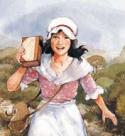
Mary Jones: “God Will Give Me a Bible.”

Mary Jones: “God Will Give Me a Bible.”

Mary Jones: "God Will Give Me a Bible."

Daydreams
“Mary, Mary!” Exasperation filled Molly Jones’ voice. “Where could that girl be? She usually has her chores finished by now. Maaaary…”

Her mother’s call interrupted six-year-old Mary Jone’s daydreams, and she remembered the chores. The sun was low in the sky as Mary dashed home to finish them.

“Mother, I’m sorry I forgot my chores. I’ll go finish them right now.”

“But Mary, this isn’t like you. What were you doing?”

Mary answered breathlessly. “There were no eggs in the nest, so I went to look for the hens’ newest hiding place, and while I was walking, I looked over at Cader Idris, and the mountain made me think of Mount Moriah and Abraham and Isaac and how Abraham almost sacrificed Isaac, but God gave them the ram at the last minute!”

Chuckling, Molly interrupted her daughter. “So the mystery is solved. I understand perfectly! I should have known you were thinking about a Bible story.”

“But mother,” Mary answered, “all the best stories come from the Bible. How I wish I could read them for myself.”

In Wales in 1790, Mrs. Jones knew that six-year-old Mary had little chance of learning to read and even less chance of owning a Bible. Still, she didn’t want to discourage her daughter. “Some day, Mary, perhaps someday you will.”

“God Will Give Me a Bible!” 
When Mary Jones was eight or nine years old, a school opened in the village two miles away from her home town of Llanfi-hangel. Mary could barely contain her excitement when her mother told her the news. “I can’t believe it, Mother! God has finally answered my prayers. Soon I’ll be able to read the Bible myself!”

Molly smiled at Mary’s youthful optimism. “It’s a two mile walk to that new school, and the same coming home each day. Are you sure you can handle that, Mary?”

“Oh, Mother, of course I can. I would walk much more than two miles if it meant I could read the Bible for myself. I can hardly wait! When does school start?”

“In three weeks, and of course you can wait. You’ll have to!” Despite her teasing tone, Mary could tell her mother was disturbed.

“What is it, Mother?” Mary asked. “Mary, you do understand we have no money for a Bible? We barely make ends meet as it is. Besides, Bibles are scarce! Why, I’ve never even seen one for sale!”

But Mary was far from discouraged. “Mother, I understand, but God understands, too. I’ve prayed for so long that God would let me learn to read so I could read His words. The new school is the beginning of God’s answer to my prayer. When I’m ready to read His Word, God will show me how to get a Bible.”

Molly hugged her daughter and kissed the top of her head. “You’re right, Mary,” she whispered, humbled by her daughter’s faith. “We’ll pray every night and trust God.”

Saving Pennies
“And how much did you earn today, Mary?” Molly asked fourteen-year-old Mary as she entered the house and went to the moneybox in the cupboard.

“Only a few pennies today, Mother,” Mary answered cheerfully as she dropped the money into the box. “But I’ll have eggs to sell tomorrow and I’m taking in laundry next week!”

Molly smiled at her daughter’s enthusiasm. Mary had been saving for years already. While other children played, Mary worked at all kinds of jobs to earn money. “I’m proud of you, Mary. After all these years of saving you haven’t given up!”

“In just a couple of more years I should have enough,” replied Mary with a smile.

The Day Arrives
“Pastor, Pastor,” sixteen-year-old Mary cried as she rushed up to her pastor. “I did it!”

“Did what, child? Here, sit down for a minute and catch your breath.”

“I’ve finally saved enough money for my very own Welsh Bible! Can I get one here?”

“Your very own Bible! Why, that is quite an accomplishment. But there are no Bibles for sale in these parts.” The pastor looked into Mary’s eyes, which were bright with hope. “You’ll have to go to Bala. A Mr. Charles lives there, and he has a few Welsh Bibles to sell. But waste no time, young Mary. They will sell quickly!”

Mary hurried home to give her mother the good news. “Bala! Why Mary, that’s almost twenty-five miles away! How will you get there? It’s much too far for you to walk alone!”

“God will go with me, Mother. I’ve worked over six years for a Bible, a 50-mile round trip will seem easy in comparison!” And as much as Molly disliked allowing Mary to make the trip on her own, she found she couldn’t say no. Mary was right–God would go with her.

Mary Jones Takes a Long Walk
So, early the next morning, Mary set out on the long walk to Bala. With each mile, her feet ached more and more, for she walked barefoot so she wouldn’t wear out her shoes. Upon arriving in Bala, Mary carefully pulled her shoes onto her red, swollen feet. She wanted to look her best when she bought her Bible!

Mr. Charles heard the knock and went to answer his front door. Standing there was a tired, dirty girl with a big grin on her face. “Please sir, my name is Mary Jones. Do you have Bibles for sale?” Mary asked.

“I just promised the last one to someone a few days ago.” Then, seeing the tears in Mary’s eyes, he asked, “Why child, what is the matter? Why are you crying?”

“Forgive me, sir. I just can’t help it. I’ve saved my money for six years and walked twenty-five miles today to buy a Bible. I was sure God would have one for me, and now they’ve all been sold!”

Mr. Charles thought quickly. He could get another Bible for his other customer. What he couldn’t do was send this remarkable young girl home without the book she had sacrificed so much to buy. “Mary, dry your eyes. You may buy the one Bible I have left. Anyone who has sacrificed as much as you have cannot be sent away empty-handed!”

But it was impossible for Mary to dry her eyes. At Mr. Charles’ words, her tears of joy fell even more quickly. God had answered her prayer and given her the desire of her heart. After years of work and prayer, she finally owned a Bible in her own Welsh language!

And Mary’s story didn’t end there. In a way, it was just the beginning. Mr. Charles was very touched by the little girl who worked for 6 years and walked 25 miles to buy a Bible. Mary Jone’s example provided the inspiration to start the British and Foreign Bible Society in 1804, so more people could get Bibles of their own. Within about 100 years, the society distributed about 200 million Bibles and Scripture portions. There are now many Bible societies world wide, all distributing Bibles to those who couldn’t get them otherwise.Make It Real! Questions to make you dig a little deeper and think a little harder.

  1. How many Bibles do you have in your family? Is there a Bible in your home that is more special than the others? Why?
  2. Why do you think Marys Bible was so precious to her?
  3. Do you know anyone who doesnt have a Bible and would like one? How can you help them get a Bible?
  4. Use the internet to learn more about Bible Societies today. How could you support a Bible Society in their efforts to distribute Bibles?

Suggested reading:

  • Mary Jones and Her Bible, Christian Focus Publications, Nov. 2004.

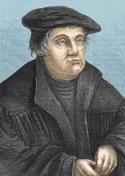
Martin Luther: Father of the Reformation

Martin Luther: Father of the Reformation

Martin Luther: Father of the Reformation

Thwack! Thwack!
Eight lashes. The sting was tremendous and I cringed, my shoulders sinking lower. The hole in the circle at the end of the stick was designed to raise blisters. I longed to pull my hand to myself and run out of the school as fast as I could.

I glanced sideways and caught a glimpse of “the wolf,” my classmate whose job was to tell on everyone. He’d turned me in for speaking German instead of Latin on the playground. The wolf’s sneer told me that he was enjoying my pain.

“Say it in Latin,” the teacher demanded again, raising the stick to the striking position. “You must speak only Latin in this school!”

I continued to hold my hand out as it swelled, but I held back the tears. If only I could remember the Latin grammar, I would have said it a dozen times, but it was a new language to me and I couldn’t string the words together.

I gathered my courage and spoke to the teacher in Latin in my most respectful voice. “Forgive me, Master Heindrick. I would like to remember, but the words escape me.”

“Here,” he said, shoving a Latin book into my reddened hand. “Take this home and study it. And don’t be caught speaking German in this school again.”

The Pursuit of God
Even though I hated Master Heindrick’s discipline, I loved to learn. My father worked hard to send me to good schools and I wanted to please him.

Every good father in Germany wanted his sons to learn Latin. (Girls didn’t go to school.) All of our church services were sung and spoken in Latin. When my family and I attended church, the monks read the Latin Bible, and none of the common people understood a word of it.

My one pleasure in life was my music. I often sat alone in my room or outdoors and plucked the strings of my lute. I learned many Latin chants in the boys’ choir at the church. My favorite was the “Magnificat,” the wonderful song Mary sang because she was chosen to be the mother of Jesus. I wondered if God had some special purpose for my life, too.

The Fear of God
It bothered me, though, that no matter how “good” I was at anything, I couldn’t seem to please my father or God. Everyone I knew was afraid of God–too scared to even talk to Him. Even some of the statues and paintings of God were scary looking. I never thought about loving God, and I certainly never dreamed He loved me. Besides, we went to the monks, not God, to ask for forgiveness for our sins.

Some of my friends went to school to become religious monks. A monk had to lead church services in Latin, promise to live in poverty, and never get married. My father wanted me to be a lawyer. I was so glad he didn’t want me to be a monk!

The Promise to God
Then one day, something happened that changed everything. I was walking to law school when suddenly the sky darkened and a violent thunderstorm broke out. I was all alone on the road and terribly frightened.

Fierce lightning cracked the sky and bolted from the heavens to the ground right beside me! I flew into the air and landed in a crumpled heap on the ground.

Desperate to live, I cried out a prayer, “Help me, St. Anne, and I will become a monk.” I lived through the awful storm and kept my vow. I felt like Saul in the Bible whose entire life was changed when a light from heaven stopped him on his way to Damascus!

Oh, my stern father was so angry with me! I can’t blame him, really. He said that all the money he spent on my schooling was wasted. However, I had made a promise to God, so I joined the monastery. Let me tell you, if someone could earn salvation from hell by being a good, devoted monk, I could! I nearly killed myself trying to be good! I hardly slept, fasted often, recited long prayers, sang in the choir, did lots of chores and gave all my money away. I even gave away my treasured instrument, the lute.

But the longer I stayed in the monastery, the less I liked it. God still seemed to be very much like my old school teacher, Master Heindrick–always ready to strike me to blisters for my sins. I spoke fluent Latin by that time, but I couldn’t seem to do enough good things to please God.

The Forgiveness of God
I was feeling depressed about all this one day while studying in the reading room. I was looking in the New Testament at St. Paul’s epistle to the Romans when I came upon the Scripture in Romans 1:17, “The just shall live by faith.” I suddenly sprang from my chair with greater happiness than I’d ever known!

I realized, in this one flashing moment, that God freely gives forgiveness of sins and eternal life to all who believe in Jesus Christ. Oh, what a relief! What a great hope for heaven! It wasn’t my good works that earned me a place in heaven. God would give it as a free gift to those who trusted Him and believed the message of the gospel. I felt as though the gates of heaven had just been opened to me! I was finally able to sense God’s love.

The Work of God
Imagine my surprise one day when a monk named John Tetzel began selling pieces of paper to people. He claimed that if they bought that piece of paper called an indulgence, God would forgive their sins. People actually believed they could have God’s forgiveness by buying a piece of paper.

John Tetzel wouldn’t listen to what I had to say, so I needed a way to make my point that indulgences were wrong. It was a common practice for scholars to write down their positions on religious subjects and tack them on the door of Wittenberg’s Castle Church. I decided this was the best way to start the debate on what Tetzel was doing. On October 31,1517, I tacked my 95 Theses, or 95 reasons, onto the door of the Castle Church.

That day, I had no idea that my 95 theses would be the spark that lit the fire of what came to be known as The Great Reformation.

PostScript
Martin Luther had a big problem: How did he dare stand against a powerful church, long traditions, and great teachers? Yet before God, he felt he had no choice.

There are now about 65 million people in the world who are Lutherans. However, Martin Luther never intended to start a new or separate church. He wanted to see the Roman Catholic Church reformed.Make It Real! Questions to make you dig a little deeper and think a little harder.

  1. As a child and young man, Martin Luther thought of God as angry and harsh. When you think of God, what characteristics do you think of?
  2. Martin Luther posted his 95 Theses in order to begin a debate on topics he felt strongly about. Can you hold a mock debate in your classroom or in your family? What modern topics would be good to debate?
  3. Luther said, “Next to the Word of God, music deserves the highest praise.” He was especially inspired by Mary’s song, the “Magnificat.” Do you have a particular song that inspires you?
  4. A “defining moment” can be described as an event that changes the course of your life. Can you describe some of Martin Luther’s defining moments?
  • Suggested reading:
    • Spy for the Night Riders by Dave & Neta Jackson (Trailblazer Books, Bethany House)

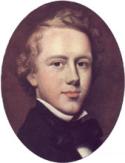
Hudson Taylor: Fit to Serve

Hudson Taylor: Fit to Serve

Hudson Taylor: Fit to Serve

Bump! Bump! Thump!

Fourteen-year old Amelia Taylor ran to the stairs to see what was causing all the commotion. “Hudson! What in the world are you doing with your feather bed?”

Amelia’s seventeen-year-old brother looked down the stairs with a smile. “I’m getting rid of it–they don’t have comfortable mattresses in China, you know!”

“Getting rid of it? Mother is not going to like this!”

“Oh, she’ll come ’round. Remember, China was Mother and Father’s idea in the first place! People there don’t have it as good as we do–sleeping on hard boards ought to toughen me up.”

Amelia jumped aside as the heavy mattress landed on the kitchen floor. “I’ll help you drag it outside,” she said. “Let’s store it in the shed in case you change your mind. Those hard boards are going to be awfully uncomfortable!”

When he was born, Hudson Taylor’s parents had dedicated him to serve God in China. At age eighteen, Hudson felt the call to China and began preparing in earnest. Now that Hudson was doing all he could to get ready for China, Mrs. Taylor grew concerned. Getting up extra early every day to study was one thing, but going out into the cold for rigorous exercise was another matter. “Hudson, you’ll catch your death of pneumonia! Come in and sit by the fire,” she begged. Hudson had been a sickly and weak child, so Mrs. Taylor had pampered him for many years.

“Now Mother, don’t worry,” Hudson replied. “I’m feeling stronger already! The crisp air and hard work are just what I need.”

Reluctantly, Mrs. Taylor allowed Hudson to follow his plans. He rose early to study languages; he exercised in the crisp cool air; and he learned to live with few comforts. God even provided Hudson with a way to learn medicine so he’d be better able to minister to the people in China. But there were some lessons that only life’s trials could teach the young man. Hudson wanted to learn to trust God and follow His voice before heading to China. This would take some practice.His Last Coin 
Twenty-year-old Hudson pulled his coat tighter around his shrinking frame as he walked through a dirty, crowded street in the town of Hull, England. Reaching into his pocket, he felt his last coin. “Lord, please remind Dr. Hardey to pay me. My rent is due soon and I’ve only a bit of food. This coin won’t last but a few days. Help me to trust in you, Lord.”

Hudson walked on deep in thought when a man who recognized him as the doctor’s assistant grabbed his arm. “My wife’s in there an’ she needs help.” Hudson was quick to respond. His heart went out to people in need, and this man’s need was obvious.

When they came to the grimy door, a boy opened it a crack, his hollow eyes staring into Hudson’s. He’d seen that hopeless look far too many times before. “Yes, sir?”

“I’m studying to be a doctor,” he said. “Your father brought me to see your mother.” The boy swung the door open and stepped back to let Hudson and his dad pass.

The smells of unwashed bodies and tobacco smoke rose to meet him. The apartment was completely cheerless, with crumbling walls and filthy flooring. He walked across the single room to a cot on which the mother lay. The sheets hadn’t been washed in far too long. Four other children huddled in the shadows, dressed in tattered clothes, too hungry to move. A newborn baby lay next to the poor mother. It didn’t take Hudson long to realize there was no hope for the woman. He hung his head, knowing there was nothing medicine could do.

“Please, won’t you pray for her?” The husband’s voice came from the doorway.

“Yes, of course,” Hudson replied. Even as he asked the Lord to send them food and heal the mother, he became aware of the coin in his pocket. He knew he should give it to her so that she could get something to eat, but it was his very last money and he would soon be hungry, too! Inside, a battle raged. Hudson knew that he should give them some of his clothes and money, but then where would he be? Could he trust God to take care of his needs if he gave his belongings to others? He felt no peace until he stopped arguing with himself, took off his coat and sweater, and handed them over to the mother, along with the coin.

“God bless you,” she whispered, eyes filling with tears. And He did. Hudson left with only a song in his heart to keep him warm.

The next day the mailman handed him a letter. When he opened it, the envelope contained four times as much money as he had given that family! He learned a lesson that would help him again and again in his work in China–as he cared for others in Christ’s name, he could trust God’s provision! Hudson would trust in this principle during the years to come.

The English Chinaman 
The town of Hangzhou, China was bustling for the Chinese New Year in 1867. A new missionary family was just arriving to serve with the China Inland Mission. As they made their way among the noisy street vendors, they saw a strange sight ahead. An Englishman wearing Chinese clothing and a long Chinese pigtail stood on a table outside the mission clinic. It was Hudson Taylor preaching to a gathering of Chinese people.

Hudson had first arrived in China 13 years before, in 1854. He had shaken up the established missionaries with his decision to dress like the Chinese, but he had caused an even bigger raucous when he decided to give up the comfort of living in the cities in order to reach the poorest people in the middle of China. His new mission organization, the China Inland Mission, was serving the people’s physical, medical, and spiritual needs.

Hudson paused from his preaching just long enough to wave and smile at the new missionaries. He’d been expecting them, for he had prayed for 24 new workers, and he knew God answers prayer! These new recruits would be joining the others in making great personal sacrifice to further the Gospel. Yet as Hudson Taylor continued to pray over the years, more and more missionaries came to serve.

Hudson ministered in China for 51 years, and eventually there were enough missionaries to realize his goal of reaching all 18 provinces of China. Now that’s answered prayer!Make It Real! Questions to make you dig a little deeper and think a little harder.

  1. What types of preparations did Hudson Taylor do to get ready for his work in China?
  2. Do you think God wants Christians to have easy lives? Why or why not?
  3. What kinds of training do you think missionaries have today before they head to another country?
  4. Hudson Taylor’s organization, the China Inland Mission, is now known as the Overseas Missionary Fellowship. What does their new name say about their focus? Check out their website at http://www.us.omf.org
  1. Suggested reading:
    • Shanghaied to China by Dave and Neta Jackson (Trailblazer series), Bethany.
    • Hudson Taylor by Janet & Geoff Benge (Christian Heroes: Then and Now series), YWAM

Más que Vencedores

Él estaba diciendo: “no tienen de que preocuparse, porque no hay nadie que tenga más poder o autoridad, en ninguna parte del universo, que el que me ha sido asignado a mí”
Mas que vencedores Cesar Castellanos

Texto Biblico: Lucas 1:74-75

Mas que Vencedores

“Que, librados de nuestros enemigos, sin temor le serviríamos en santidad y en justicia delante de él, todos nuestros días”.
(Lucas 1:74-75)

Zacarías, lleno del Espíritu de Dios, profetizó sobre Juan el Bautista diciendo que al ser libres de los enemigos, el temor perdería su control sobre nosotros y de esta manera podríamos servir al Dios vivo.

Todos tenemos que enfrentarnos ante el espectro del temor, cuya meta es sacarnos del propósito perfecto de Dios para nuestras vidas; pero la única manera de vencerlo es por medio de la fe. Sabemos que tanto el temor como la fe son atractivos, ya que ambos pertenecen al mundo espiritual.

La fe viene de Dios y el temor proviene del adversario; la fe nos lleva al éxito, el temor conduce al fracaso; la fe produce un estado de ánimo positivo, el temor genera un estado de ánimo negativo; la fe nos hace vencedores, el temor produce la derrota; la fe trae gozo, el temor nos da tristeza; la fe produce compañerismo con Dios, el temor trae soledad.

Cuando mi esposa Claudia era niña, fue mordida por un perro que se lanzó contra ella, a causa de esto tuvo que luchar por años contra un espíritu de temor, hasta que lo identificamos y echamos fuera. 

La mejor manera de vencer el temor es enfrentarlo en el poder del Espíritu, habiendo sido llenos del perfecto amor del Padre, San Juan dijo: “En el amor no hay temor, sino que el perfecto amor echa fuera el temor; porque el temor lleva en sí castigo. De donde el que teme, no ha sido perfeccionado en el amor” (1 Juan. 4:18).

Thomas Carlyle dijo: “Los actos de un hombre son serviles, hasta que pone el temor debajo de sus pies”.

Cuando las barreras que coloca el temor son superadas, estamos listos para influenciar a otras personas, incluso familiares y amigos. Poco antes de ascender al cielo, el Señor Jesús dijo a sus discípulos: “…Toda potestad me es dada en el cielo y en la tierra” (Mateo 28:18).

Él estaba diciendo: “no tienen de que preocuparse, porque no hay nadie que tenga más poder o autoridad, en ninguna parte del universo, que el que me ha sido asignado a mí”. El Señor animó a sus discípulos diciéndoles: “…y he aquí yo estoy con vosotros todos los días, hasta el fin del mundo. Amén” (Mateo 28:20).

Los apóstoles sabían cómo doblegar los poderes del infierno en cualquier ciudad a donde ellos llegaban a predicar el evangelio. Además, el evangelio que predicaban estaba cargado de poder porque ellos habían renunciado a cualquier clase de prejuicio humano, y solamente se movían en la sensibilidad al Espíritu Santo.

ALGO EN QUÉ PENSAR

En 1911, dos grupos de exploradores emprendieron una misión increíble. Aunque usaron estrategias y rutas diferentes, los líderes de los equipos tenían la misma meta: ser los primeros en la historia en llegar al polo sur.

Uno de los grupos fue dirigido por el explorador noruego Roald Amundsen.

Antes de la salida de su equipo planeó su viaje con mucho esmero. Estudió los métodos de los esquimales y de otros experimentados viajeros del ártico y determinó que su mejor plan sería transportar todo su equipo y todas sus provisiones en trineos tirados por perros. Al reunir sus hombres, escogió expertos esquiadores y entrenadores de perros. Su estrategia era sencilla.

Los perros harían la mayor parte del trabajo mientras el grupo avanzaba de 15 a 20 millas en un periodo de seis horas cada día. Esto daría suficiente tiempo, tanto a los perros como los hombres, para descansar cada día después de una jornada. La previsión y la atención que Amundsen dio a los detalles fueron increíbles.

El otro equipo de hombres fue dirigido por Robert Falcón Scott, británico. La expedición de Scott fue la antítesis de Amundsen. En vez de usar trineos tirados por perros, Scott decidió usar trineos motorizados y caballos. Sus problemas comenzaron cuando los motores de los trineos dejaron de funcionar a sólo cinco días de haber comenzado el viaje.

Los caballos tampoco viajaron bien en esas temperaturas glaciales y tuvieron que sacrificarlos. La ropa estaba tan mal diseñada que todos los hombres sufrieron de congelación. Finalmente, llegaron al polo sur el 17 de enero de 1912. Allí encontraron la bandera en Noruega que ondeaba al viento y una carta de Amundsen, quien había llegado primero a la meta ¡con más de un mes de antelación!

De regreso todos los del equipo de Scott incluyéndolo a él, murieron. Esto fue lo que él escribió: “Moriremos como caballeros. Creo que esto demuestra que el brío y el poder para aguantar no se ha ido de nosotros”.

ORACIÓN

Amado Jesús, hoy reconozco que no hay nadie más poderoso que Tú en todo el universo, así que si estás a mi lado no tengo nada que temer. Hoy renunció a todo temor y lo echo fuera de mi vida por el poder del Espíritu Santo, que me llena del amor perfecto. Sé que junto a Ti soy más que vencedor y un conquistador, amén.

DECLARACIÓN

“El Espíritu Santo en mí es fuerza de conquista y libertad”.

Create a website or blog at WordPress.com

Up ↑

Design a site like this with WordPress.com
Get started