Lottie Moon: The Southern Belle Who Went to China

Lottie Moon: The Southern Belle Who Went to China

Lottie Moon’s Good Life in America

Lottie Moon sat on the back step of the sprawling Virginia estate, her cousin Sarah at her side. “I just can’t imagine living anywhere else,” said ten-year-old Lottie. “It’s the most beautiful place in the whole, wide world.”

Sarah agreed. “I’m going to miss plantation life when my family goes to Jerusalem.”

In the distance, Lottie could see two slaves working in the fields. She wondered why her uncle’s family was giving all this up to be missionaries. “Do you really want to go?” she asked her cousin.

“I really do,” said Sarah. “My whole family does.”

Grabbing a handful of pea pods crossly, Lottie tried not to cry. “Well I don’t know why,” she complained. “All Christians do is argue, and the Bible is just a storybook. It’s a long way from Virginia to Jerusalem just to waste your time telling people fairy stories!”

Sarah looked hurt. “Don’t say that. You used to believe too.”

“I’ll say anything I want,” said Lottie. “And anyway, being a missionary is not for girls. Girls should learn to be ladies and have the biggest, grandest house they can get!”

“Well, when you get your own big house, I’ll come back and visit you,” answered Sarah. “Meanwhile, promise you’ll write to me, Lottie. I want to hear all the news from home.”

Lottie took her cousin’s hand. “Every week, Sarah. I’ll write to you every week.”

A few years after Sarah’s family moved to Jerusalem, Lottie Moon went to boarding school. In those days, wealthy Southern belles were groomed for marriage and were not to be “overeducated,” yet Lottie’s father had left money so his daughters could have all the education they wanted. In 1857, Lottie took the bold step of enrolling in college.

Lottie Moon’s Memorable Birthday

“What are you two talking about?” Lottie asked Kate and Laura one day on the way to French class.

The girls looked uncomfortable. “We were discussing whether to go to the special services at the Baptist Church,” Kate admitted.

“I suppose I could give myself an 18th birthday treat and go along too,” teased Lottie. “Poking fun at sermons is always good for a laugh.”

Her friends looked embarrassed and changed the subject. They were even more embarrassed when Lottie appeared at the church, took a seat right in the front row, and turned around and winked at them!

“I must be losing my touch,” Lottie thought, as the service went on. “I’ve not wanted to burst out laughing once so far. What a waste of time!”

That night she tossed and turned and turned and tossed. At last, she rolled over to think. “I wonder if there is anything in Christianity. I stopped believing because I saw Christians arguing with each other when I was a little girl, but maybe that was not logical,” she reasoned. “People might argue over a game, but that doesn’t mean they should stop playing it forever.”

By the following morning, Lottie eagerly desired to become a Christian. She got up early to attend a morning prayer meeting.

“What does she want?” asked Kate when Lottie arrived. “I bet she’s looking for trouble.”

But Lottie was not. She was looking for a Savior, the Lord Jesus Christ. By the end of the day, she found Him. Lottie became a Christian.

Bucking the System

After graduation, Lottie used her new skills to teach girls at a school in Georgia. She was helping girls get an education, which hadn’t been available to them before. But another idea burned in her heart. Lottie couldn’t stop thinking about serving as a missionary in another land, as her cousin, Sarah, had done as a child. At that time, most Christian churches did not allow single women to become missionaries. Finally, in 1873, at 33 years of age, Lottie Moon found an open door through the Southern Baptist Foreign Mission Board. Once she arrived in China, it didn’t take Lottie long to get busy.

“Why would you start a school for Chinese girls?” a friend asked. “They don’t need to be educated to get married and have children.”

“Education will help the girls,” Lottie explained. “At the moment, everything is decided for them. They can’t even choose not to have their feet bound, but if they are educated, they may let their own daughters run and skip with unbound feet. Girls who are educated will educate their daughters and things will change.”

“Well, I don’t think any girls will come,” commented her friend.

She couldn’t have been more wrong. By the end of the school’s first year, Lottie had 13 pupils. Because nobody would pay to have a girl educated, she had to pay all the expenses herself: food, medicine, and housing. But she knew it was worth it, even if she had to do with less. Lottie served selflessly, through all kinds of trials, but it was her countless letters that may have had the biggest impact.

Impact on American Missions to China

In 1887, a group of ladies gathered for their Woman’s Missionary Society meeting. “Did you read Lottie’s latest letter in the Foreign Mission Journal?” asked Mary. “I admire anyone who can live in those horrible conditions. She has to sleep on the floor, travel to the roughest places, and work dreadfully long hours every day!”

“And just think how lonely she must get since no one there speaks English!” replied Bessie.

“Well, I don’t suppose that bothers Lottie Moon—I hear she picks up languages like a child. But seeing the incredible needs of the Chinese people and having no help to reach them all, surely that is her greatest sorrow.”

“Yes,” replied Mary. “But what more can we do? We don’t have much power or influence, and I’ve already given all the money I can.”

Annie Armstrong turned the missionary journal over in her hand with a thoughtful look. “Lottie’s letters have shown us the importance of missions work.”

“That’s so,” agreed the others.

Annie continued, “And she’s certainly shown us that women can do things we never thought we could. If Lottie’s letters have accomplished all that, then why don’t we write letters to the other women’s societies and all work together to help her? I believe we could raise $2,000, which should be enough to send two new missionaries.”

The ladies did just that. Their handwritten letters went out to a thousand Baptist women’s groups. They collected over $3,000 and sent three new missionaries to China. That was a lot of money then, worth about $100,000 today.

Except for a few visits back to the United States, Lottie Moon ministered in China for the rest of her life. She started schools, shared the Gospel in various villages, and helped raise the conditions for missionaries. The offering that was begun by the Baptist Women’s Missionary Union is still collected every year as the “Lottie Moon Christmas Offering.” It is the largest single missionary offering of that denomination each year.Make It Real! Questions to make you dig a little deeper and think a little harder.

  1. As a young girl, Lottie Moon rejected Christianity. Do you have questions about faith that sometimes make it hard to believe? Whom can you talk with about your questions?
  2. Lottie Moon helped the people of China, but she also helped raise the living conditions for missionaries in general. Why were both important?
  3. Did you know that countries such as France, England and even the United States are now considered mission fields? Why do you think that is?
  4. What types of hard circumstances do you think missionaries face today? What can you do to help missionaries?
  5. Have you ever written a real letter to someone? How is a letter different from e-mail? Can you write a letter that would encourage someone in his or her faith?

Suggested reading:

  • Howat, Irene. Ten Girls Who Made History. Light Keepers, Christian Focus Publications.
  • Benge, Janet and Geoff. Lottie Moon. Christian Heroes: Then and Now, YWAM
  • Jackson, Dave and Neta. Drawn by a China Moon. Trailblazer Books, Bethany House.
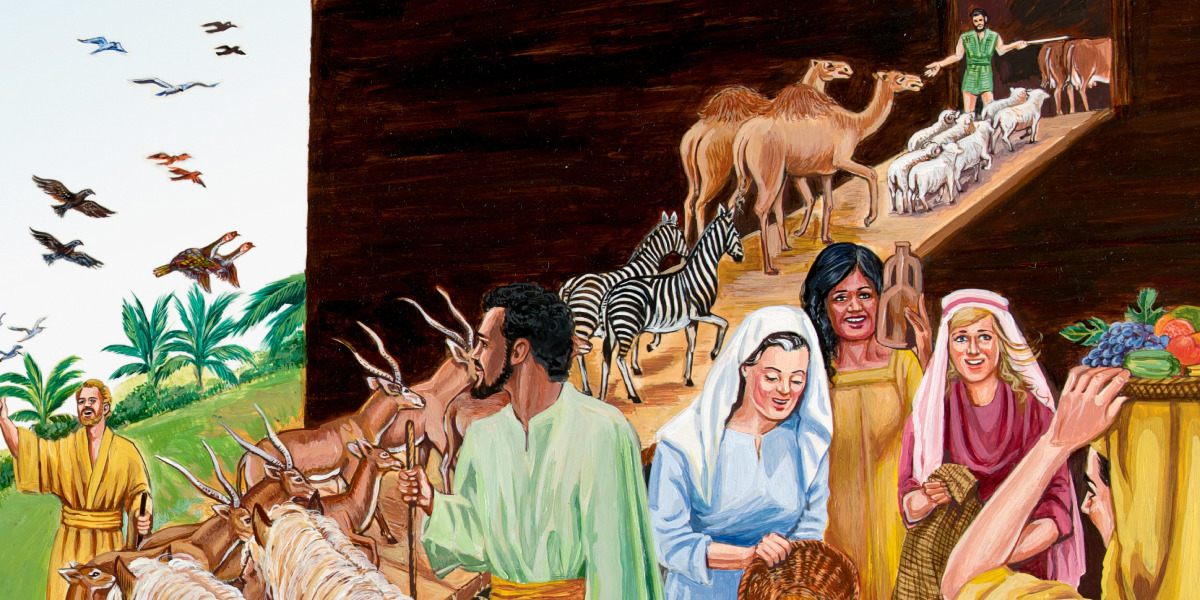
Noé y su familia llevan provisiones y animales dentro del arca

Noé hace un arca

NOÉ tenía una esposa y tres hijos. Los hijos se llamaban Sem, Cam y Jafet. Cada hijo tenía una esposa. Así que había ocho personas en la familia de Noé.

Ahora Dios hizo que Noé hiciera una cosa rara. Le dijo que hiciera un arca grande. El arca era grande como un barco, pero más bien parecía una caja grande y larga. ‘Hazla de tres pisos,’ dijo Dios, ‘y ponle cuartos.’ Los cuartos eran para Noé y su familia, los animales y el alimento para todos.

Dios le dijo a Noé que hiciera el arca de modo que no le entrara agua. Dijo: ‘Voy a enviar un gran diluvio de agua y destruir al mundo entero. El que no esté en el arca morirá.’

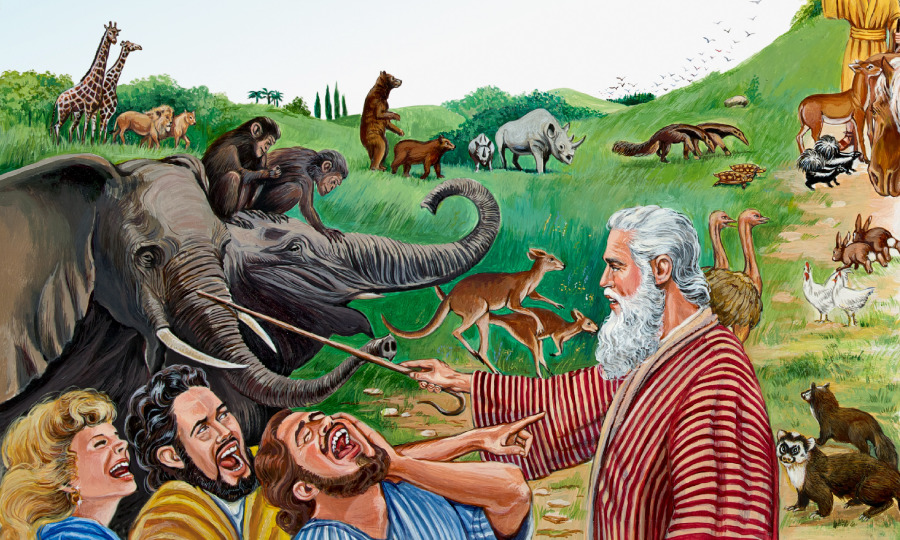
Noé y sus hijos obedecieron a Dios y empezaron a construir. Pero la demás gente solo se rió. Siguieron siendo malos. Nadie creyó cuando Noé les dijo lo que Dios iba a hacer.

La gente se ríe cuando Noé trata de advertirles de que viene el diluvio

Por lo grande que era, tomó mucho tiempo hacer el arca. Después de muchos años, quedó hecha. Ahora Dios dijo a Noé que metiera los animales allí. Le dijo que pusiera allí dos de algunas clases de animales, macho y hembra. Pero de otros animales, Dios le dijo que pusiera allí siete. También le dijo a Noé que trajera allí todas las diferentes clases de pájaros. Noé hizo precisamente lo que Dios dijo.

Después, Noé y su familia también entraron en el arca. Entonces Dios cerró la puerta. Dentro, Noé y su familia esperaron. Piensa que estás allí, esperando. ¿Habría un diluvio como había dicho Dios?

Génesis 6:9-22; 7:1-9.

John Wesley: Father of Methodism Part 1

John Wesley: Father of Methodism Part 1

John Wesley: Father of Methodism Part 1

“FIRE, FIRE!”
“Fire, fire, help!” screamed five-year-old John Wesley as he scrambled from his bed in the smoke filled room. John quickly realized he was alone, and flames were already licking at the door, blocking his exit. John ran to the window and saw the confusion below. People were running and screaming as his parents could find only seven of their eight children. John pushed on the window with all his might, but he just wasn’t strong enough to make it budge. Spotting his father below, John began to bang on the window and scream as loudly as he could.

“There he is,” Mr. Wesley shouted. There was no time to get a ladder, so some quick-thinking men came up with a plan. The smaller man climbed onto the shoulders of the larger man to make a human ladder. The top man shoved the window open and pulled young John to safety just in time. The trembling boy was delivered into the arms of his grateful mother. Despite the loss of their house and belongings, the Wesley family praised God for John’s rescue. His parents said that John was “a brand plucked from the burning.” His mother, Susannah, resolved to take special care of John, believing God had preserved him for a special purpose.

THURSDAY’S CHILD
Like all the Wesley children, John’s busy day began well before dawn. He was expected to read from the Bible, say the Lord’s prayer, recite Bible verses, say a prayer from the Book of Common Prayer, and pray for his family members. Once all that was done, he could go to family devotions. Thursdays were the best day of the week for John, for on that day, he could go about his studies with the anticipation of a wondrous hour that would come that afternoon.

“How are your studies?” asked Mrs. Wesley as she and John sat in the warmth of the late day sun streaming through an open window. Susannah made a point of spending one hour each week with each child, no matter how busy she was. John reported on the major subjects: English, history, geography, and math. “And how is your Latin coming along?” inquired Mrs. Wesley. “Oh, that. It’s the hardest of all, but I’m working on it!” answered John. Once Susannah was satisfied with his progress, the conversation turned to more important matters. “John, you must keep all your thoughts, words and actions pure and moral. Discipline yourself so you can lead a good Christian life.”

“I try to be a good Christian, Mother, but it’s so hard!”

“Keep working at it, John. Pray, read the Scriptures and keep yourself from sin. Then you will grow closer to God. You must be disciplined in all you do.” Only time would tell if Susannah’s teaching would bear fruit.

THE HOLY CLUB
John entered Oxford University in England in 1720 at 17 years of age. Though John was serious about his studies, he also enjoyed tennis, dancing, reading for pleasure and attending plays–activities his mother might have called a waste of time. Upon graduation, John returned to Oxford as a pastor and professor. By this time, he had decided to work hard at seeking God, studying Scripture and leading a pure life. John’s younger brother Charles was now a student at Oxford. Charles couldn’t wait to tell his older brother about a new club he had started.

“John, you’ve just got to come to our club meeting tonight! It’s great!”

“I’ve heard your meetings are causing quite a stir on campus. What’s this club all about?” asked John.”We are just trying to know God and follow Him better. We study the Bible, pray, fast twice a week, and give money to the poor.”

“Ah, so that’s why the teachers and students call you the ‘Bible Moths’ and ‘The Holy Club,'” laughed John.

“It’s true they don’t really like us, but I don’t mind what they call us!” said Charles. “In fact, when they call us ‘Methodists’ it kind of makes sense. We are really looking for the best methods for following God. Some of the disciplines you and I learned as children are the best ways.”

The club used spiritual disciplines like fasting, prayer, and giving away as much money as possible to grow closer to God. Before long, John became the leader. He taught them to add good deeds to their list of disciplines. Club members visited the poor, the sick, and even the prisoners to share the Good News. But after a few years, John felt called to take his message to a new land.

AFRAID TO DIE
Cowering in his cabin on the way to America, 32-year-old John Wesley listened to the storm raging. He screamed in terror when a great surge of water nearly swamped the ship. Then he heard the faint sounds of a sweet melody. The Moravians below deck were singing a peaceful song even in these horrible conditions. How could they face death with a song when he was terrified to die?

After the storm passed, John sought out his Moravian shipmates. He was shocked to realize that even the children were not afraid to die. Was their faith stronger than his own? All his years of discipline had not prepared him to face death. John began a search for real faith–a faith that did not fear death.

In America, John set out to minister to those in the colony of Georgia, but he didn’t stay long. People spread rumors about him and his brother Charles, making ministry difficult. John was discouraged and viewed the whole trip as a failure. Little did he know his life would have a huge impact on the budding nation.

Discouraged, John returned to England, and continued his search for meaning. He tried to follow God, but something was still missing. Then one night he went to a religious society meeting on Aldersgate Street. The preacher said that God works in the heart through faith in Christ. When he heard these words, John felt his heart “strangely warmed.” He realized that he really did trust in Christ alone for salvation. This was all he needed for a faith that did not fear death. John was still disciplined in living out his faith and knowing God better, but he finally had peace and knew that his salvation was assured!

A LASTING LEGACY
The small Methodist club John and Charles started at Oxford began to spread all across England. The clubs became known as ‘Methodist Societies.’ As their leader, John traveled around England on horseback to preach to as many people as possible. This was known as “circuit riding,” as the preacher would ride the same circuits over and over, bringing the Gospel to those who had no church nearby. John even trained circuit riding preachers and sent them to America, where Methodist ideas would have a major impact on the New World. By the time he died at age 87, he had traveled more than 250,000 miles and preached more than 42,000 sermons. John Wesley believed that faith in Christ is all that is needed for salvation. Yet a life of discipline and service help us to know and follow God. These views are still impacting the world today.Make It Real! Questions to make you dig a little deeper and think a little harder.

  1. John’s family watched in horror as their home burned to the ground, yet they praised God that John’s life was spared. Think of some of the bad things that have happened in your life. Can you find reasons to praise God even when things go wrong?
  2. What habits or “disciplines” did John use to help him know God better?
  3. What things do you do to help you know and follow God better?
  4. Have you ever been in a club that had something to do with Christianity? John and Charles Wesley were ridiculed for participating in the Holy Club. If you were made fun of for being in a Christian club, what would you do?
  • Suggested reading:
    • The Chimney Sweep’s Ransom by Dave and Neta Jackson (Trailblazer series), Bethany.
    • Susannah Wesley by Katherine McReynolds (Women of Faith), Bethany.

John Newton: God’s Amazing Grace

John Newton: God’s Amazing Grace

John Newton: God's Amazing Grace

Eleven-year-old John Newton struggled under the weight of the coiled rope as he helped get the ship ready for departure. “Aren’t you too little for such a big job?” the deck hand asked as he began to ready the sails. “No sir, I’m strong for my age,” John replied as he continued his task. “But don’t your mom and dad mind you being out at sea?” continued the curious deck hand. “No,” John answered again. “My mother is dead and my father is the captain of the ship!”

John Newton’s mother died just before he turned seven years old. In her short time with her son, Mrs. Newton eagerly taught him God’s word and prayed that he would become a minister when he grew up. Unfortunately, in the years that followed, no one would have guessed that John Newton would ever be a preacher.

After his mother’s death John’s life took a turn that would lead him in a very different direction. While his father, the sea captain, spent months at sea, John was left in the care of his new stepmother. She really didn’t want John around and he was left to go his own way. All that freedom was too much for John. His behavior grew worse and worse until finally his father began taking him on voyages to keep him out of trouble. Of course, the rough sailors did not provide the good influence John needed. By the time he returned from sea, he was even more drawn to shady characters and rough living. John seemed to have forgotten all that his mother had taught him in his early years.

The Capture
“Hey you,” called the voice of a strange man John had seen staring at him earlier that night. John took off running down the darkened alley as fast as he could. His father had warned him to beware of the gangs of navy officers who captured young men, forcing them to serve on war ships. As John ran, several men closed in on him, tackling and then cuffing him. The men dragged John, kicking and screaming to a ship. He was thrown into a dark hole where he found himself with a group of other unfortunate young men. This time at sea made John an even angrier young man.

There is No God
By his early twenties, John Newton had become a rebellious person. Even the toughest sailors, known for their cursing and drinking, were sickened by John’s bad attitude and foul language. He refused to follow the captain’s orders and constantly made fun of anyone who believed in God. When John remembered what his mother taught him, he would try to be good, but his efforts would only last a short time.

One day while at sea, John began reading a book which left him convinced there was no God. At first John was afraid not to believe in God, but over time he began to like the freedom of not having to worry about answering to God someday for his doing wrong.

God, Please Help Me
One day during a long voyage, a fierce storm struck. The ship lurched and rocked as the violent storm raged. Climbing the huge waves, the boat plunged time after time, crashing into the ocean on the other side. With each fall, more and more of the ship’s contents spilled into the raging water. As an experienced sailor, John Newton had ridden out many a fierce storm before, but never had he come this close to death. As the ship began to break into pieces and water rushed in everywhere, one sailor washed overboard. A few hours later when John faced certain death, he began to recall Bible verses his mother had taught him. John, who couldn’t swim, heard himself cry, “Lord, have mercy on us.” But then he thought, “What mercy can there be for a wretch like me”? As John began to tell God he was sorry for turning away from Him and for doing so much wrong, he began to feel peace in his soul.

When the storm ended, John realized that God had saved him from a sure death. He immediately went in search of a Bible and asked Jesus to save his soul as well. The Bible, which he had made so much fun of, now gave him the guidance he needed. John Newton became a Christian. The other sailors noticed that John no longer used foul language and he did not make fun of Christians. He didn’t even get upset when others teased him.

The Slave Trade
John Newton made many trips to Africa to buy slaves, who were sold in the United States and the Caribbean. Even after becoming a Christian, Newton did not see anything wrong with slavery, like most others during his time. Later Newton did begin to see that slavery was wrong. He and a young politician named William Wilberforce joined others who spoke out against the practice. In time their efforts led to a law which banned slavery in England.

The Preacher
Remember when as a little boy John Newton’s mother wanted him to be a preacher? Well, it came true later in his life. He became the pastor of a church in Olney, England, and later a church in London. He also traveled around England telling about his adventures at sea and how God saved a wretch like him.

Besides preaching, John and his best friend wrote a new hymn for the church service every week. Can you imagine that, a new hymn every week! In all, Newton wrote almost 300 hymns. The best known of them is “Amazing Grace,” which has become one of the favorite hymns of all time. When he was writing the hymn, he remembered the storm in which he almost died. “Amazing grace,” he wrote, “that saved a wretch like me!” He remembered how wonderful it was to feel right with God at last. “How precious did that grace appear the hour I first believed,” it says.

Life is full of dangers like that storm. John’s hymn reminds us of God’s kindness in bringing us safely through difficult times. It reminds us of His mercy and grace to us when we didn’t deserve help, and His good promises to us for the future–forgiveness and eternal life.

Make It Real! Questions to help you dig a little deeper and think a little harder.

  1. John Newton spent much of his childhood free to do as he pleased. He later spent some of his adult years in a form of slavery. Which of these experiences do you think caused him to become the most hardened?
  2. How is John Newton’s story similar to the Biblical account of Jonah? How did their near-death experience affect each of them?
  3. Are you surprised that even though John Newton had been captured and made a slave of a Navy ship, he still participated in the cruel slave trade? Why do you think it took so many years for him to change his mind about slavery?
  4. Can you write your own new verse to “Amazing Grace”? What personal experiences would you reference in your verse?
  • Suggested reading:
    • Ten Boys Who Changed the World by Irene Howat (Christian Focus Publications)
    • The Runaway’s Revenge by Dave and Neta Jackson (Trailblazer Books, Bethany House)

John Calvin: Reluctant Reformer

John Calvin: Reluctant Reformer

John Calvin: Reluctant Reformer

A Daring Escape
John Calvin tugged on the last knot in his “chain” of linen bed sheets. Every tie had to be secure since he needed this home-made “rope” to make his escape. On his way to the open window, John paused by the looking glass. Surely no one would recognize the professor now dressed in the shabby clothes of a poor farmer. “God help me,” he prayed as he gathered the “rope” and tied the final knot firmly to the heavy bedpost. Seeing no one in the darkened Paris Street, he quickly slipped over the sill and shimmied down the wall with a satchel containing some clothes and books. The hoe thumped to the ground first, and then John felt his feet touch. With the hoe over his shoulder, the 24-year-old teacher strolled out of town, trying his best to look casual.

Why was it that this distinguished and quiet scholar needed to escape from Paris in the middle of the night? Recently, John had written a sermon challenging people to obey the Bible and not the church officials. Now he was paying the price. The officials wanted to throw him into prison, maybe even kill him. With a fake name and his new clothes, John hoped to make it to a safer place. He dreamed of the day when he could stop running and settle into a calm life studying and writing about the Bible. For the next few years, he would live as a hunted man. But no matter what came his way, John decided he would keep teaching. “I will not be quiet just because the authorities don’t like what I’m saying.”

Secret Meeting in a Cave
Water dripped from the ceiling and light from torches played on the walls of the cold, stone cave. John gazed intently at the shadowy faces of the young men who had risked everything to come hear him teach. If the French authorities found their Protestant meeting, they’d all be arrested. This cold, dark cave was a far cry from the comfortable middle class home he had grown up in, yet John felt honored that God called him to teach in such a place at such a time. Seeing his fellow refugees so hungry for spiritual food, John took a deep breath and began to tell of the things that had changed his life. “Good works will never save you. Only Jesus can do that. Put your faith in him!”

During his three years of running, John found time to write one of the most important works of the era. In The Institutes of the Christian Religion, he stressed that God is in control and that the Bible can be trusted. These ideas caused quite a stir and made John Calvin even more of a wanted man.

Finally John left France for the free city of Strasbourg in search of a quiet place to do more writing. However, God had other plans, and on his way John was detoured through Geneva, a place whose bad reputation was well known. “I’d rather not go near this filthy town,” John thought as he passed the drunken men and women scattered along the street. “I’ll just spend one night and be on my way in the morning!”

Two Terrible Years
At the inn that night, Geneva’s most prominent preacher, William Farel, came to John with a request. As they sat down to a meal of bread and cheese at a rough wooden table, Farel’s voice was somber. “This town is a mess. There is so much immorality, and people don’t seem interested in the gospel.”

“Yes, I noticed,” John said.

Then Farel dropped a bombshell. “I need help to clean this place up, and I believe you are the man for the job.”

John nearly choked on a piece of bread. “Thank you, but I would rather not. I am not cut out for church leadership. I wish to study and write.” There was no way he wanted to stay in such an immoral place!

The man’s eyes flashed, and he brought his hands down hard on the table. “You are concerned about your rest and your personal interests. I proclaim to you in the name of Almighty God whose command you defy: upon your work there shall rest no blessing. . . If you do not stay and help me, you will be going not against me, but the Lord himself!”

John couldn’t find his tongue, he was so deeply shaken. No one had ever spoken to him in that way before. He looked around at the candles casting shadows against the wall, trying to avoid the curious stares. He didn’t want to stay, but he was even more terrified of not obeying God. “It seems as though God has stopped me in my tracks,” he thought. “I must help Farel in spite of my fears.”

The next two years were among the worst of his life. The city government had been trying to curb the drunkenness and gambling, but the people ignored them. John preached in the churches about clean living, but few would listen to him. “That John Calvin is a nuisance!” they said.

John was miserable. “Why have I come here?” he wondered. He suffered from stomach upsets and constant headaches, and his asthma often flared up. “Have I heard you correctly, Lord?” he prayed. “Was it really You who called me here?” He was glad when he finally had to leave.

Get out of Town!
“Get out of Geneva!” ordered the Geneva city officials. “We don’t want you here anymore.” Although it wasn’t a nice thing to be shown the door like that, John wasn’t entirely unhappy about it. It was his way out. He promised himself, “I will never get mixed up in church administration again!” He went to live in Strasbourg to teach and write as he had always desired. John’s friends convinced him he should look for a bride and promptly began introducing him to ladies they thought he should consider! After about a year of such match making, John turned his eye toward Idelette Stordeaur. Their happy marriage lasted nine years before she died.

In the meantime, Geneva continued its downward slide into all things evil. The officials began to see the wisdom in the reforms John had attempted. “Please come back,” they begged. Sensing that this was God’s call on his life, he returned in 1541.

For the rest of his life John stayed in Geneva. He worked to bring about moral and spiritual reform by trying to make a government based on Scripture. He gave churches a system for leadership. In Calvin’s system, the people had a say in who would be their leaders. These ideas would eventually be used in democratic societies. Slowly but surely the town of Geneva changed its ways. It became a center for academics and a place where persecuted Christians could safely live. Although John found great satisfaction in writing important books, perhaps his biggest contribution was in bringing God’s light to a darkened city.Make It Real!
Questions to make you dig a little deeper and think a little harder.

  1. Calvin preferred a quiet life reading and studying about God, yet he followed God’s call to be a pastor in a town that was very sinful. How did this experience help him to learn more about God?
  2. Calvin believed the Bible taught that doing good things cannot get a person into heaven. What did he say is necessary to go to heaven?
  3. Calvin allowed the people in the church to have a say in choosing their leaders. Do you think this was a wise and good thing?
  • Suggested reading:
    • The Reformation by Sarah Flowers (World History Series, Lucent Books)

John Bunyan: The Jailor’s Story

John Bunyan: The Jailor’s Story

John Bunyan: The Jailor's Story

Taking a Stand
I watched for trouble as John Bunyan preached to a crowd in the town square. The foolish man had been warned he’d be arrested for preaching outside the church. At this rate, he’d end up in my jail before long.

“I must preach,” I once heard him tell an officer. “When God lays that on a man’s heart, it is terrible to disobey, more terrible than your jails.”

“Humph,” I thought. “Does he really know what jail is like?” Did he understand how dark they were, how only the faintest light penetrates the damp stone walls? Did he realize that he’d get just a quarter loaf of bread a day and that no one in the crowded cells got to bathe?

If Bunyan did know about these conditions, he didn’t let it stop his preaching. I became curious. Why would a man act like this? Did Bunyan really believe what he said about God? What did I believe? These questions were in my mind when I went to hear him, hoping no one in the crowd would recognize me.

Bunyan’s preaching kept my attention. I’ll give him that. He spoke about what makes a person a Christian. Now that was a funny thing to talk about. Weren’t we all Christians since we were born into the Anglican Church?

“Those who receive Christ are the ones who truly know God,” he shouted.

That’s when it started– a disturbance at the edge of the crowd. Officers of the British government muscled their way past worshipers. “John Bunyan, we arrest you in the name of the king for holding an illegal religious meeting.”

I slipped away and returned to the jail; there’d be a new prisoner to process.

The Times
I stood before him with my hands on my hips. “Well, Bunyan, look at where your preaching got you.”

He sat on the rough bench regarding me with peaceful eyes. Fear usually envelops my prisoners’ faces.

“You understand the law, don’t you?”

“Yes, of course. These are troubled times, and the new king fears that hotheads could stir up revolution. But I’m not interested in politics. My zeal, as you know, is for bringing lost people to Jesus Christ,” insisted John.

I jumped. “And how would I know?”

Again, the smile. “I saw you out there today.”

“Yes, well, a man can be curious, can’t he?” I grumbled and hurried away. John Bunyan wasn’t going to get his hooks in me.

Bunyan drew a lot of visitors to my jail, including his devoted young wife, who was expecting a baby. She always came in with her head high and proud, as if defying the stench and the darkness. She constantly went to the authorities to plead Bunyan’s case. One man shouted her out of his chambers claiming, “John Bunyan does the devil’s work!” Like her husband, she never quit.

When she didn’t come to see him for several days, I figured she was out badgering the judges again. When she did come, it was clear that she had lost their baby. Bunyan remained in prison, toiling away, making shoelaces to earn money. I didn’t hear him complain, but sometimes he looked very sad.

Never Give Up
Three months after Bunyan came to jail, a big-shot came looking for him, wrinkling his nose at the smell.

“If you promise to stop preaching, you may go free,” I heard him tell Bunyan.

“I cannot go against God,” he said.

“Pitiful,” I thought. “After all he and his family have been through, he’s still holding out. What’s wrong with him?”

Preach and write, write and preach. That’s what Bunyan did day in, day out. Many a morning while I passed the bread along to the hungry inmates, I’d hear him preaching to the others. “God will come to the aid of anyone who believes in Him,” he said.

“Don’t you ever stop?” I growled at him.

He shook his head and smiled. “I’m already in here for preaching the Gospel. What’s to prevent me?”

Blind Mary Brings Soup
For all the hardships I saw him endure, what really got to me was his daughter, Mary, a little girl of 10. The first time I saw her I said, “Why do you want to be coming to a place like this?”

“I’ve brought my father his supper,” she replied holding up a hot jug of soup.

When she tripped over the stoop, I shook my head at her clumsiness. “Better watch where you’re goin’.”

“I can’t help it, sir,” she said. “I’m blind.”

I could’ve eaten my words and bitten my tongue. Poor lass! Naturally, I let her in. She memorized the way to the prison and started coming daily to give her father soup. I knew where she got her dedication.

It nearly broke my heart when, three years later, she didn’t come.

“Where’s the lass?” I asked her brother.

He hung his head. “She’s awful sick.”Then she died. I half expected Bunyan to start wailing at the news. Instead, he took up his pen. Through his quiet tears he explained, “I must write about the resurrection of the dead.”

That’s when I started wondering if it might be true.

John Bunyan’s Progress
Twelve years passed, and finally Bunyan was set free. It seemed as if his troubles were over and he could go back to a quiet family life. Yet, one day three years later, I looked up and there he was again.

A pompous looking officer said, “This man is under arrest for illegal preaching.”

I sighed. Was there no end to this man’s troubles?

“C’mon in,” I said. “I believe you know the way.”

When he got settled, he started writing again as if he had something urgent to say. He paused a few weeks later and looked up as I brought his bread. “And what keeps you so busy these days?” I asked.

“There’s a story I’ve been working on for a long time. It’s about a Pilgrim named Christian who is making his way through a world full of hardship and temptation. He’s going to make it, though, to Heaven, or what I call the Celestial City.”

“A Celestial City? Ha! This world is so full of troubles, how can anyone believe in heaven? Surely, all your trials have taught you that, John!”

John’s eyes held compassion. “My friend, we all have trials in this life. But if we put our faith in God, then we will see that we are just pilgrims passing through this world on our way to heaven.”

Finally, it was all so clear to me! John Bunyan was like a Pilgrim on a difficult journey, but he knew he was going to a better place. By keeping his sights on heaven, he could face anything, even imprisonment!Make It Real!
Questions to make you dig a little deeper and think a little harder.

  1. In John Bunyan’s time in England there was no freedom of religion. Can you think of places in the world today where religious freedom is restricted?
  2. John Bunyan could have been released from jail if he would stop preaching. Do you think he made the right decision?
  3. John Bunyan’s most famous book is The Pilgrim’s Progress. The book is an exciting adventure that shares spiritual truths. Why do you think this has become the bestseller of all time, besides the Bible?
  4. John Bunyan used his time in prison for good. Look up Philippians1:12-14 to learn of another man who worked for good while in prison. Have you ever served God during a time when your circumstances were bad?
  • Suggested reading:
    • The Pilgrim’s Progress by John Bunyan
    • Dangerous Journey by Oliver Hunkin (available from Vision Video)
    • The Pilgrim’s Progress Audio Drama

Jim Elliot: Story and Legacy

Jim Elliot: Story and Legacy

Jim Elliot: Story and Legacy

January 2, 1956, was the day that 29-year-old Jim Elliot had waited for most of his life. He jumped out of bed, dressed as quickly as he could, and got ready for the short flight over the thick Ecuador (Eck-wah-door) jungle. Almost three years of jungle ministry and many hours of planning and praying had led Jim to this day. Within hours, he and four other missionaries would be setting up camp in the territory of a dangerous and uncivilized Indian tribe known then as the Aucas (Ow-cuz), known now as the Waodani (Wah-o-dah-nee). The Aucas had killed all outsiders ever caught in their area. Even though it was dangerous, Jim Elliot had no doubt God wanted him to tell the Aucas about Jesus.

Growing Up

As a little boy growing up in Portland, Oregon, Jim Elliot listened carefully as visiting missionaries told about life on faraway missions fields. He asked them questions and dreamed about being a missionary himself some day. It made him sad that so many people in other countries died without knowing about God.

The Long Boat Trip

On February 2, 1952, Jim Elliot waved goodbye to his parents and boarded a ship for the 18-day trip from San Pedro, California to Quito (Kee-toe), Ecuador, South America.

He and his missionary partner, Pete Fleming, first spent a year in Quito learning to speak Spanish. Then they moved to Shandia (Shan-dee-ah), a small Quichua (Kee-chew-wah) Indian village to take the place of the retiring missionary. Jim and Pete studied hard to learn the language and fit in. Their hard work paid off; in six months, both were speaking Spanish well enough to move to Shandia. When they arrived in Shandia, they also had to learn the speech of the Quichuas.

Planning to reach the Aucas

Three years later many Quichuas had become faithful Christians. Jim now began to feel it was time to tell the Aucas about Jesus.

The Aucas had killed many Quichuas. They had also killed several workers at an oil company-drilling site near their territory. The oil company closed the site because everyone was afraid to work there. Jim knew the only way to stop the Aucas from killing was to tell them about Jesus. Jim and the four other Ecuador missionaries began to plan a way to show the Aucas they were friendly.

Nate Saint, a missionary supply pilot, came up with a way to lower a bucket filled with supplies to people on the ground while flying above them. He thought this would be a perfect way to win the trust of the Aucas without putting anyone in danger. They began dropping gifts to the Aucas. They also used an amplifier to speak out friendly Auca phrases. After many months, the Aucas even sent a gift back up in the bucket to the plane. Jim and the other missionaries felt the time had come to meet the Aucas face-to-face.

One day while flying over Auca territory, Nate Saint spotted a beach that looked long enough to land the plane on. He planned to land there and the men would build a tree house to stay safe in until friendly contact could be made.

The missionaries were flown in one-by-one and dropped off on the Auca beach. Nate Saint then flew over the Auca village and called for the Aucas to come to the beach. After four days, an Auca man and two women appeared. It was not easy for them to understand each other since the missionaries only knew a few Auca phrases. They shared a meal with them, and Nate took the man up for a flight in the plane. The missionaries tried to show sincere friendship and asked them to bring others next time.

For the next two days, the missionaries waited for other Aucas to return. Finally, on day six, two Auca women walked out of the jungle. Jim and Pete excitedly jumped in the river and waded over to them. As they got closer, these women did not appear friendly. Jim and Pete almost immediately heard a terrifying cry behind them. As they turned they saw a group of Auca warriors with their spears raised, ready to throw. Jim Elliot reached for the gun in his pocket. He had to decide instantly if he should use it. But he knew he couldn’t. Each of the missionaries had promised they would not kill an Auca who did not know Jesus to save himself from being killed. Within seconds, the Auca warriors threw their spears, killing all the missionaries: Ed McCully, Roger Youderian, Nate Saint, Pete Fleming and Jim Elliot.

Waiting to Hear

Late in the afternoon of Sunday, January 8, Elisabeth Elliot, Jim’s wife, waited by the two-way radio to hear Nate Saint and his wife discuss how things had gone that day. But there was no call. As evening turned to night, the wives grew worried. They knew the news was not good.

The next morning another missionary pilot flew over the beach to look for the men. He saw only the badly damaged plane on the beach.

News quickly spread around the world about the five missing missionaries. A United States search team went to the beach, found the missionaries’ bodies, and buried them.

But don’t think Operation Auca ended there because it didn’t. In less than two years Elisabeth Elliot, her daughter Valerie, and Rachel Saint (Nate’s sister) were able to move to the Auca village. Many Aucas became Christians. They are now a friendly tribe. Missionaries, including Nate Saint’s son and his family, still live among the Aucas today.

Elisabeth Elliot even helped make a movie about Operation Auca called Through Gates of Splendor. It showed real life scenes of the five missionaries on the beach with the friendly Aucas. It also included footage of the two years she and her daughter spent living in an Auca village.

Jim’s Mission

During his life, Jim Elliot longed for more people to become missionaries. In his death, however, he probably inspired more people to go to other countries to share the love of Jesus than he ever could have in life.

Jim Elliot Quote

Make It Real! Questions to make you dig a little deeper and think a little harder.

  1. Jim desired to serve God as a missionary. How do you desire to serve God?
  2. Jim chose not to use a gun to protect himself when attacked by the Aucas. Why? What would you have done and why?
  3. Jim’s wife and daughter went to live with the Aucas after Jim was killed. Can you imagine choosing to live in the Auca village after such tragedy?
  • Suggested reading:
    • Jim Elliot by Kathleen White (Men of Faith series, Bethany House Pub.)
    • Jim Elliot by Susan Miller (Heroes of the Faith series, Barbour Pub.)
    • Jim Elliot: One Great Purpose by Janet & Geoff Benge (Christian Heroes: Then and Now series, Ywam Pub.)

Create a website or blog at WordPress.com

Up ↑

Design a site like this with WordPress.com
Get started