SI ALGUIEN que viniera hacia ti fuera tan alto que la cabeza le llegara al techo de tu casa, ¿qué pensarías? ¡Que era un gigante! Hubo un tiempo en que de veras hubo gente de esa clase en la Tierra. La Biblia muestra que sus padres eran ángeles del cielo. Pero ¿cómo pudo ser eso?
Recuerda, Satanás el ángel malo estaba causando problemas. Hasta estaba tratando de hacer que los ángeles de Dios fueran malos. Con el tiempo, algunos ángeles empezaron a prestar atención a Satanás. Dejaron la obra que Dios tenía para ellos en el cielo. Vinieron a la Tierra y se hicieron cuerpos humanos. ¿Sabes por qué?
La Biblia dice que fue porque ellos vieron a las mujeres bonitas en la Tierra y quisieron vivir con ellas. Por eso vinieron y se casaron con ellas. La Biblia dice que esto fue malo, porque Dios hizo a los ángeles para vivir en el cielo.
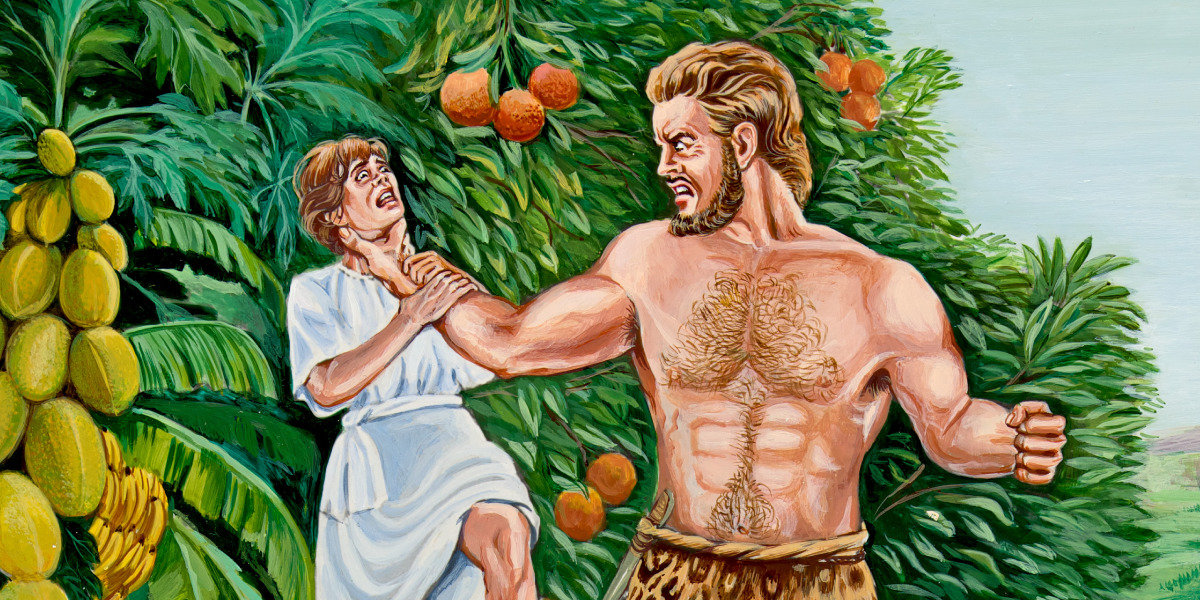
Cuando los ángeles y sus esposas tuvieron bebés, éstos eran diferentes. Al principio quizás no parecían muy diferentes. Pero siguieron creciendo y creciendo, y haciéndose más y más fuertes, hasta que se convirtieron en gigantes.
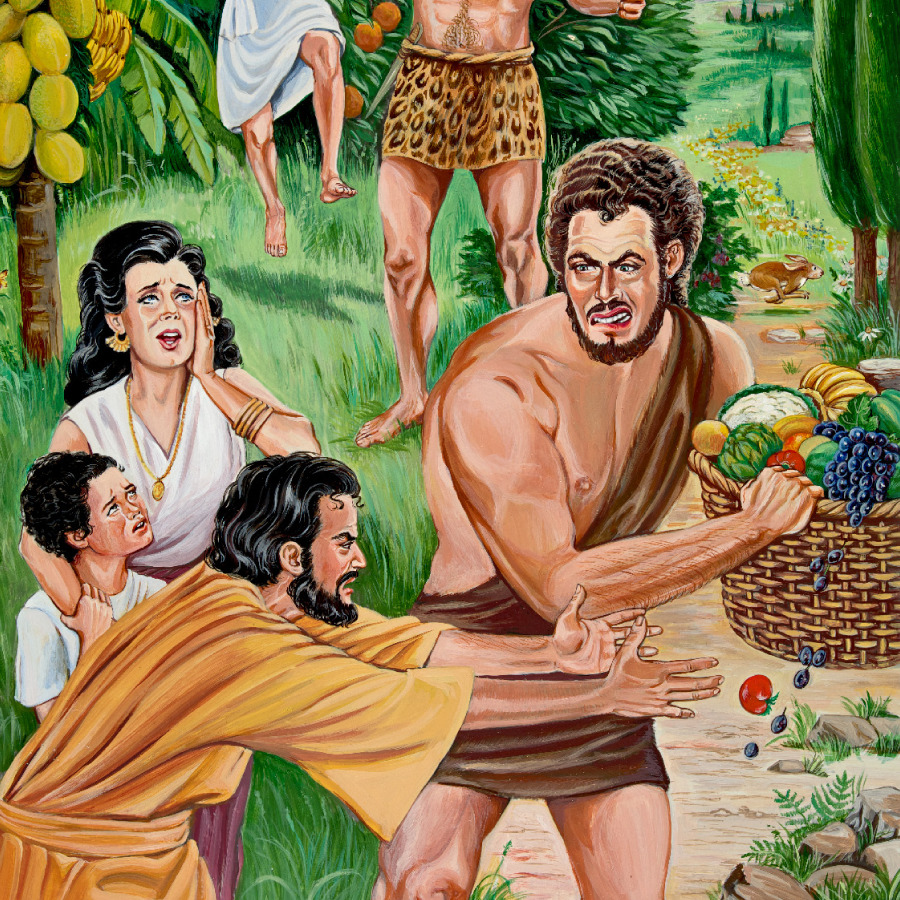
Estos gigantes eran malos. Y por ser tan grandes y fuertes, causaban daño a la gente. Trataban de obligar a todos a ser malos como ellos.
Enoc había muerto, pero había un hombre en la Tierra ahora que era bueno. Este hombre se llamaba Noé. Él siempre hacía lo que Dios quería que hiciera.
Un día Dios le dijo a Noé que había llegado el tiempo en que Él iba a destruir a todos los malos. Pero Dios salvaría a Noé y su familia y a muchos animales. Veamos cómo lo hizo.
J. S. Bach: Soli Deo Gloria – To the Glory of God Alone
Johann Bach’s Midnight Adventure
The night is dark and cold, and a fierce wind rattles the windowpanes. A small ten-year-old boy tiptoes quietly down the stairs. He cups his hand and shields the light from the candle he’s holding, trying not to awaken the others in the house. Slowly, ever so slowly, he pushes on the door to the study. He knows it will squeak unless opened very slowly, and if anyone hears him, his mission will be over.
Johann Sebastian Bach has a burning desire to play new music. Since his parents died, Johann lives with his brother, a church organist. His brother keeps his music locked away since he thinks it is too valuable to be used by children. Johann has already mastered the beginner pieces and now wants something more difficult to practice.
Johann sets down his candle and squeezes his arm through the lattice of the locked music cabinet. Very carefully, he rolls a manuscript and eases it out of the cabinet. He spreads the precious pages out on the table. The rest of his night will be spent carefully copying the notes of the piece he will begin to learn the following day. Once he has copied the final line, he carefully places the music back in the locked cabinet. Johann returns to his own bed, filled with anticipation of playing the new music. For young Johann, music is more than something to listen to or practice. It can cheer him up when he is sad. Music is the way Johann Bach expresses his thoughts and feelings.
God Makes the Music
Johann Bach’s love of music and dedication to practice began to pay off. At just seventeen years old, he got his first job as a church organist. His Lutheran family was pleased to see him carry on the family tradition in music. Word of his musical abilities spread quickly. One day, he went to compete in an organ contest, only to learn there was no contest.
“I guess you’ve won the organ contest Johann!” the judges said.
“But I haven’t even played a single note! How did I win?” he asked.
“The Frenchman heard of your amazing talent and didn’t want to risk getting beaten. Louis Marchand knows he can’t beat you!”
When Johann played music, he felt his soul praising God. In fact, he once said, “I play the notes as they are written but it is God who makes the music.” After a few years, Johann got another job as a church organist and choir director at a small German church. He directed the choir and wrote the worship music used in the church service. But even though he used his musical talents to glorify God, a problem soon arose.
Bach was Misunderstood
“Johann, people are complaining about the music you’ve been composing.”
Bach was stunned. He knew that some of the recent pieces were his best work. What could the problem be?
The man continued, “The music is too showy. Some of our members even think it is sinful. Music should be simple so that it draws attention to God, not to the music or the performers.”
Bach couldn’t believe it! His music was “sinful”? How could people call his music sinful when he only tried to glorify God? Bach took a deep breath before defending his music.
“The main purpose of my music is to glorify God. Some people do this with music that is simple. I haven’t chosen to use a simple style, but my music comes from my heart as a humble offering to God. This honors God no matter what musical style I use.”
Unfortunately, Bach and the church could not agree on this matter, so he started looking for another job. In fact, Bach changed jobs many times during his life, searching for the freedom to write the music he heard in his soul. He found a temporary refuge in the town of Weimar. This was the first time Bach did not work for a church, but his boss, the Duke of Weimar, was a religious man. The Duke encouraged Bach to continue writing sacred music, and for a while, Bach had the freedom for which he had searched.
“Jesus Help Me”
Even though the Duke gave Johann the freedom to write what he wanted, Johann never forgot that it was God who made the music through him. Whenever he began a new piece, he bowed his head and prayed. “Jesus, help me show your glory through the music I write. May it bring you joy even as it brings joy to your people.” Without Jesus’ help, Johann knew he’d never be able to complete the task. Before writing even one note, Johann carefully formed the letters J J at the top of the page. With that, the music began to pour from his soul and onto the page. When he was finally satisfied, he wrote the letters SDG at the bottom of the page – Soli Deo Gloria – For the Glory of God Alone. He hoped that when the music was played, it would point toward God.
For the Glory of God Alone – Soli Deo Gloria
People today know that Bach was one of the most brilliant composers ever. Although the peace he found at Weimar did not last, it gave him temporary relief from the problems he experienced earlier. Instead of having to please the whole church with the music he wrote, he only had to please the Duke. But while the people of his day recognized Bach as a great organist, they never accepted him as a great composer. When he died in 1750, his music was considered old-fashioned and had been forgotten by most people. It was not until almost 80 years later that his music was rediscovered. In 1829, the composer Felix Mendelssohn found a copy of Bach’s St. Matthew Passion (the story of Jesus’ crucifixion and death) and decided to perform it.
The people who heard this performance of Bach’s music loved it! They wondered why his music had been forgotten. Now that people knew about Bach’s music, they began performing it at concerts and in churches around the world. Bach became more famous a hundred years after his death than he had ever been while he was alive. But he never desired to become famous. His desire was to glorify God. Today his music is played and studied around the world. It is used in nearly every Christian denomination. It’s safe to say that many people now agree that Bach’s music truly is Soli Deo Gloria – “to the glory of God alone!”Make It Real!
Questions to make you dig a little deeper and think a little harder.
How can you follow Bach’s example and do all for the glory of God? Read 1 Corinthians 10:31 and find some of the ways you can do this.
Johann expressed his thoughts and feelings through music. What are some ways you use to express yourself?
Bach’s music was never really appreciated by the people of his time. Do you think he was discouraged by this?
God gave Bach a special talent for music. He developed that talent by practicing diligently. What talent has God given you, and how are you developing your talent?
Suggested reading:
Sebastian by Jeanette Winter (Browndeer Press, Harcourt Brace & Company)
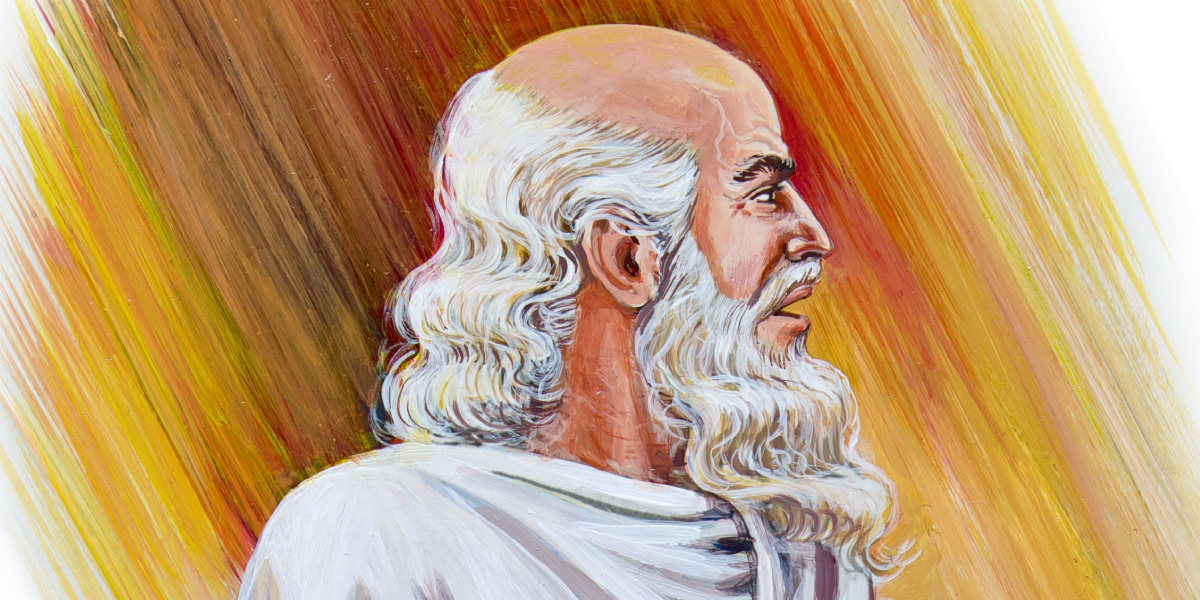
CUANDO empezó a haber más gente en la Tierra, la mayoría hicieron cosas malas como Caín. Pero un hombre fue diferente. El nombre de éste era Enoc. Él era un hombre valiente. La gente que estaba viviendo alrededor de él era gente mala, pero él seguía sirviendo a Dios.
¿Sabes por qué aquella gente cometía tantas cosas malas? Piensa en esto: ¿Quién hizo que Adán y Eva desobedecieran a Dios y comieran del fruto que Dios les prohibió? Un ángel malo. La Biblia lo llama Satanás. Y él trata de hacernos malos a todos.
Un día Jehová Dios hizo que Enoc dijera a la gente algo que ellos no querían oír. Fue esto: ‘Un día Dios va a destruir a todos los malos.’ Esto quizás enojó mucho a la gente. Quizás trataron de matar a Enoc. Por eso, Enoc tenía que ser un hombre muy valiente para que dijera a la gente lo que Dios iba a hacer.
Dios no dejó que Enoc viviera por mucho tiempo entre aquellos malos. Solo vivió 365 años. ¿Por qué decimos “solo 365”? Porque en aquellos tiempos los hombres eran mucho más fuertes que ahora y vivían más. ¡Sí; Matusalén el hijo de Enoc vivió 969 años!
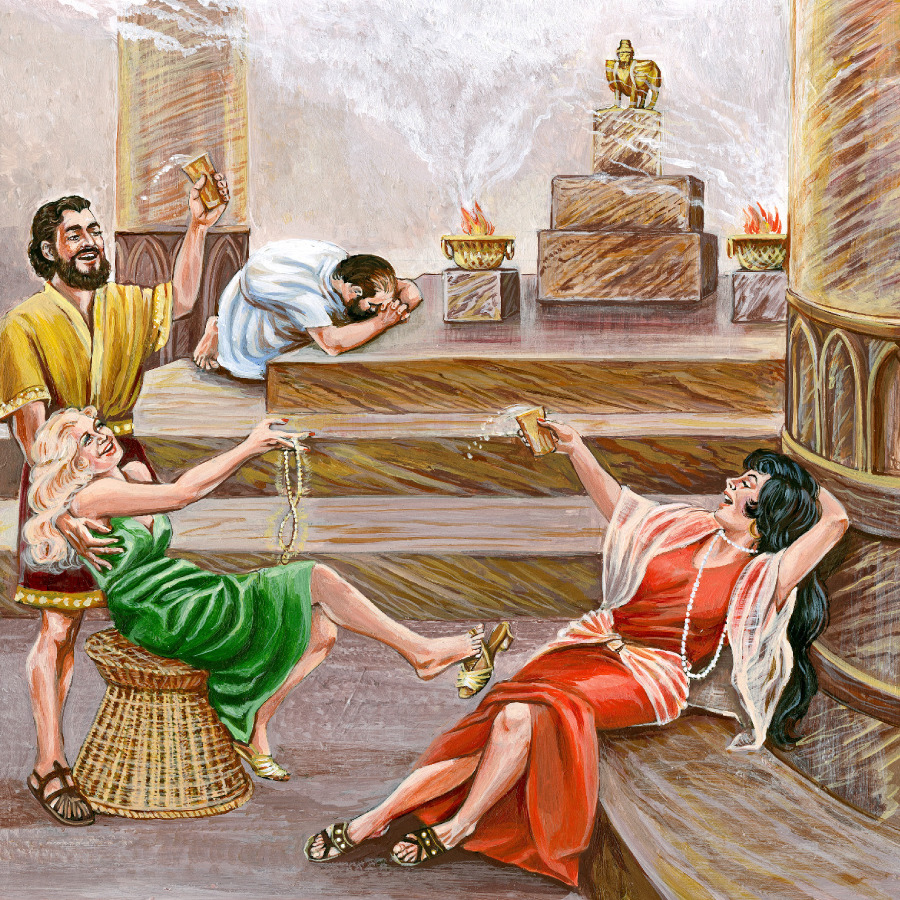
Pues bien, después de la muerte de Enoc, la gente se hizo peor. La Biblia dice que ‘todo lo que ellos pensaban era malo siempre,’ y ‘la Tierra llegó a estar llena de violencia.’
¿Sabes una de las razones por las cuales hubo tantas y tantas dificultades en aquellos días? Fue que Satanás tuvo una nueva manera de llevar a la gente a lo malo. Veamos qué fue eso.
Just One Chunk of Bread Nebraska farm life was like a dream to seven-year old Ida Sophia Scudder. There were the wide-open fields to run through, the sweet smelling hay to play in, and a beautiful horse to take care of. These happy days on the farm almost made her forget what had happened a year ago in India. Almost. But not quite.
It was the children’s eyes that would be forever etched in her memory. Those rows and rows of pain-filled eyes all looking to her for relief. Eyes so weak they could scarcely be held open. Eyes full of hunger longing to be satisfied.
Even though Ida’s basket was full of bread, she couldn’t give them enough to really satisfy their hunger. Her mother had been clear about that. “Only one chunk of bread, Ida. Just one chunk for each child. Otherwise those at the back of the line will get nothing.”
It was hard, but Ida obeyed her mother. One chunk of bread wouldn’t satisfy these poor children suffering from India’s famine, but at least their tummies wouldn’t rumble quite so much. That evening as Ida looked at her own dinner, she felt guilty for having enough when so many had too little.
But all that was behind Ida now that her missionary family had returned to America because of her father’s poor health. She loved the comforts of America, where there always seemed to be plenty of food to go around. Ida Scudderdecided to never return to India. She wanted to live an easy life in the land of plenty.
College Dreams The girls giggled as they crowded into their secret meeting place. The furnace room was the perfect spot for “the bunch” to examine their loot. Florence had “borrowed” the headmistress’ pen and Annie had a pot from the school kitchen. “I’ve got you all beat!” exclaimed Ida, as her hand slipped into her pocket. “These screws are right from the front gate of the seminary! Just wait till the headmistress comes through the gate!”
With that, the entire group dissolved into laughter. Borrowing and later returning items was just one of the many pranks “the bunch” had pulled during their four years at Dwight L. Moody’s Seminary for girls. But now that graduation was nearing, the girls’ thoughts turned toward marriage and settling down.
Ida too had dreams of a secure life with her own “Prince Charming” in America. Her dreams were interrupted by bad news from her parents, who had returned to their work in India. Ida’s father needed her to come and care for her mother, who was quite ill.
“You’re going to become a missionary just like the rest of your family,” teased Florence.
Ida’s anger flared. “Oh, no I won’t! I will never be a missionary. You’ll see. I’ll be back in one year.”
A Change of Plans Once back in India, 21-year-old Ida helped her parents in their mission work, but secretly she planned her escape. One evening, Ida had settled into her room to enjoy a book. As she turned the pages, her mind drifted to her plans to return to America, marry “Mr. Right,” and live out her days in the land of opportunity. The quick footsteps and knock at the door brought Ida back to the present. She looked up to see a young Hindu man trying to get her attention. “My wife is having our first baby and something is wrong,” he blurted out. “I was told you could help.”
“I’m no doctor, but my father is. He’ll help your wife.”
The young man’s face fell in sadness. “Our religion does not permit a man to even look at my wife’s face.”
Ida implored him, “But without my father’s help, she may die!”
In disbelief, Ida watched the man’s sad eyes drop to the floor as he turned to leave whispering, “All is lost.”
That night, another Hindu man came to Ida with the same request. He refused her father’s help for the same reason. A Muslim also came, seeking help for his pregnant wife. When Ida gave him the same explanation, he replied, “If you cannot help me, then it is better that my wife die, rather than be seen by a strange man.” With that, he bowed and left.
Ida spent a sleepless night praying for guidance. She felt she met God that night, and He was calling her to abandon her plans and follow Him.
The next morning, Ida learned that all three women died during the night. These senseless deaths occurred all because there was no female doctor. As a little girl, Ida hadn’t had enough bread to feed the starving children, but now she knew there was a way to help the hurting women.
Ida Scudder prayed aloud, “God, if You want me to stay in India, I will spend the rest of my life trying to help these women.” Once she chose to follow God’s call, Ida never looked back. She returned to America to attend Cornell Medical College. In 1899, Dr. Ida Scudder was ready to begin her work in India.
Medication to the people Ida examined the large open sore on the boy’s leg. “Why didn’t you bring your son in sooner?” she asked his mother. Ida was thrilled that the women were finally trusting her enough and coming to the clinic, but why did they sometimes wait too long?
“I thought it was the image of a god growing there,” replied the mother. “Everyone told me I would anger the gods if I even touched it. Can you help him?”
Ida sadly sent the mother away. It was too late for her to help the poor suffering boy. The superstitions the people believed were keeping them from coming to her in time. She had to think of a way to resolve this problem.
Ida’s “Roadsides” were the answer. With an ox and wagon full of medical supplies, Ida traveled to remote villages to treat the people where they lived. She would always pray with those she visited, and ask them if they had any questions about Jesus or Christianity.
Training Indian Women Ida set her mind to train Indian women as nurses and doctors so they could help themselves. Though no one believed the women would be able to pass the final doctor’s exam, Ida pressed on. When the scores were finally tallied, all fourteen of her students had passed! Ida’s dreams of teaching the Indian women to help themselves were becoming a reality.
Ida helped start the Vellore Christian Medical College and Hospital, which is today known around the world for excellent research, healthcare, and disease prevention. There, Bible classes are held in nine different languages, and chaplains pray with patients. Dr. Ida Scudder, who once promised never to work in India, left a legacy that continues to touch millions of lives each year.
Make It Real! Questions to make you dig a little deeper and think a little harder.
Why didn’t Ida want to go back to India after living in America?
What lead her to change her mind about being a missionary?
Ida was a “medical missionary.” What do you think that means?
Look up Luke 9:23Æ24 in the Bible. What is Jesus asking his followers to do? How did Ida follow Jesus’ instructions?
Are there ways that you can follow Jesus’ command in your own life today?
Suggested reading:
Ida Scudder: Healing Bodies, Touching Hearts by Janet and Geoff Benge (Christian Heroes Then and Now series,YWAM)
Ten Girls Who Made History by Irene Howat (Christian Focus Publications)
Entrad por la puerta estrecha; porque ancha es la puerta, y espacioso el camino, que lleva a la perdición, y muchos son los que entran por ella. Porque estrecha es la puerta, y angosto el camino que lleva a la vida, y pocos son los que la hallan, Mateo 7:13-14.
El reino de los cielos sufre violencia, y solo los valientes lo arrebatan. Lucas 16:16. El reino de los cielos requiere valentía y esfuerzo, todos luchan por entrar a él, pero solo pocos lo logran.
Esta es una realidad de la que poco se habla hoy, y es lo que Jesús enseñó. El reino de Dios es para aquellos que lo buscan con todo su corazón y con toda su vida; es para aquellos que agonizan luchando por entrar por amor al Dios que salva, aquellos que quiebran su corazón a causa de su pecado, se arrepienten y cambian el rumbo; para aquellos que lloran con mansedumbre ante su Dios; para aquellos que están hambrientos y sedientos de justicia, y que desean que Dios transforme sus vidas
Entrad por la puerta estrecha; porque ancha es la puerta, y espacioso el camino, que lleva a la perdición, y muchos son los que entran por ella. Porque estrecha es la puerta, y angosto el camino que lleva a la vida, y pocos son los que la hallan, Mateo 7:13-14.
El reino de los cielos sufre violencia, y solo los valientes lo arrebatan. Lucas 16:16. El reino de los cielos requiere valentía y esfuerzo, todos luchan por entrar a él, pero solo pocos lo logran.
Esta es una realidad de la que poco se habla hoy, y es lo que Jesús enseñó. El reino de Dios es para aquellos que lo buscan con todo su corazón y con toda su vida; es para aquellos que agonizan luchando por entrar por amor al Dios que salva, aquellos que quiebran su corazón a causa de su pecado, se arrepienten y cambian el rumbo; para aquellos que lloran con mansedumbre ante su Dios; para aquellos que están hambrientos y sedientos de justicia, y que desean que Dios transforme sus vidas
El intentar evadir y ocultar el coste de nuestra obediencia resulta siempre en una falta de progreso espiritual. Y en realidad no podemos hacerlo.
Texto Biblico: Lucas 23:26
Lo que mi obediencia a Dios cuesta a los demás
Y cuando lo llevaban, tomaron a cierto Simón de Cirene,…y le pusieron encima la cruz para que la llevase tras Jesús. (Lucas 23:26)
Si obedecemos a Dios, les costará a otras personas más que lo que nos cuesta a nosotros, y ahí es donde comienza el dolor. Si estamos enamorados del Señor, la obediencia a nosotros no nos costará nada —es una delicia. Pero para los que no le aman, nuestra obediencia les cuesta mucho.
Si obedecemos a Dios los planes de otras personas quedarán maltrechos. Y nos ridiculizarán como diciendo: «¿Y a eso le llamas cristianismo?» Podríamos evitar el sufrimiento, pero no si somos obedientes a Dios. Debemos pagar el precio.
Cuando nuestra obediencia comienza a costar algo a otros, nuestro orgullo humano se atrinchera y dice: «Nunca aceptaré nada de parte de nadie.» Pero debemos, o desobedeceremos a Dios. No tenemos derecho a pensar que nuestras relaciones con los demás deban ser en absoluto diferentes de las que nuestro Señor mismo tenía (véase Lucas 8:1-3).
El intentar evadir y ocultar el coste de nuestra obediencia resulta siempre en una falta de progreso espiritual. Y en realidad no podemos hacerlo. Debido a que estamos tan involucrados en los propósitos universales de Dios, otros quedan inmediatamente afectados por nuestra obediencia a Él.
¿Nos mantendremos fieles en la obediencia a Dios y dispuestos a sufrir la humillación de rehusar ser independientes, o haremos lo opuesto y diremos: «No puedo permitir que otros sufran»?
Podemos desobedecer a Dios, si así lo decidimos, y aliviaremos de inmediato la situación, pero contristaremos a nuestro Señor. En cambio, si obedecemos a Dios, Él cuidará de aquellos que han sufrido las consecuencias de nuestra obediencia. Debemos sencillamente obedecer y dejar todas las consecuencias en Sus manos.
No trates de imponer a Dios hasta dónde estás dispuesto a admitir como condición de tu obediencia a Él. —Dan Crawford
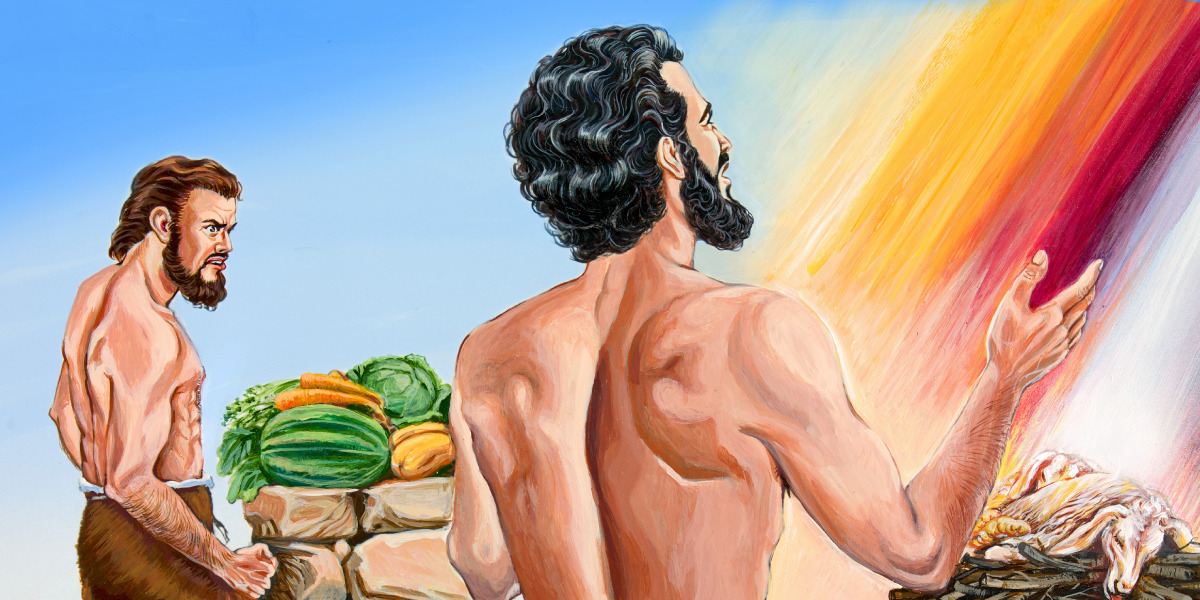
MIRA ahora a Caín y Abel. Ambos han crecido. Caín se ha hecho agricultor. Él se ocupa en el cultivo de granos y frutas y vegetales.
Abel cría ovejas. A él le gusta cuidar los corderitos. Estos crecen y llegan a ser ovejas grandes, y pronto Abel tiene un rebaño entero de ovejas para atenderlo.
Un día Caín y Abel le llevan un regalo a Dios. Caín lleva alimento que él ha cultivado. Y Abel lleva la mejor oveja que tiene. A Jehová le agradan Abel y su regalo. Pero no le agradan Caín y su regalo. ¿Sabes por qué?
No es solo que el regalo de Abel sea mejor que el de Caín. Es porque Abel es bueno. Ama a Jehová y a su hermano. Pero Caín es malo; no ama a su hermano.
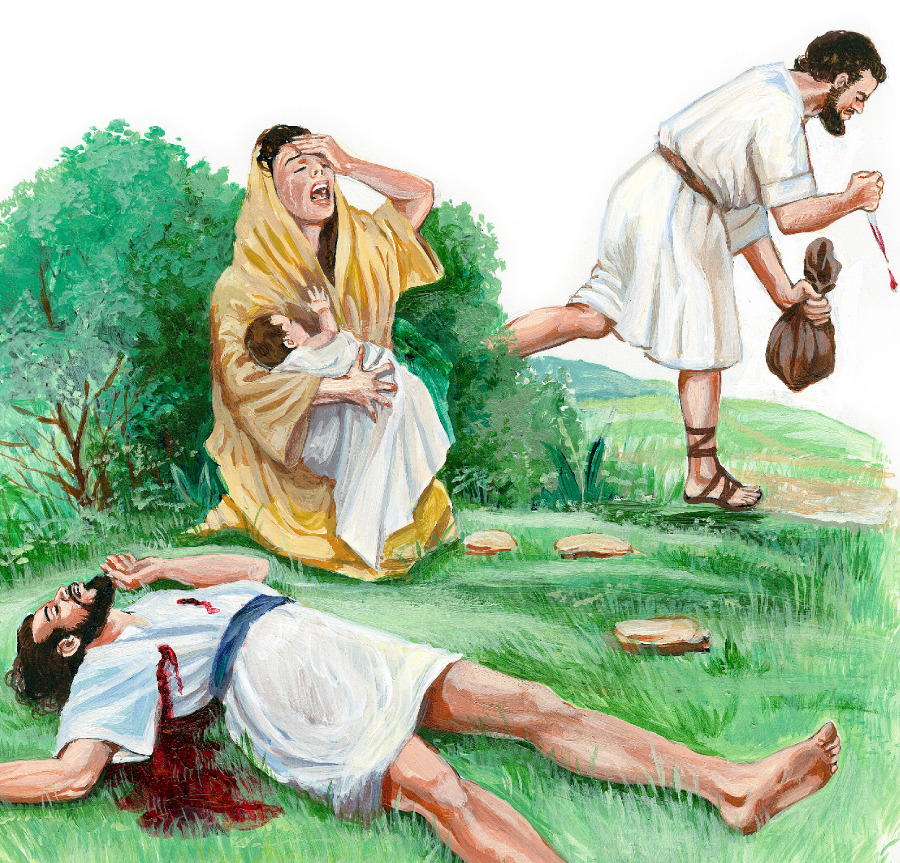
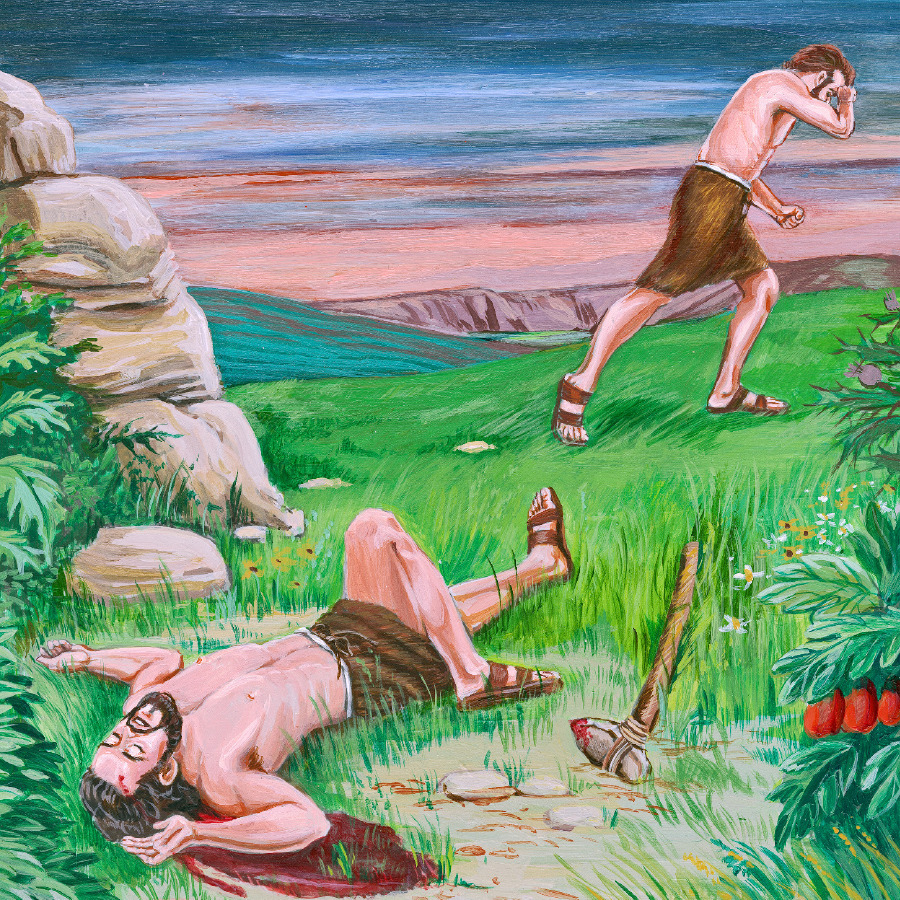
Por eso Dios le dice a Caín que debe cambiar. Pero Caín no le hace caso. Está muy enojado porque Dios ha preferido a Abel. Caín le dice a Abel: ‘Vamos allá al campo.’ Allá, cuando están solos, Caín golpea a su hermano. Le da tan duro que lo mata. ¿No te parece terrible que Caín hiciera eso?
Aunque Abel murió, Dios todavía lo recuerda. Abel era bueno, y Jehová nunca olvida a personas que son así. Por eso un día Jehová Dios hará que Abel vuelva a la vida. En ese tiempo Abel nunca tendrá que morir. Podrá vivir para siempre aquí en la Tierra. ¿No será bueno conocer a personas como él?
Pero a Dios no le agradan personas como Caín. Por eso, después que Caín mató a su hermano, Dios lo castigó enviándolo lejos del resto de su familia. Cuando Caín se fue para vivir en otra parte de la Tierra, se llevó consigo a una de sus hermanas, y ella llegó a ser su esposa.
Con el tiempo Caín y su esposa empezaron a tener hijos. Otros hijos e hijas de Adán y Eva se casaron y también tuvieron hijos. Pronto hubo muchas personas en la Tierra. Conozcamos algunas.
Born: a slave in 1820 — Dorchester County, Maryland Died: 1913 — a free woman in Auburn, New York
“Harriet, I can’t go no farther,” my brother moaned as we ran through the darkened woods. “Just let me go back. I’ll take the whipping and promise never to run away again.”
I understood his fear. I’d seen it before and had even felt it when I first ran away from the plantation. “The good Lord will see us through, Jim,” I reminded him. But poor Jim was so sure we’d be caught that he tried to turn back.
I reached into my pocket and pulled out the shiny silver pistol I used when encouraging words weren’t enough. “You gonna live free in the north or die right now in the south,” I warned. I didn’t like doing this, but there were too many people risking their lives for his freedom. Without another word, Jim turned and began walking north. I knew he’d thank me as all the others did once he tasted freedom.
My First Job Many years earlier, I was playing in the yard when Master Brodas called me to the big house. He was standing on the porch with a white woman who asked how old I was. Master Brodas told me to open my mouth. Seeing that my front teeth were missing, he guessed. “Five or six years old. As I told you,” he continued, “she ain’t house-trained, but you get what you pay for.”
“I guess she will do,” the woman said. She signed some papers and motioned for me to get on the wagon. My mind began to race. Where was she taking me? I had heard the grown folk whispering about how slaves were taken farther south, never to be heard from again. I wanted to jump off the wagon and run to the field where my father was working, but I knew I would be caught and beaten. At just six years old, I was being hired out to make money for the plantation.
No matter how hard I tried, I could not do as good a job as was expected. I was beaten and spat on. Once I ran away and hid, living with the pigs for two days, sneaking their food to survive. After being returned to the plantation, beaten and bruised, my momma warned me, “Child, now that you at hiring age, you better do a good job or they’ll sell you south.” Being sold south struck fear in every slave’s heart. Fortunately, my mother also told me I could call upon the Lord for help at any hour of the day or night. I would remember that during the many difficult times to come.
The Brain Injury When I was only 13 years old, a friend warned me he was going to make a run for freedom. As the overseer tried to catch him, I jumped in the way to help my friend escape. The overseer threw a two-pound weight at him, but it hit me instead. I spent the next week unconscious on the floor of our cabin. It was many months before I could sit up or walk again. The weight left a permanent, two-inch gash in my head. For the rest of my life, the injury made me black out when I least expected it. All the pain and suffering was worth it to help a fellow slave taste freedom.
My Escape I was working at the far end of the field one day when a Quaker woman slowed her buggy and told me if I ever needed help, she would be a true friend. Years later, after Master Brodas died, I felt God telling me it was time to go. I’d heard a rumor that I was going to be sold the next day. That night I slipped out into the darkness and began to run. I found my way to the Quaker woman’s house.
“I’m Harriet Tubman,” I told her. “You told me I could come to you if I needed help.”
“Thee was right to come,” the Quaker woman said. She explained to me that the Underground Railroad was not a railroad with trains but a group of friendly folks who were willing to help runaway slaves reach the free north. Telling only my sister, I left immediately, running through the woods. Following the North Star, I crossed through streams and lakes to throw the barking bloodhounds off my scent. At each safe house I was given a hearty meal and a bed to sleep in. My last stop was at the home of a shoemaker, who hid me in a secret room for two days. Early on Sunday morning, the sixth day after I had left the Brodas plantation, the shoemaker gave me clean clothes, a black veil to cover my face, and a new pair of shoes. He took me by carriage close to the Delaware-Pennsylvania border. He pressed a silver dollar into my hand and gave me a piece of paper with the word “Pennsylvania” written on it. “Thank you sir, and may God bless you for all your help to me,” I said and began my final two miles to freedom.
As I got near the signpost for Pennsylvania, I took out the piece of paper and held it up to the sign. The words matched! I was now breathing free air. No one would ever be able to whip or sell me again. I vowed never to return to the south. But as time passed, I began to feel very lonely for my family. I wanted them to be free too. I worked very hard and saved money so I could go back and help anyone who wanted to escape.
postscript Harriet Tubman was called the Moses of her people. She made 19 trips back to Maryland, leading more than 300 slaves to freedom, including her family. A $40,000 reward was issued for her capture, dead or alive. She narrowly escaped capture many times, but credited God for rescuing her from her trouble and directing her daily.Make It Real! Questions to make you dig a little deeper and think a little harder.
Harriet was thrilled when she was finally breathing the free air of Pennsylvania. Yet she willingly risked both her freedom and her life so that others could be free from slavery. What do you think motivated her to take such risks?
Does it surprise you that for the sake of one slave’s freedom, many people need to risk their lives? How was their opinion of slavery different from the opinion of the slave owners? Why do you think they were willing to take such risks?
Harriet was known as the “Moses of her people.” What parts of her story remind you of Moses?
Suggested reading:
Harriet Tubman: Freedom Bound by Janet & Geoff Benge (Heroes of History series, Emerald Books)
Listen for the Whippoorwill by Dave & Neta Jackson (Trailblazer Books, Bethany House)










 Jesus is the name